Faces of the Stone City
Fiction. AI illustrations of an imaginary stone city. Each pair shows first Jani Korpi's source material and then an AI illustration inspired by the outline of the skull. Most of the source material is photographs from Peru; pair 02 is put together from video stills, and pairs 12–13 include video frames of the Cairo sculptures. The stone city and its inhabitants are invented.
A day in the stone city (fiction)
This story is invented. It does not describe the history of Peru or Egypt, and its characters have no connection to the deceased people seen in the photos. The story ties the thirteen illustrations together as events of one imaginary day.
The stone city is built in terraces on a mountainside. Channels bring water from springs higher up the slope, and glass canopies shade the alleys. Everything in the city is measured: the joints of stones, the height of water and the angle of light. Measuring is a shared language here.
Three people are at the centre of the day. Ilun the optician grinds the prisms that the city's surveyors use to read angles. Sava the water keeper makes sure that every terrace gets its turn of water. Tiru the weaver makes shade cloths that protect the market and the gardens from the midday sun.
In the morning Sava notices that too little water is reaching the lowest terraces. The fault could be in the slope of a channel, a broken joint or a sluice. Over the day the city looks for the fault together: a stonecutter checks the joints, a gardener reads the signs of drought in the plants, and builders bring a new glass canopy over the place where the water is divided. At the market people trade maize, baskets and news.
In the evening the water flows again. Tiru mends the edge of a shade cloth, and the channel gauger sets the last sluice. The shapes come from Jani's photos; the events, names and characters are invented.
01 · The optician adjusts a prism
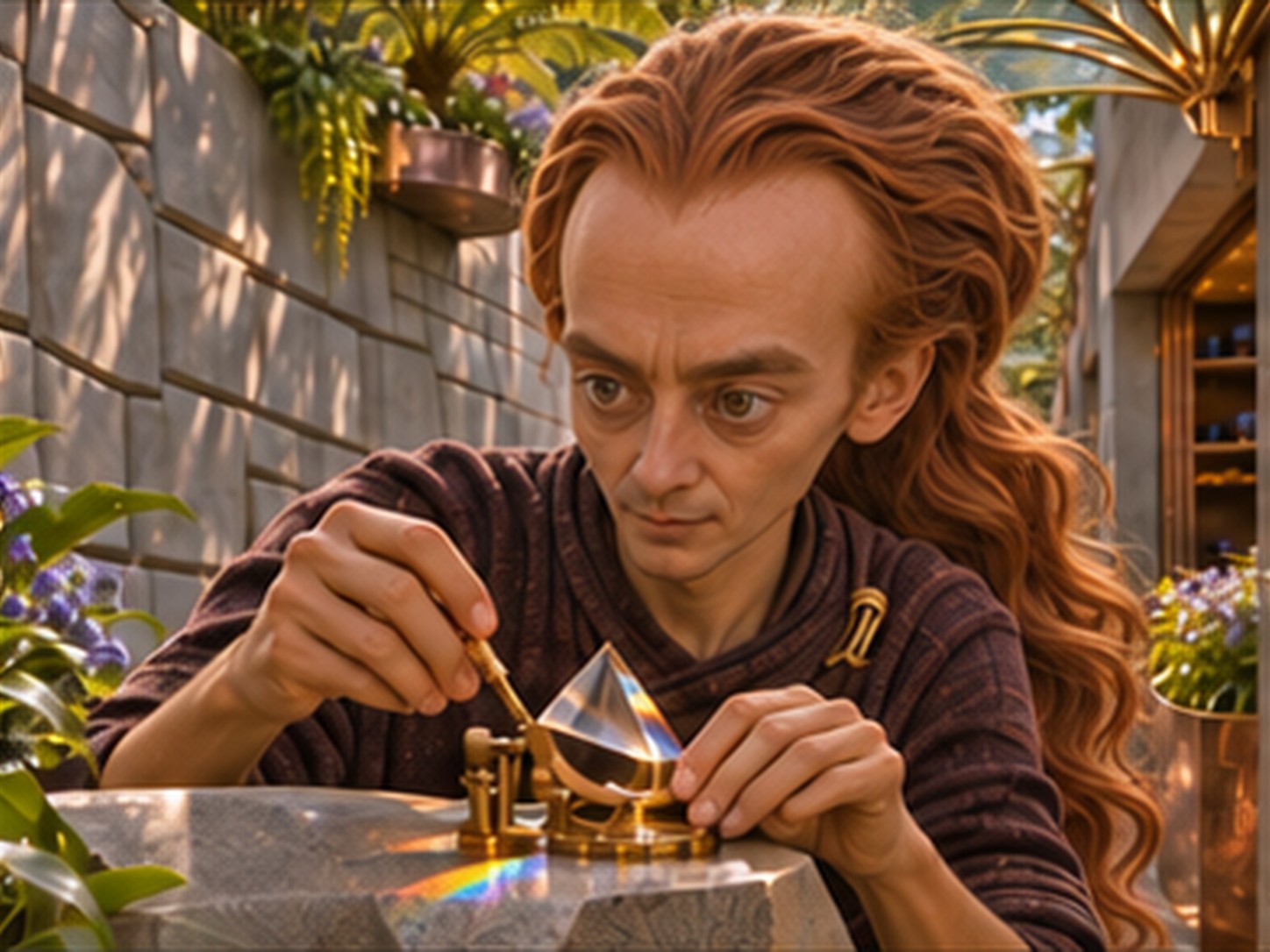
Story (fiction): The morning begins in the measuring workshop. Ilun turns a prism until the beam of light hits its mark. Sava will later read the channel's angles with the same prism, so the work must be done before the sun rises over the terraces.
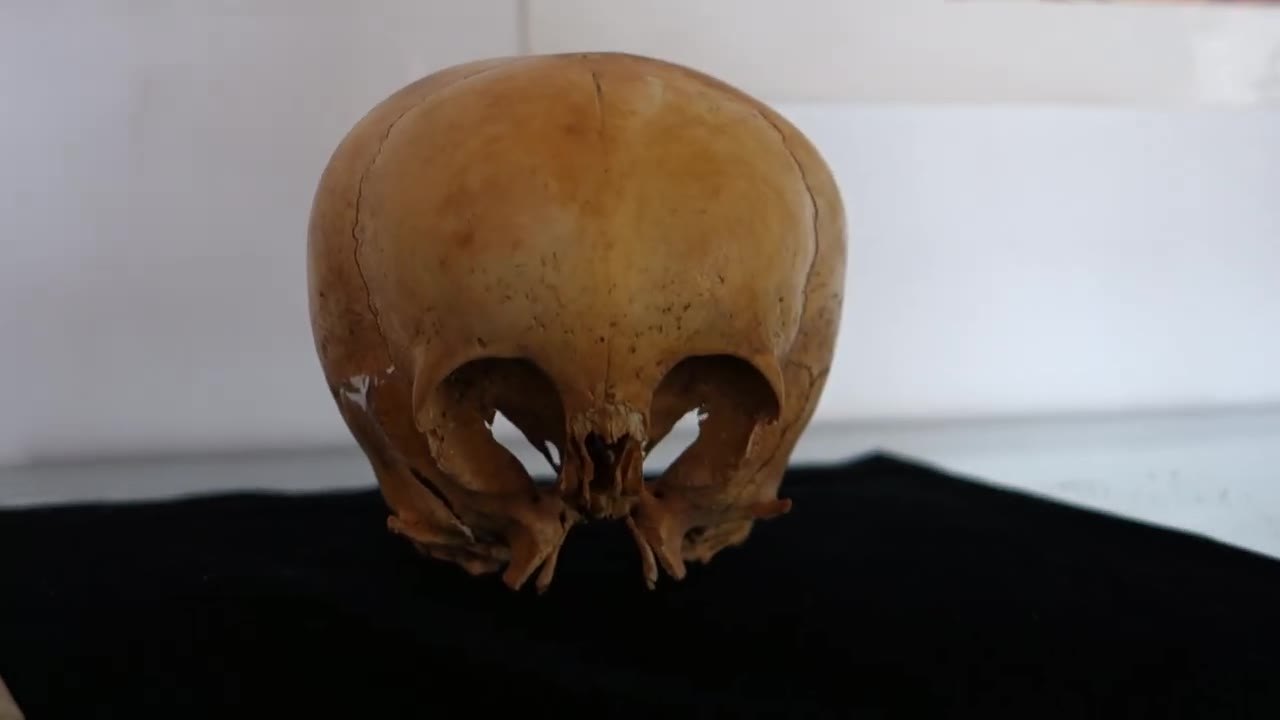
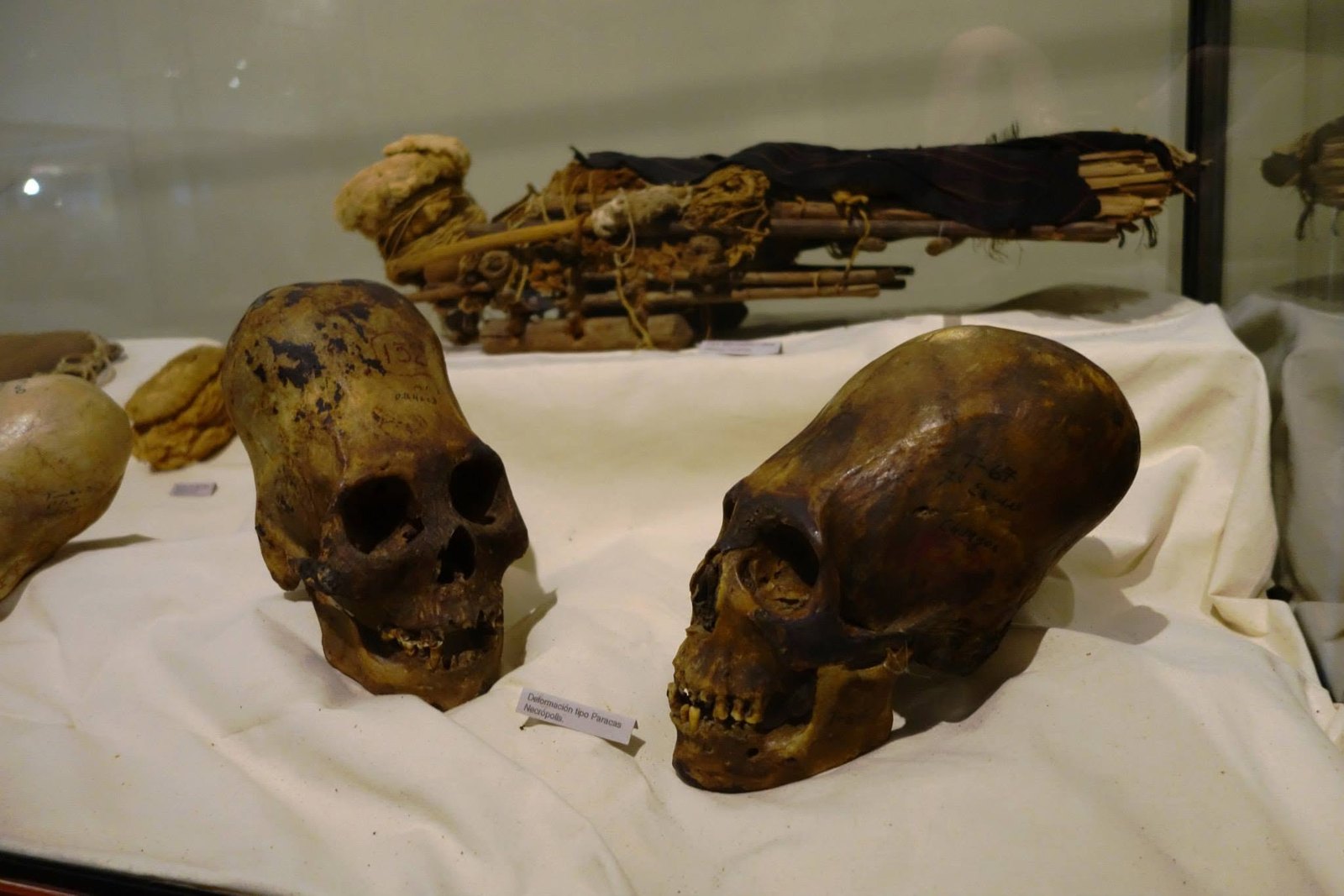
Starting point: The width of the forehead and the distance between the eye sockets guided the shape of the upper face. The jaw and mouth are the illustrator's choices.
Original photo 01 and observations · Pairs 04 and 10 may show the same object as this pair.
Read more about the page and show all 13 pairs
The page is based on Jani's idea of an advanced, imaginary society that preceded humans. The skulls in the source photos are human remains. In the studied Paracas material the long head has been interpreted as shaping done in childhood; the individual details of the particular skulls Jani photographed have not been confirmed. The stone city and its inhabitants are invented. The skulls in the source photos are human remains whose origin and collection history are only partly known (see the fact page). That is why the illustrations do not portray these people, and the skull photos serve here only as a starting point for shapes. The copper-red wavy hair, the emphasised upper skull and back of the head, the large eyes and the small chin and nose are artistic choices inspired by Amarna art. The illustration is not a facial reconstruction, nor a research result about eye or hair colour.
The images and text were edited with several AI tools; the tools are not named because this section is entirely fiction. The travel story elsewhere on the site (Jani’s notes) is not fiction and does not fall under this label.
Each pair shows first Jani's photograph and next to it or below it an AI illustration inspired by the outline of the skull, that is, fiction. The number links the source photo and the illustration. The lower jaw is often missing from the source photos, so the jaw and mouth are the illustrator's decisions. The figures' expressions, skin tone, hair and daily life belong to the stone city. The illustration cannot tell us the facial features, species or appearance of the deceased.
What do the skulls tell us?Fact page: photos 01–11, exhibition labels and published research.
02 · A load of stone passes down the lane
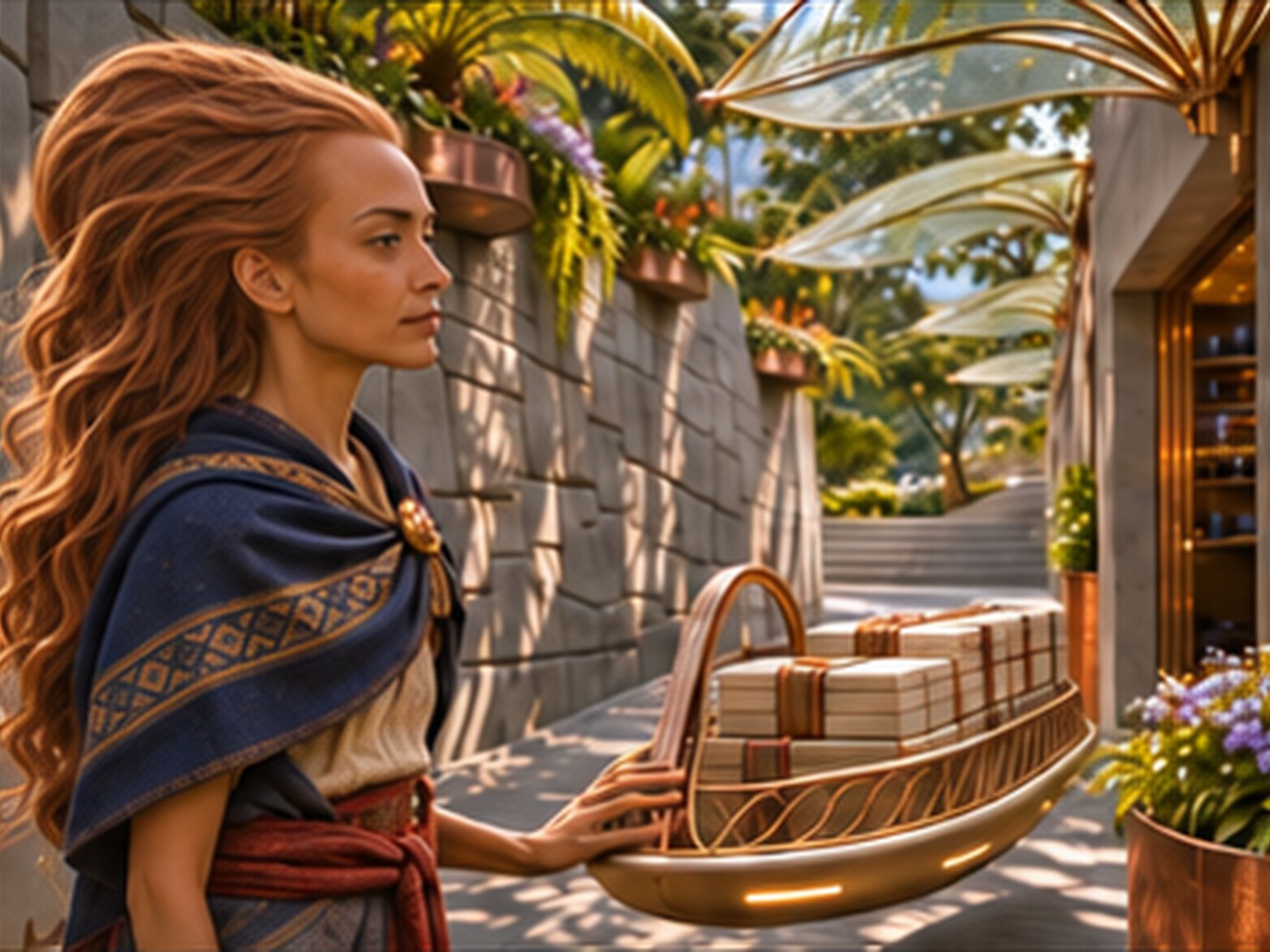
Story (fiction): A load of stone moves along a narrow alley towards the lowest terrace. The driver knows only that new blocks are needed for the channel edge before evening. Nobody knows yet where the fault is.
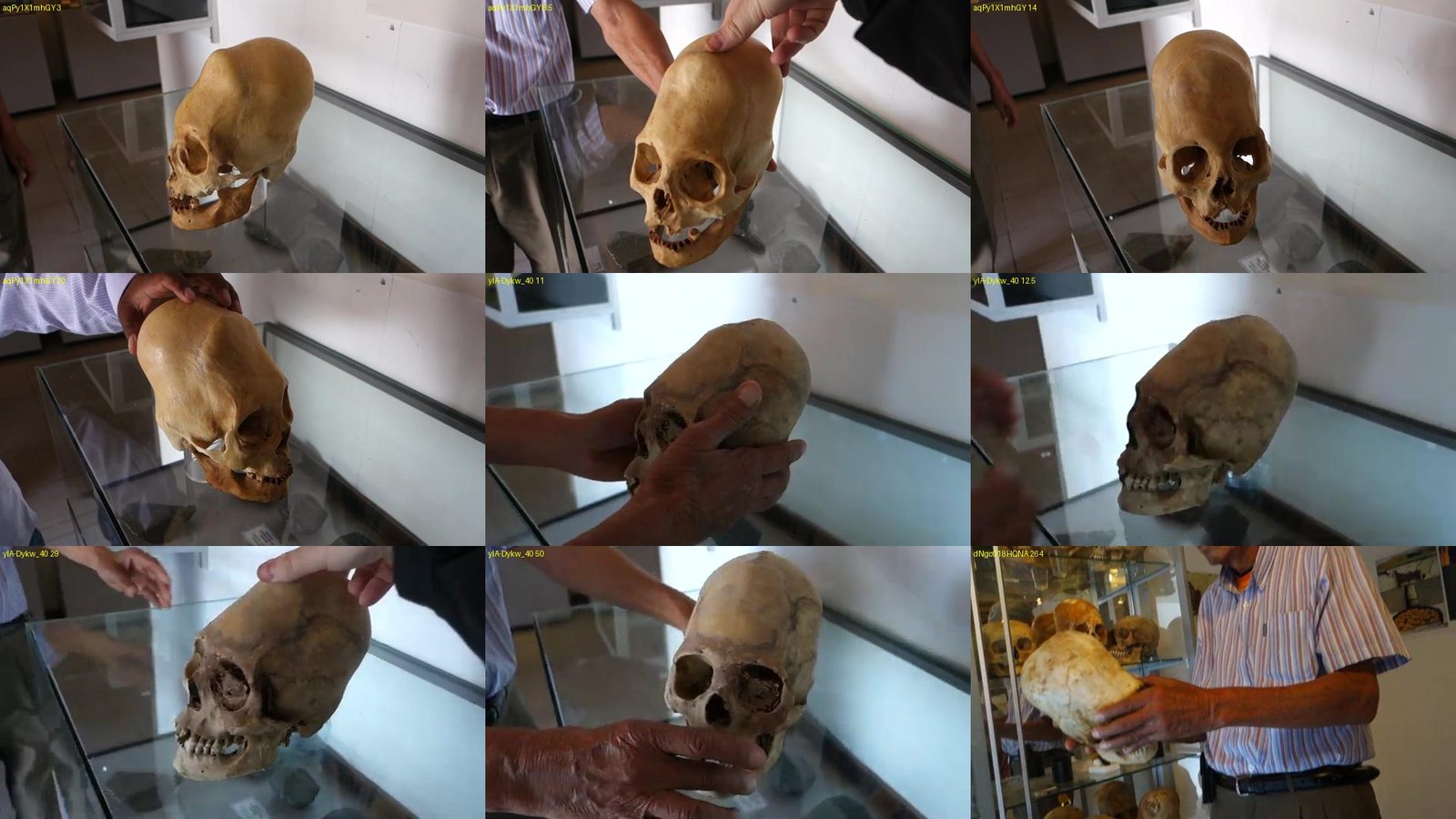
Starting point: The figure's forehead rises fairly upright. The model was the pale skull in the top row of the video compilation.
03 · The stonecutter checks a joint
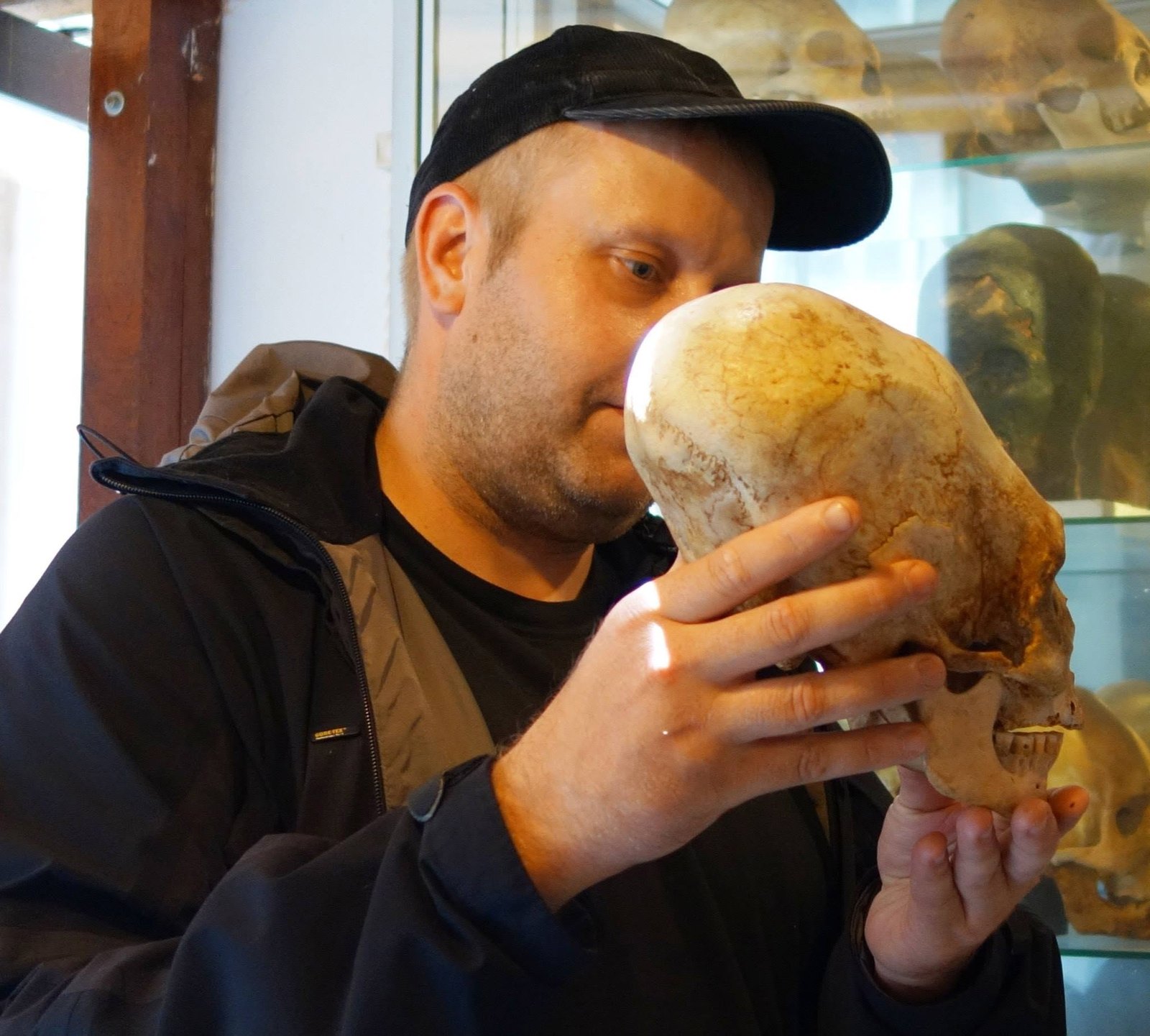
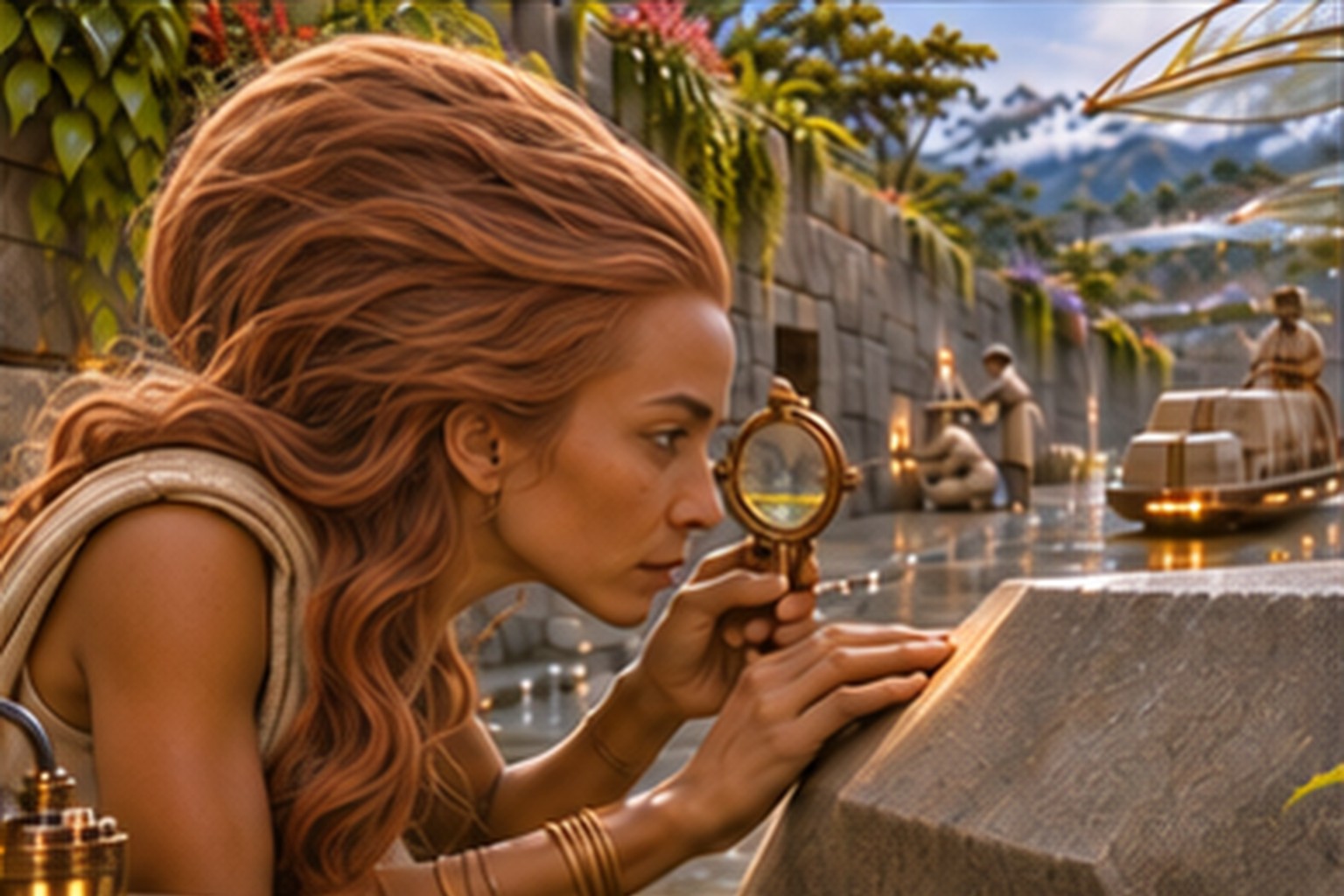
Story (fiction): A stonecutter studies an old joint of the channel through a lens. The joint is sound. She sends word to Sava: the fault is not in the stone but somewhere higher up.
Starting point: In the side view turned to the right, the most important shape is the line from the forehead to the backward-curving back of the head.
04 · The gardener examines a seed pod
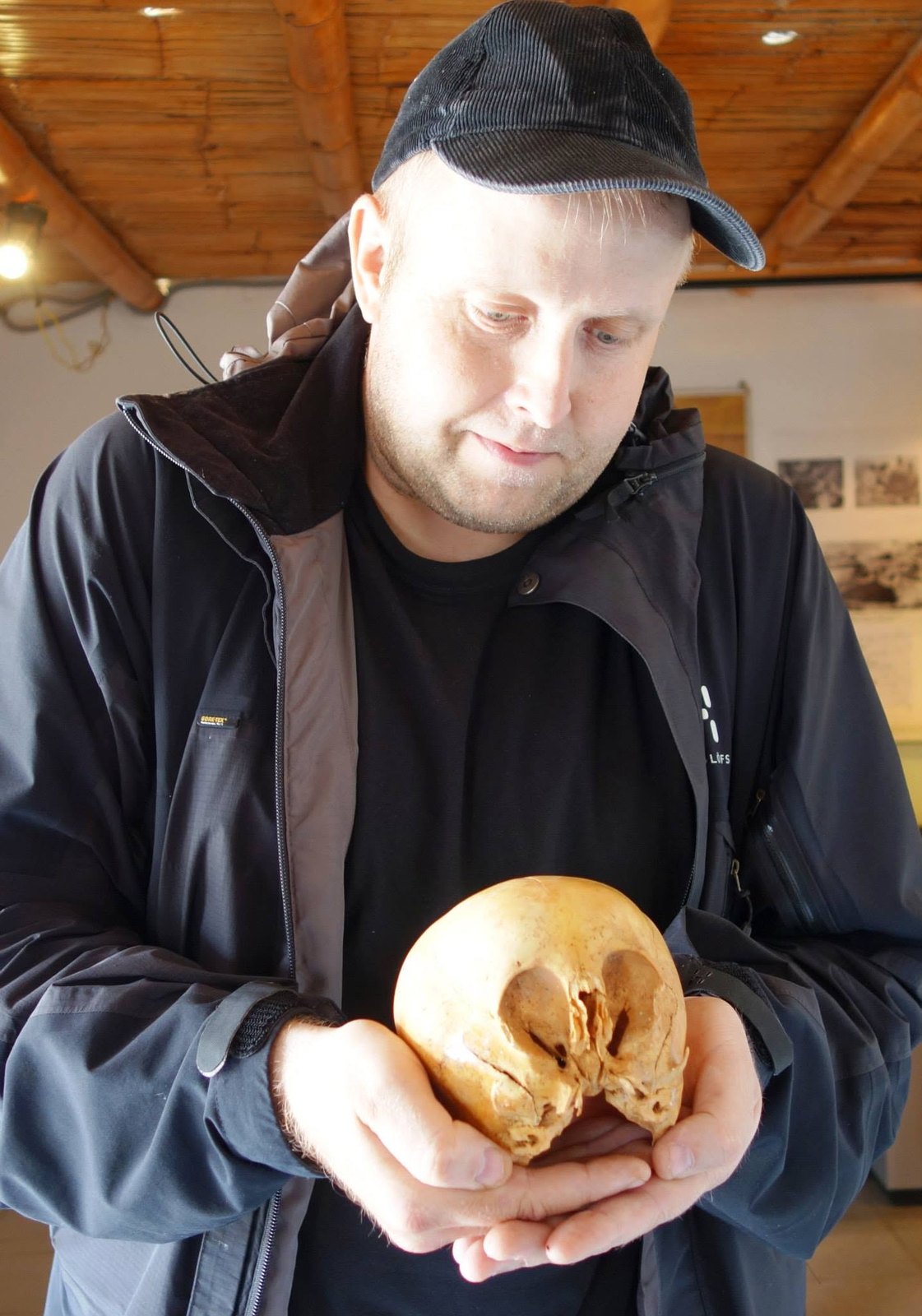
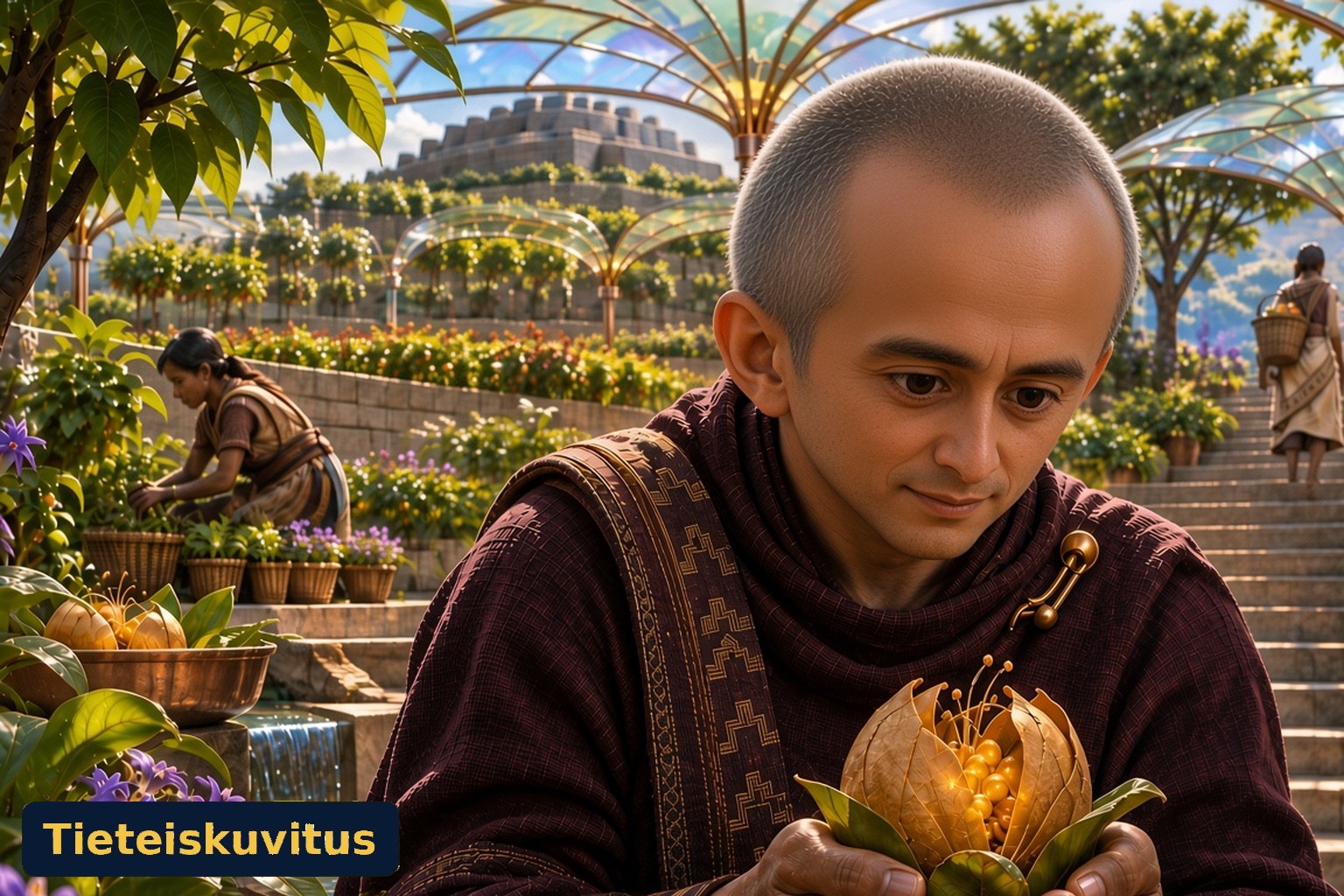
Story (fiction): On the lowest terrace a gardener opens a seed pod and sees that it has dried too early. He says that less water has been arriving for several days.
Starting point: The round shape of photo 01 recurs in the upper face. The hands help to judge the proportions of the source photo.
Original photo 04 and observations · Pairs 01 and 10 may show the same object as this pair.
05 · The water keeper measures the channel's levels
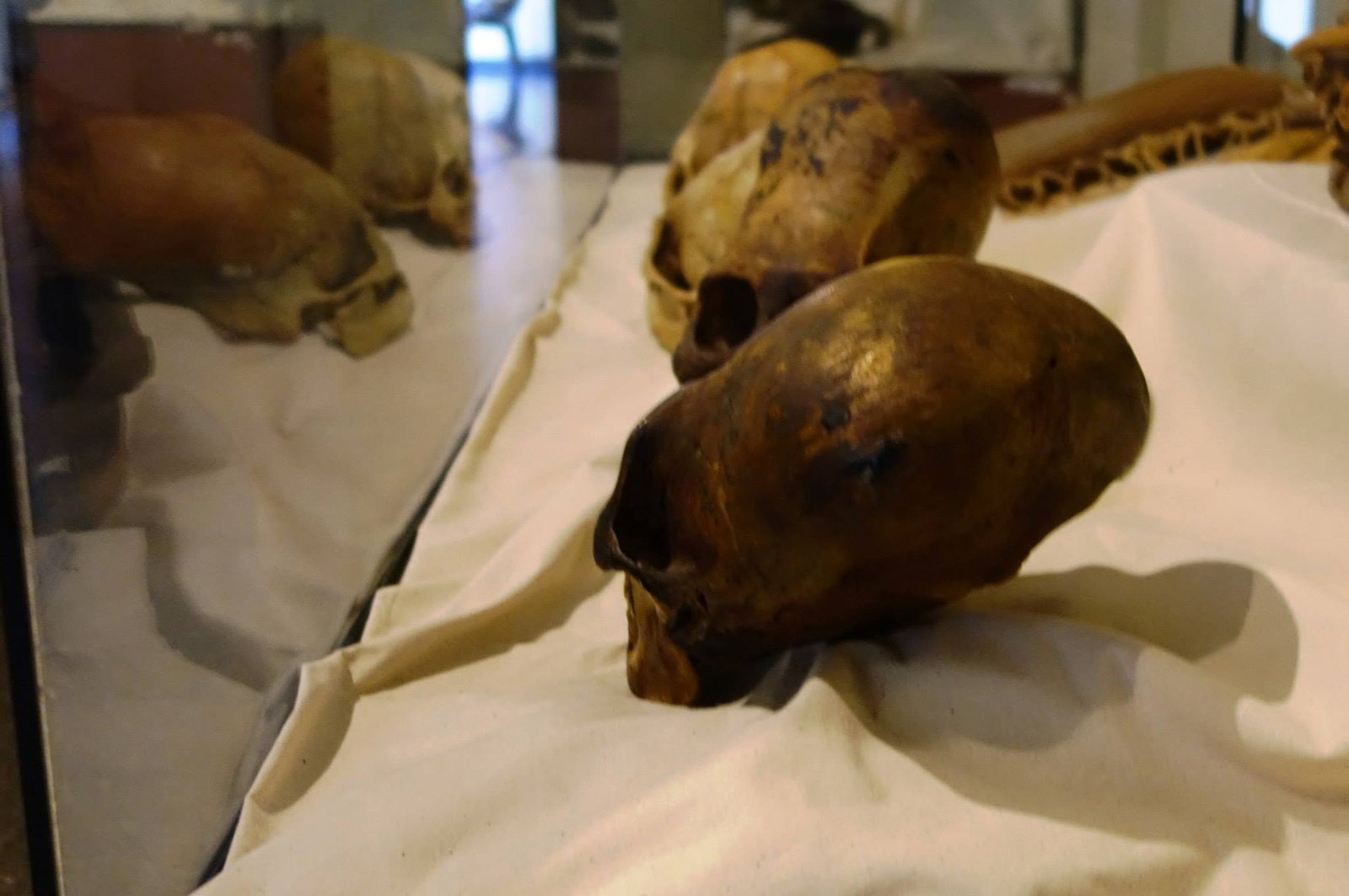
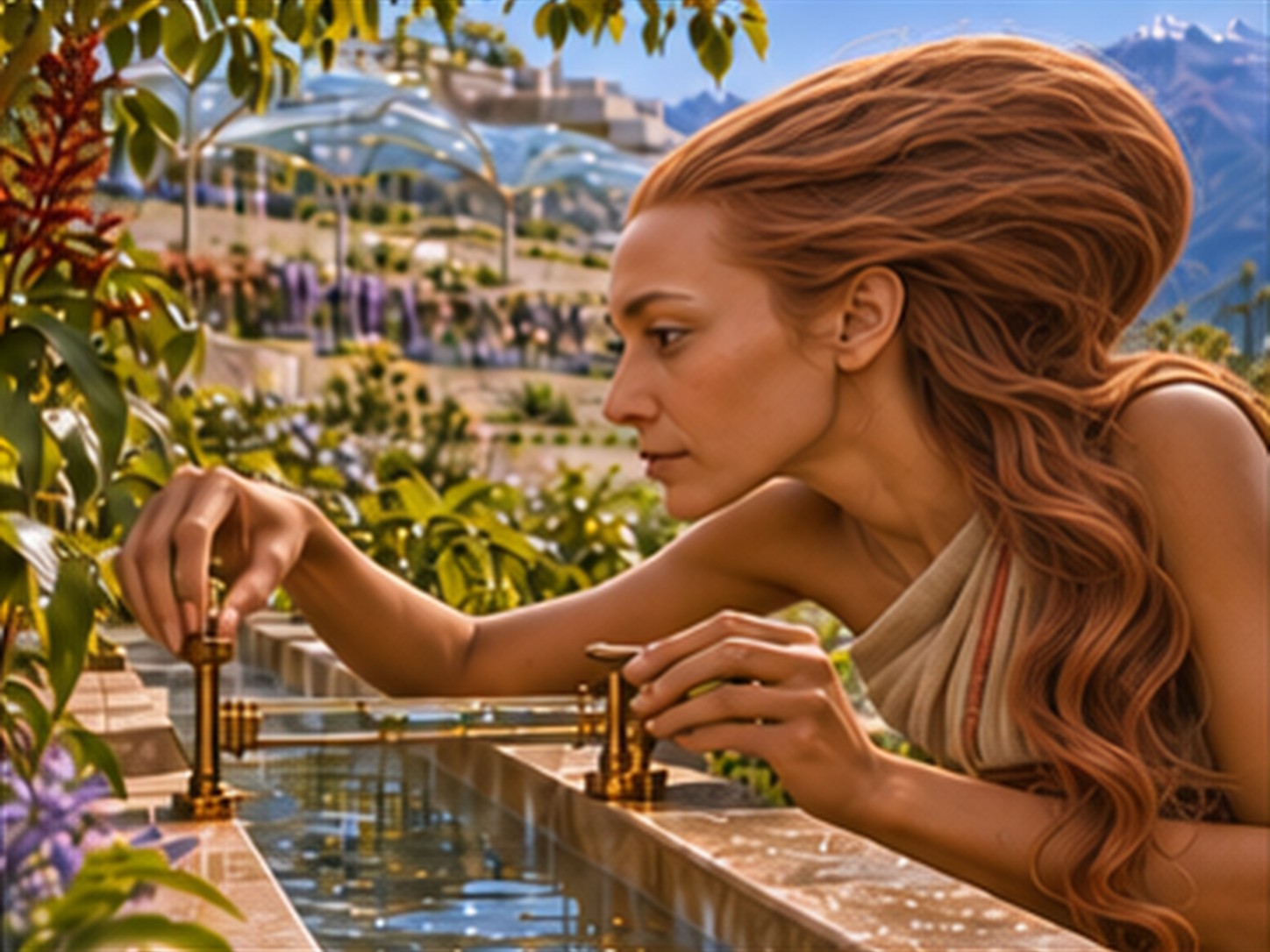
Story (fiction): Sava sets a levelling instrument on the edge of the channel and measures the height differences point by point. The measurement shows that the channel slopes the right way. So the fault must be at the dividing point or in a sluice.
Starting point: The starting point was the left-facing profile of the skull in the foreground. The curve of the back of the head continues behind the ear.
06 · The weavers examine a cloth
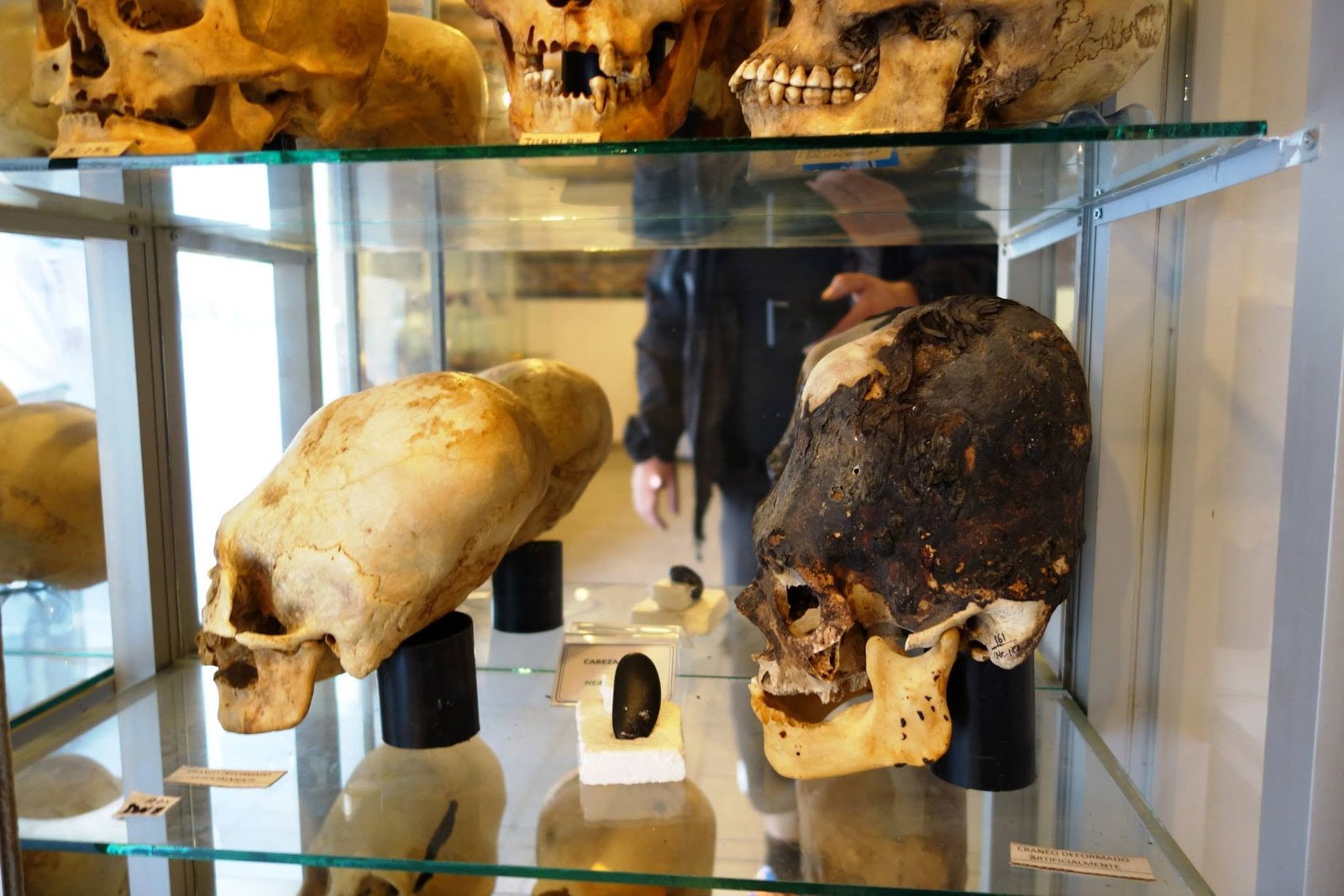
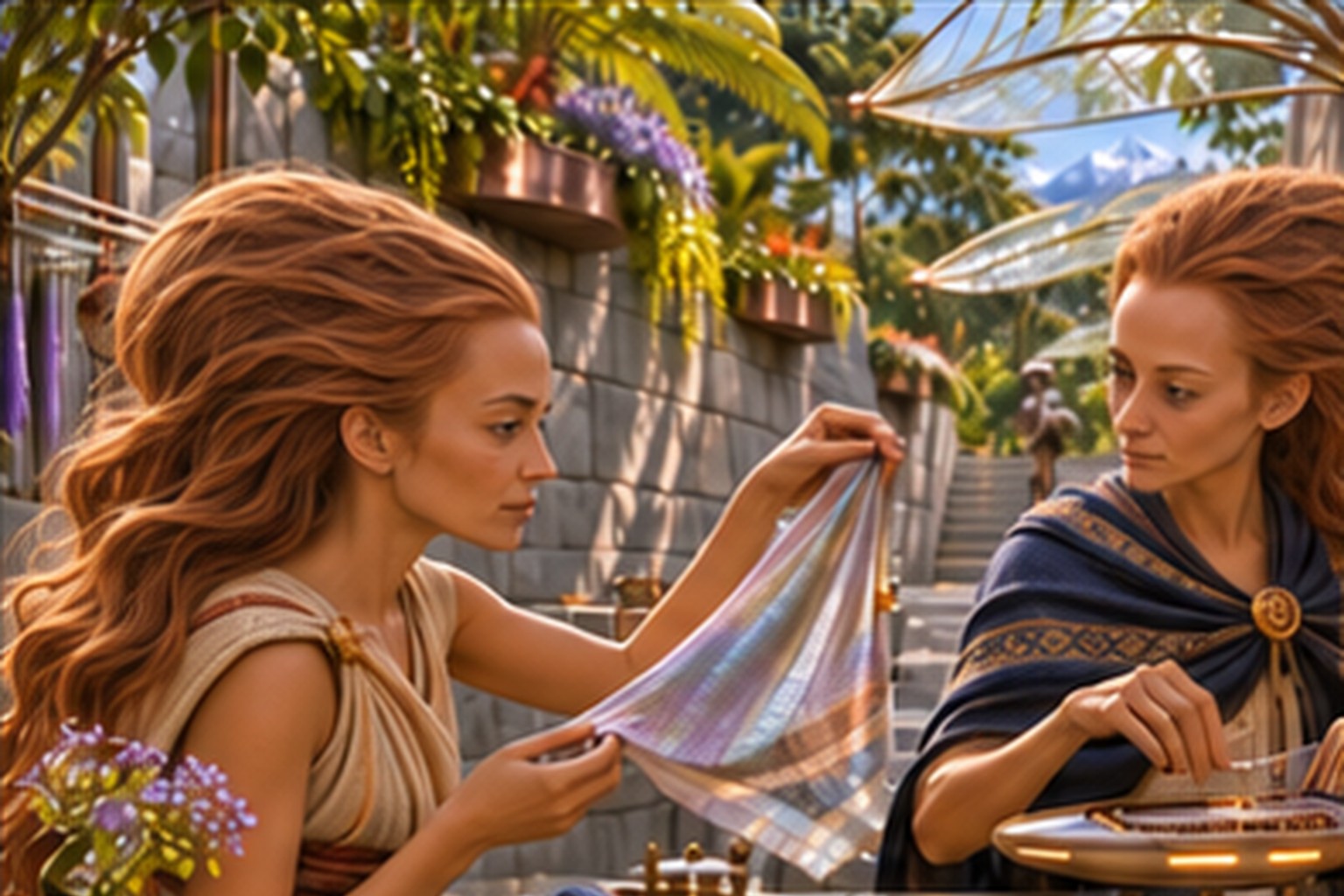
Story (fiction): The weavers hold a thin cloth up to the light. Tiru needs a shade cloth over the dividing point so that the water does not evaporate in the midday heat. The cloth must be light but dense.
Starting point: The crown of the left-hand skull slopes backwards. The outline of the right-hand one rises more upright.
07 · A meeting at the maize market
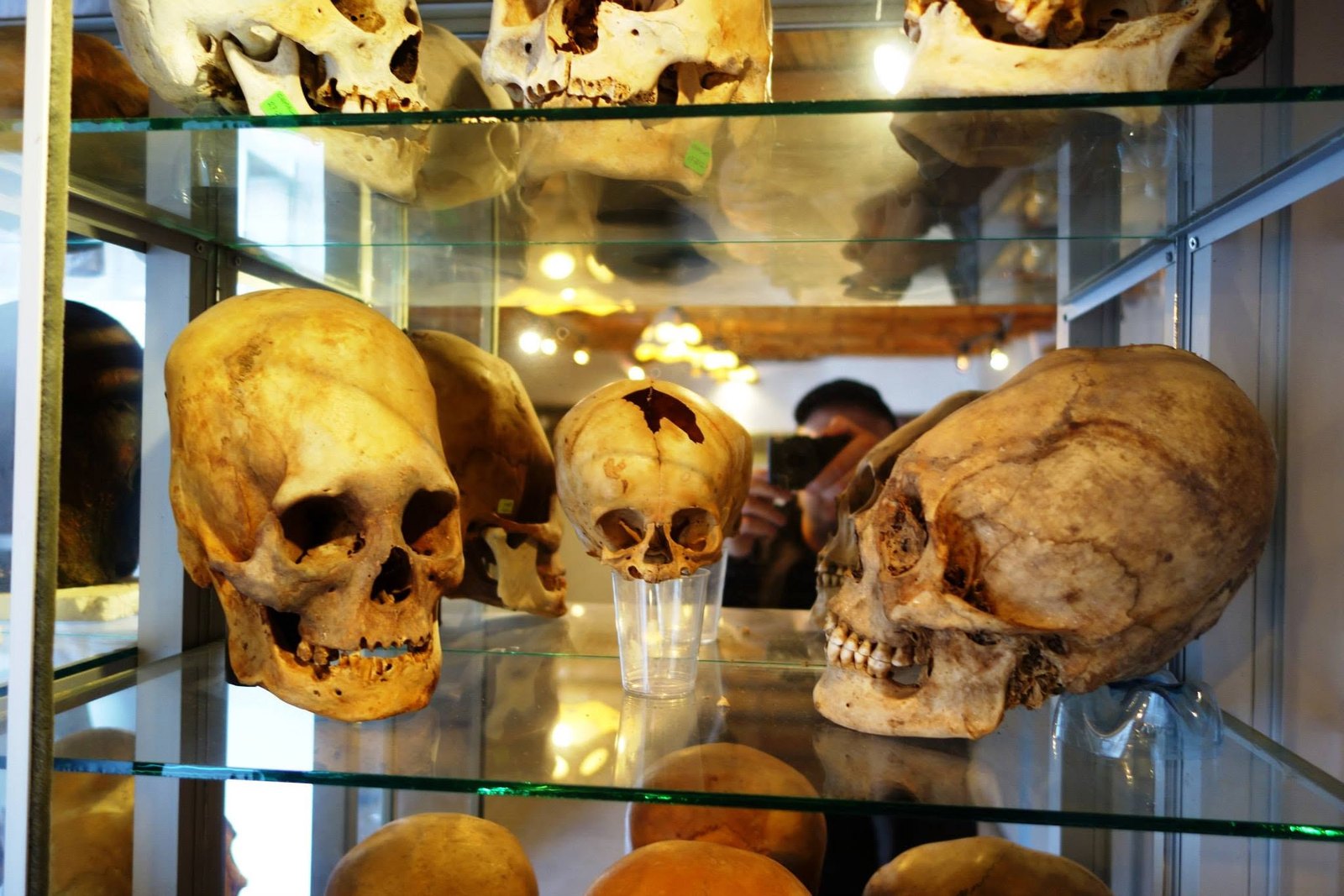
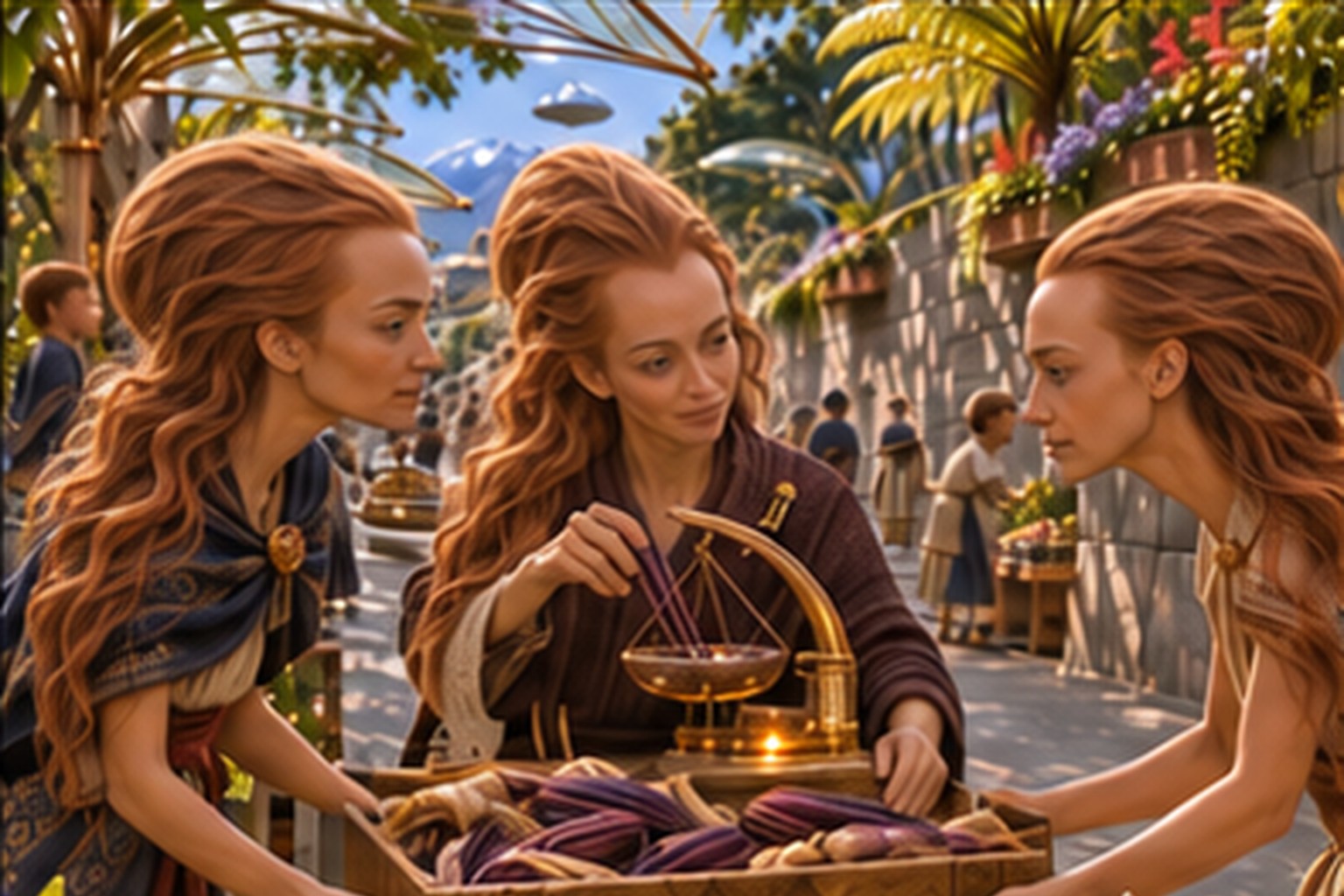
Story (fiction): At the maize market three townspeople trade goods and news. A rumour about the water shortage has been going round all morning. The market agrees that builders will take a new glass canopy to the dividing point.
Starting point: The three angles gave the idea for three different facial outlines. The middle market figure is imagined as an adult.
08 · Two builders carry a glass canopy through the gateway
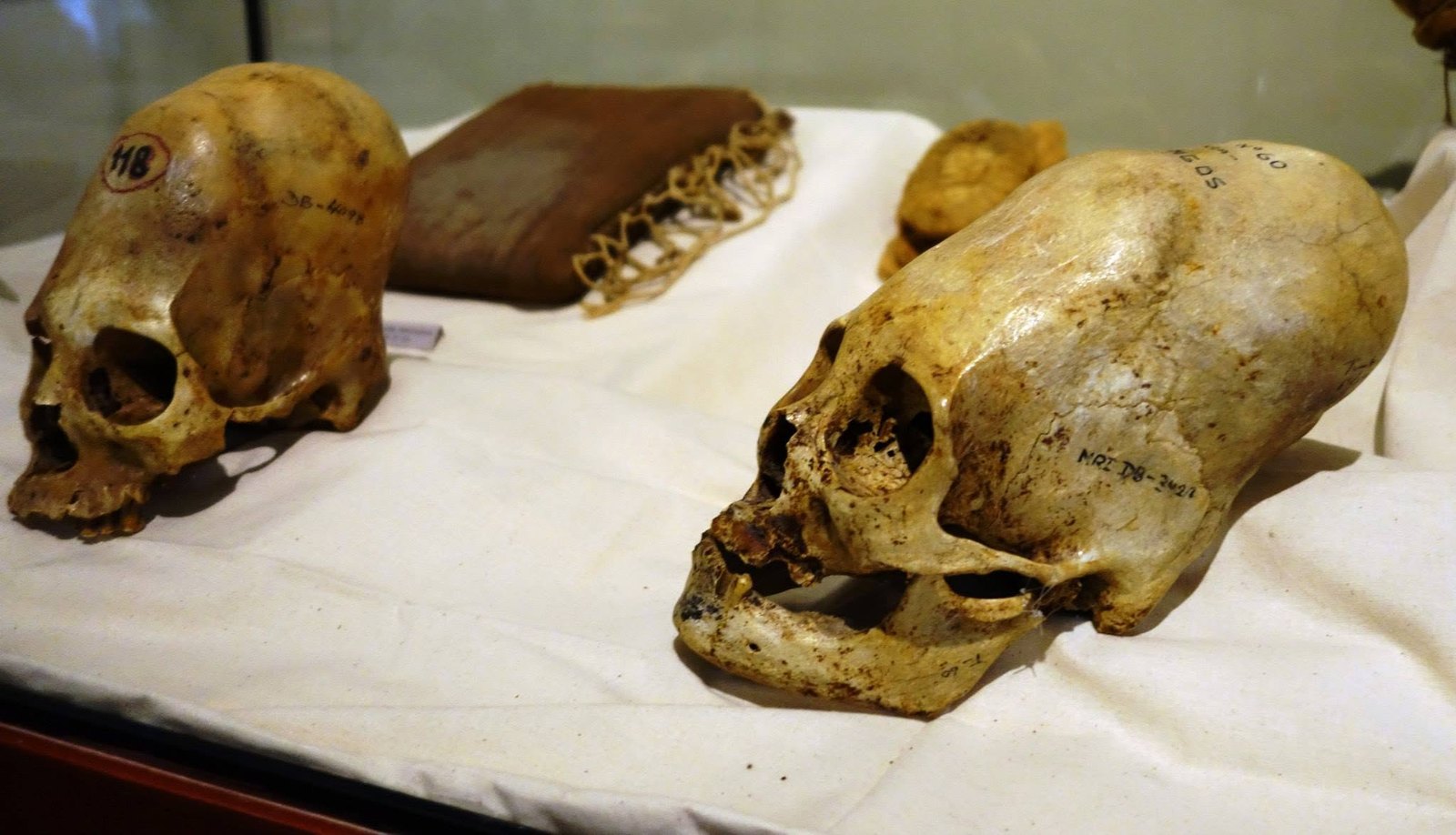
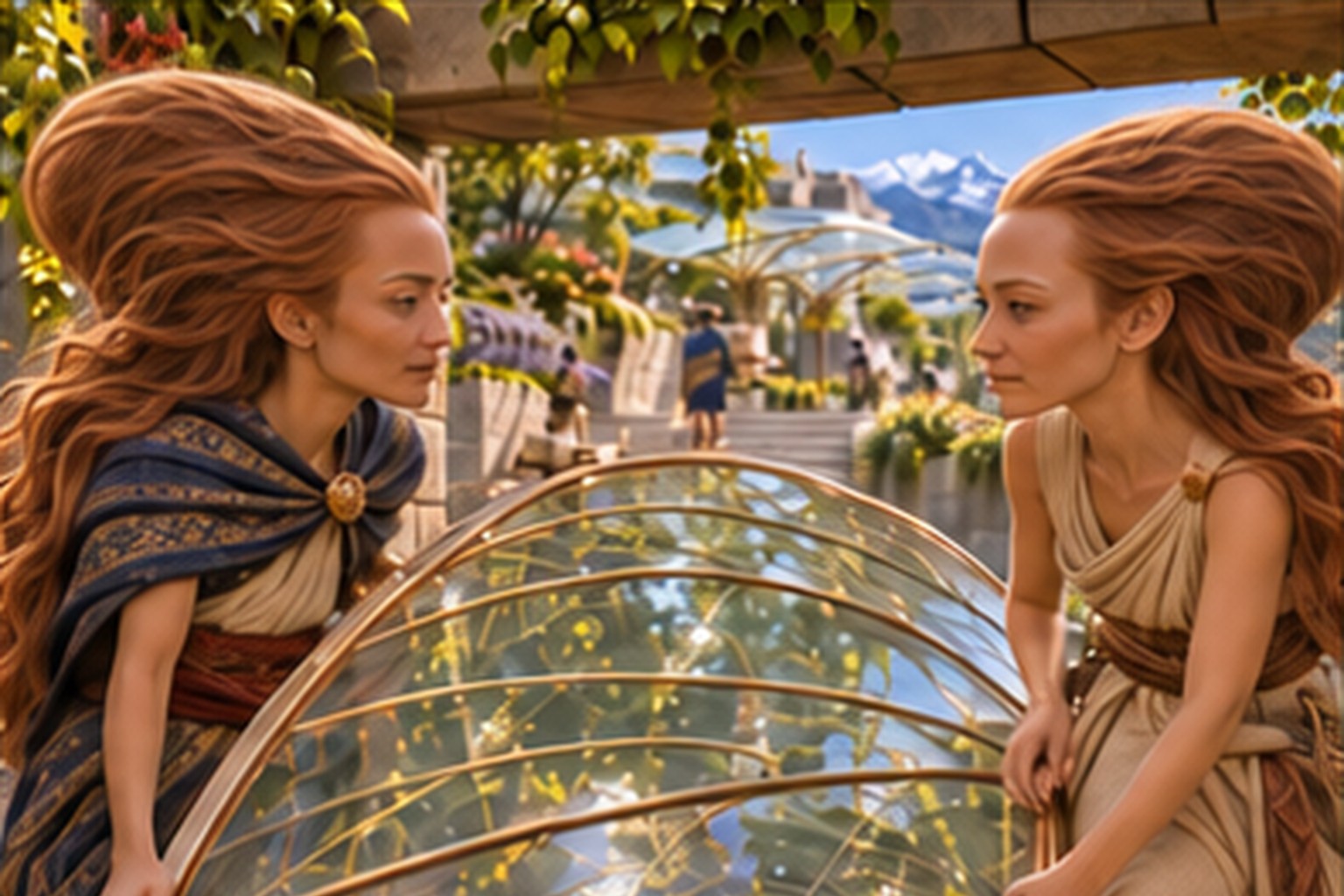
Story (fiction): Two builders carry a curved glass canopy through the gateway. It is heavy and fragile, so they walk slowly and look at each other at every step.
Starting point: The more upright shape of the left-hand skull and the gentler forehead line of the right-hand one are best seen by comparing the sides.
09 · The song of the water wheel
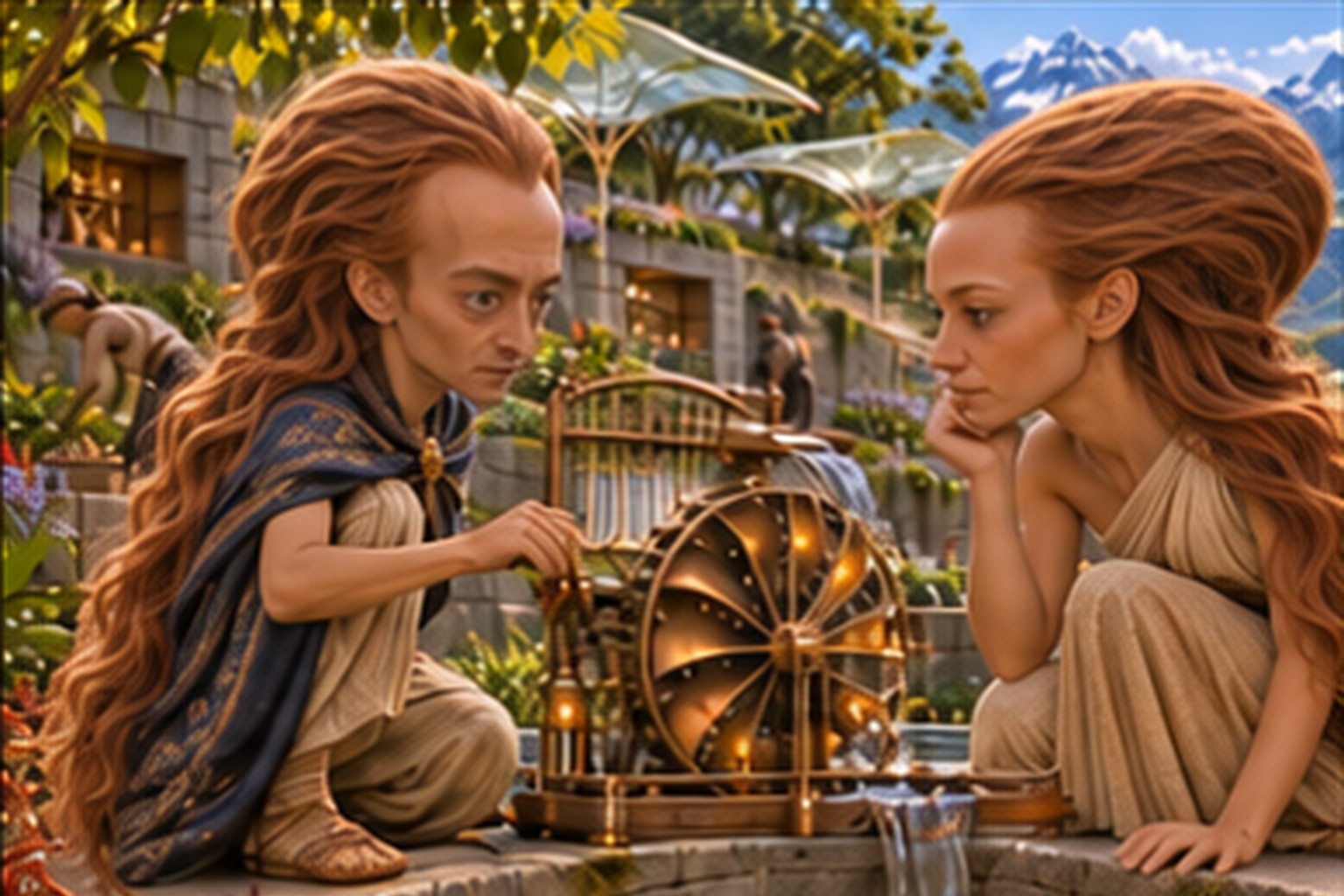
Story (fiction): The water wheel sounds wrong. Sava and her helper listen to it and find a stuck gate at the dividing point. When the gate comes free, the tone of the wheel changes and the water starts to move.
Starting point: The different slope of the left and right heads gives faces to two inhabitants bending over the water wheel.
10 · The flute player in a stone lane
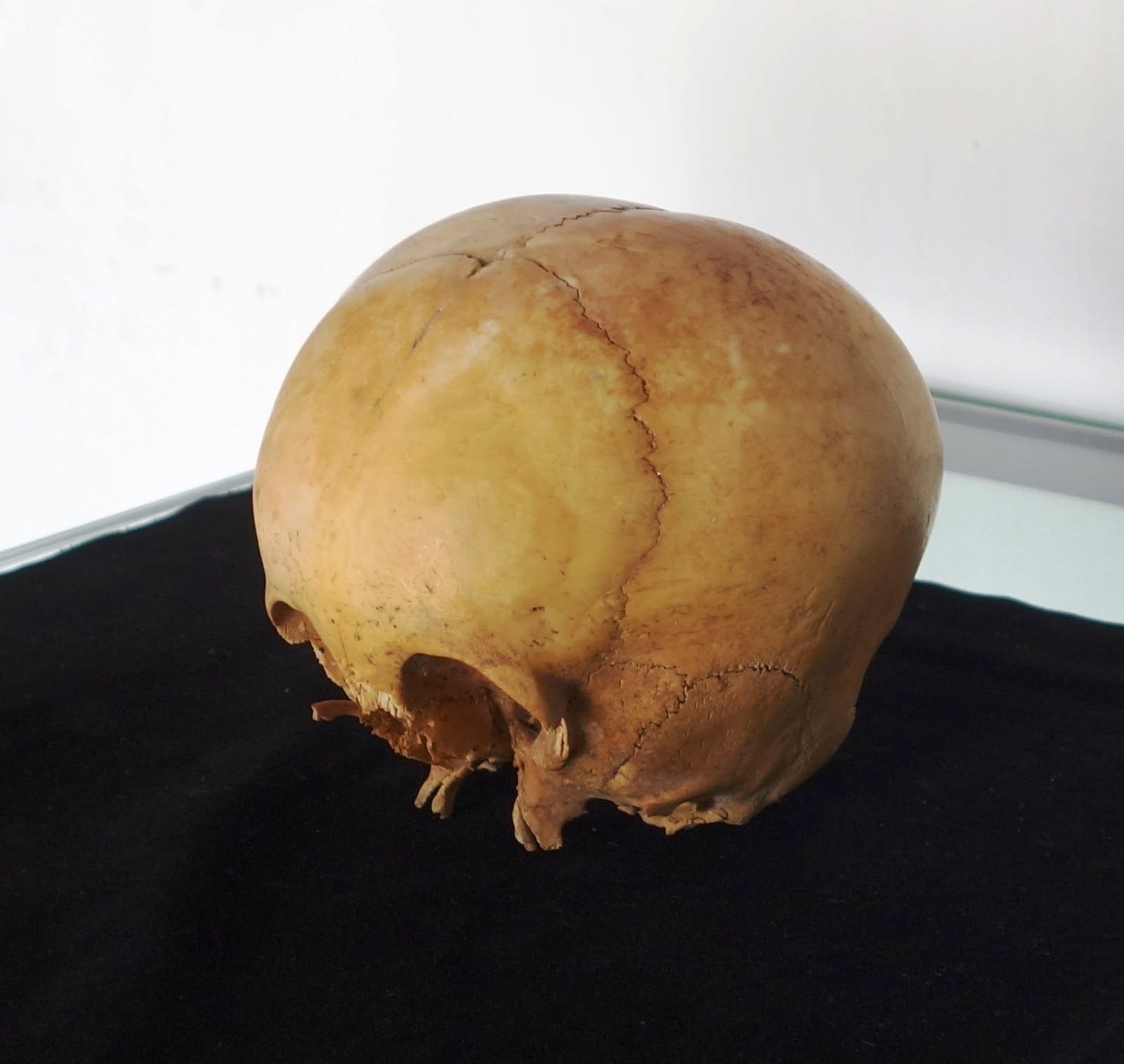
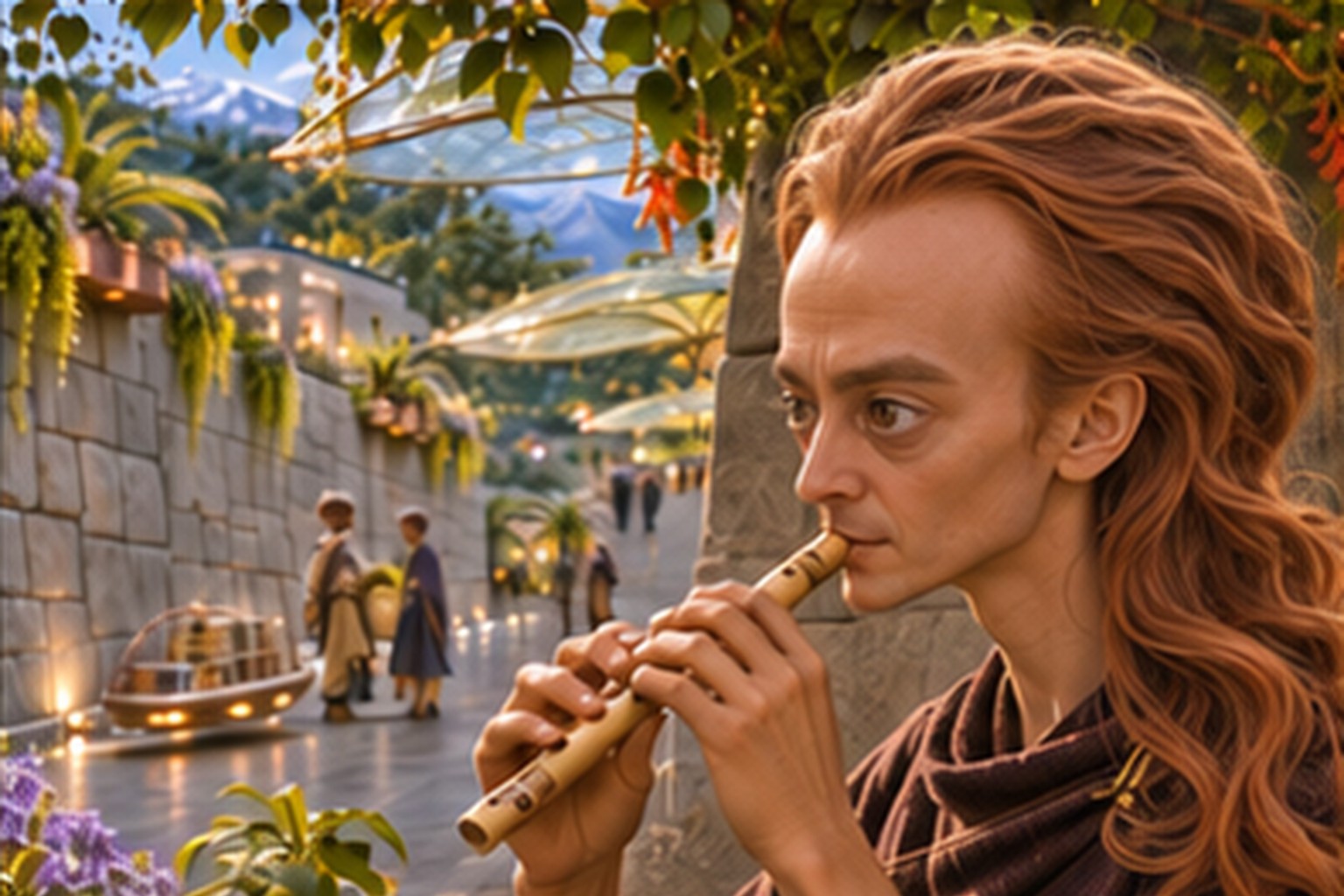
Story (fiction): When the water flows again, Ilun leaves his workshop and plays a signal on his flute in the alley, one the whole slope knows. The upper terraces answer with the same tune.
Starting point: The side view shows the round crown and the edge of the eye socket. The shape of the player's lips and jaw is imagined.
Original photo 10 and observations · Pairs 01 and 04 may show the same object as this pair.
11 · Exchanging baskets in the terrace city
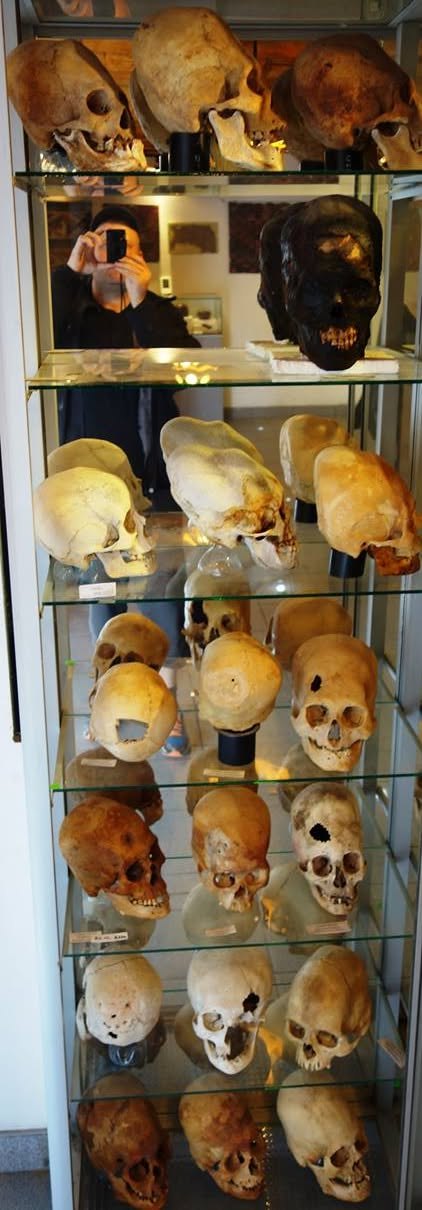

Story (fiction): On the terraces people exchange baskets. The gardener sends the first rescued plants to the market, and fruit comes back from the neighbouring terrace.
Starting point: The many outlines in the display case gave rise to a city view. The inhabitants in the foreground were designed for this scene.
12 · The weaver mends a shade cloth
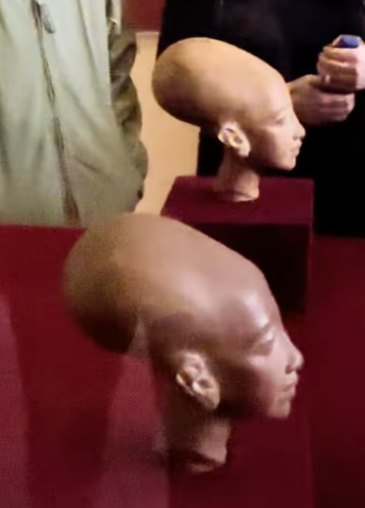
Look at the curve of the crown, the line of the forehead and how far the back of the head extends. Exact proportions cannot be compared between photos taken from different directions. Below, the illustrator's interpretation.
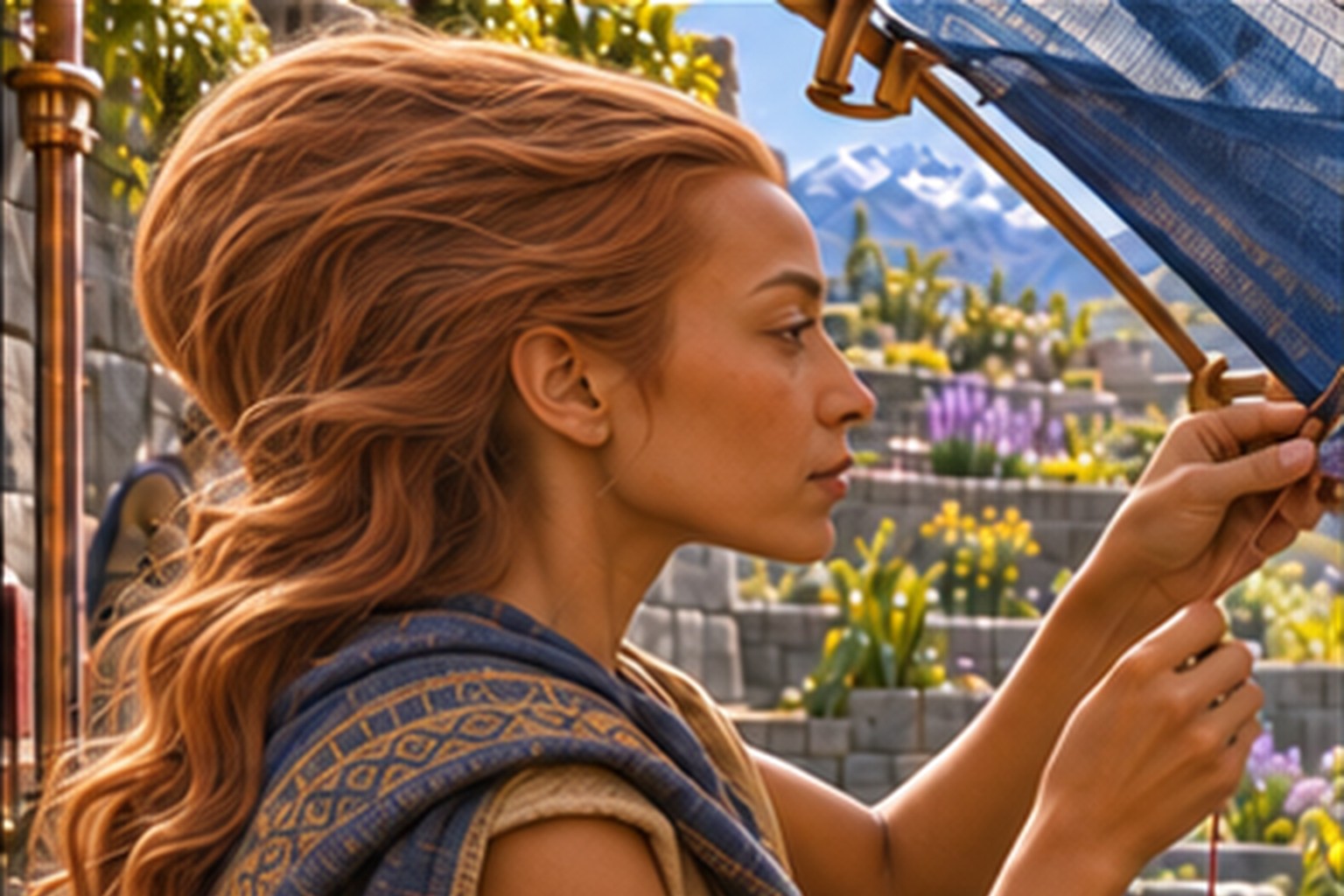
Story (fiction): As evening falls, Tiru mends the edge of the shade cloth. It protected the dividing point all afternoon, and the wind tore a small hole in its corner. She pulls the thread through before dark.
13 · The channel gauger adjusts a sluice
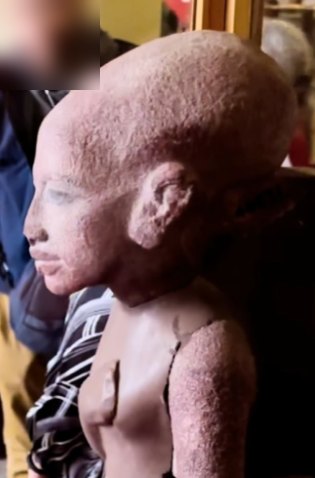
Look at the curve of the crown, the line of the forehead and how far the back of the head extends. Exact proportions cannot be compared between photos taken from different directions. Below, the illustrator's interpretation.
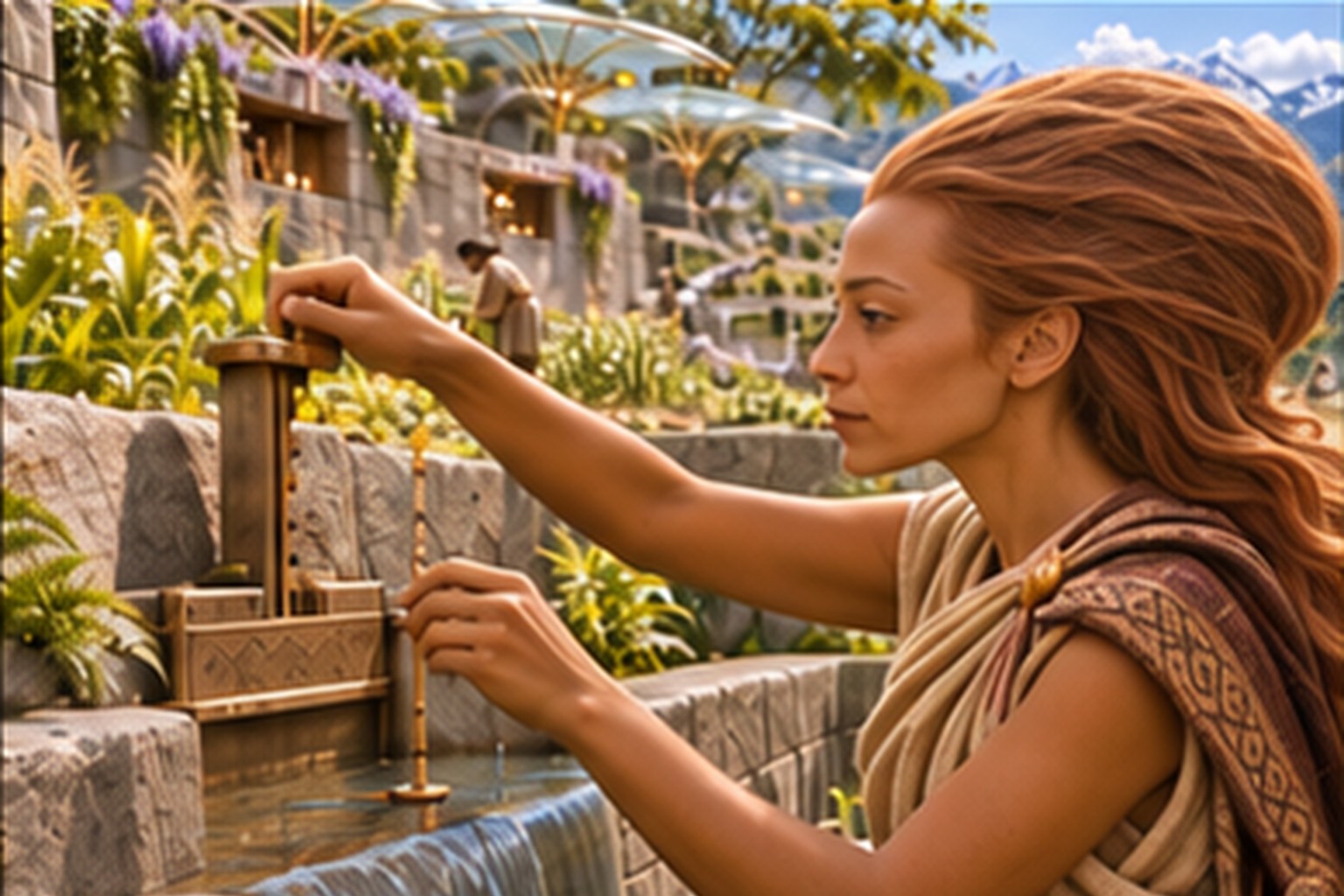
Story (fiction): Last of all the channel gauger sets the sluice for the night and records the day's measurements for Sava. In the morning Ilun's prism will check whether the angles held overnight.
Cairo's stone faces and Peru's skulls
The Amarna heads are sculptures, and museums describe the elongated crown as a stylistic feature of Amarna art (Global Egyptian Museum, JE 44869 · Egyptian Museum, Berlin, ÄM 14145). The Peruvian skulls are human remains; in the studied Paracas material the long head has been interpreted as shaping done in childhood (research background). The link between them is only visual.
Pairs 12 and 13 set the stone heads Jani filmed at the Egyptian Museum in Cairo on 15 February 2024 alongside the Peruvian skull photos and the stone city figures. The Cairo source images are crops of stills from Jani's video (museum tour from 51:31). Bystanders' faces have been blurred. The Cairo photos and research background are also on the fact page: Cairo 2024.
The object numbers cannot be made out in Jani's frames, so the museum's object record is a point of comparison, not an identification. The collection of the Egyptian Museum in Cairo includes the quartzite head JE 44869 found at Tell el-Amarna, which according to the Global Egyptian Museum is probably Meritaten, Akhenaten's eldest daughter. The German Deutsche Orient-Gesellschaft excavated it in 1912 from the workshop of the sculptor Thutmose (Global Egyptian Museum). A stone face of an Amarna princess of the same type is also in New York (The Met, Head of a princess from a group statue). The Cairo museum's own object record: Head of Princess, daughter of Akhenaten.
The same display in the Peruvian video
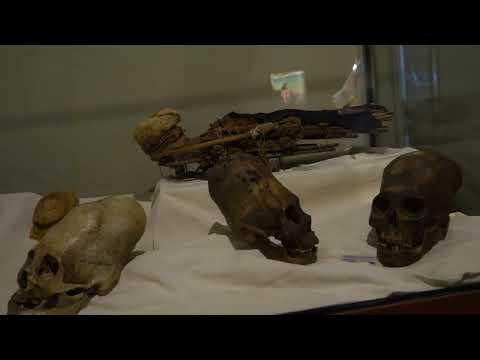
The shared feature helps to identify the display. The exact find site and the identity of the objects in the display case remain open. Photo 09 on the fact page.
Another example from Amarna: the Berlin family relief
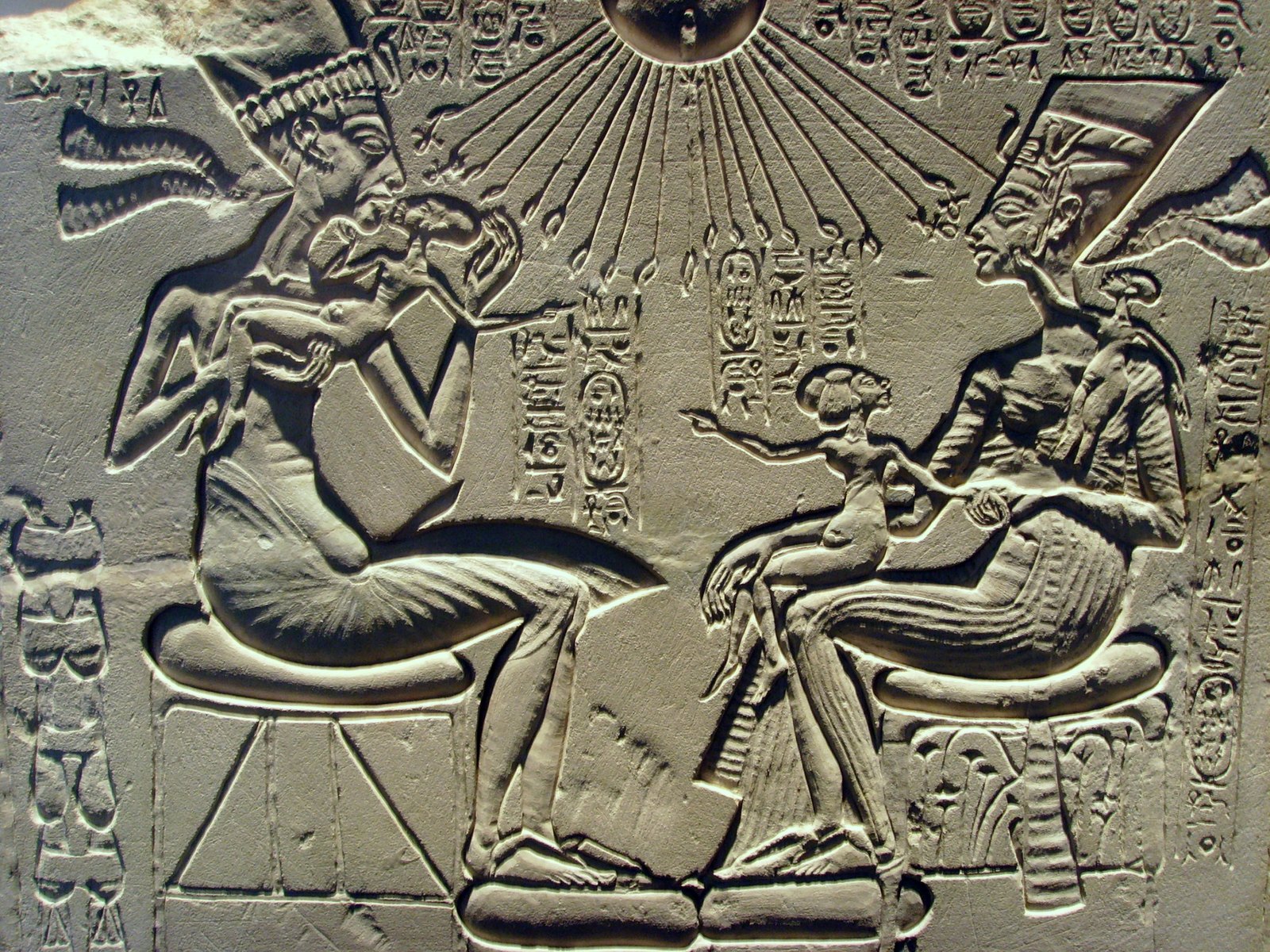
The Berlin family relief shows how the side profiles of the royal family were also depicted carved into a flat stone surface. The daughters' crowns lengthen backwards. According to the museum, the feature is a pure stylistic device and not a sign of a hereditary or intentionally produced shape (the museum's description of the relief).
The figures' expressions, skin tone, hair and daily life belong to the imagined stone city. Some of the photos show the same object from different directions.