What do the skulls tell us?
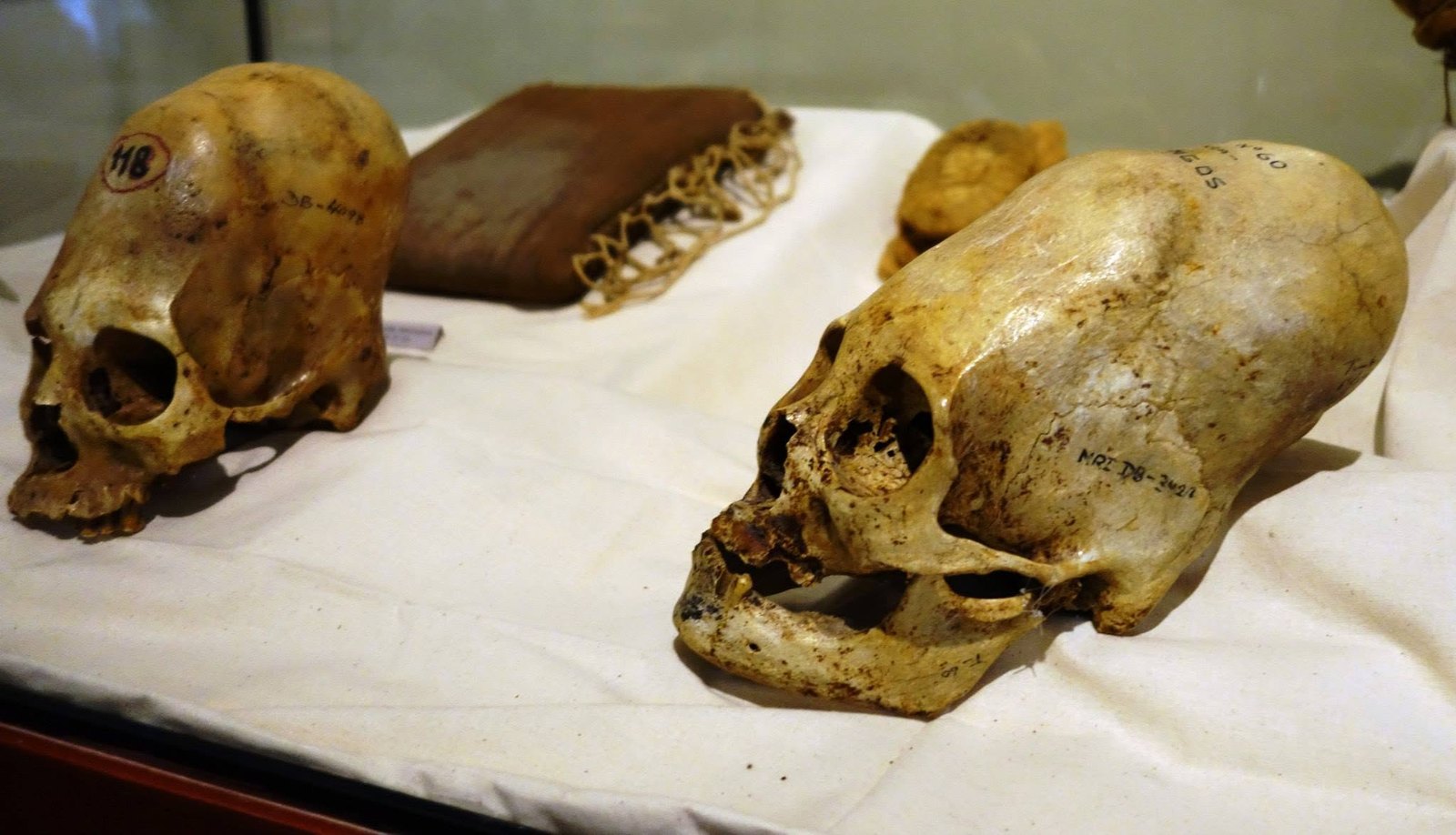
On the side of the skull, MRI DB is written in ink. Could a few letters tell us where this skull came from and where its records are? This page follows the clue as far as the opened sources go.
How the material came together
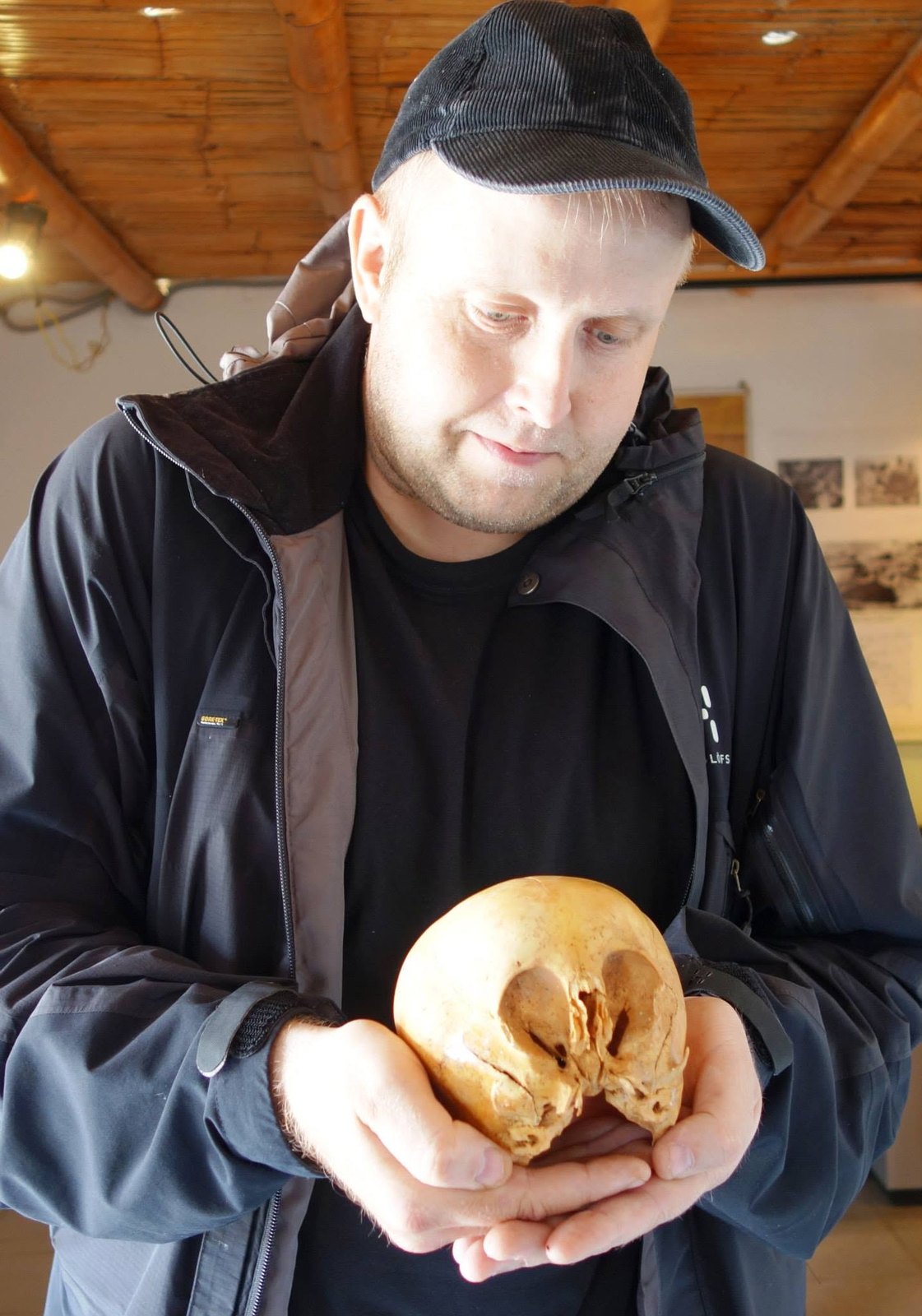
“I have travelled all over the globe, and here I am holding the Starchild 2 skull in my hands.”
- Peru, 1 November 2014. Jani photographed elongated skulls in Peruvian museums and in a private collection. Photos 01 and 03–11 are photographs from this visit; in photos 03 and 04 Jani himself is holding the skull. In the Travel South videos the owner of the collection talks about his skulls, Starchild 2 is presented by name, and filming in the back room of one museum was specially permitted. Photo 02 is a compilation of these videos.
- Cairo, 15 February 2024. In the Egyptian Museum he came across stone heads whose crown extends far back in the same way.
- Archive 2026. The photos, videos and open sources were reviewed: museum guides, object records and studies.
Three questions
- Where does the code on the skull lead? The ink-written MRI DB and the museum's object records.
- Why is this called Starchild 2? The name is borrowed from a more famous skull from Mexico.
- Why does the long head recur in Cairo's stone images? Amarna art and the Peruvian skulls side by side.
Along the way: the display case of three heads with hair, the collection owner's account and what the studies say. All eleven photos with their observations are in the photo index at the end.
The skulls in the photos are human remains. This page tells only what can be seen in the photographs and exhibition labels and what published research says. A photograph cannot tell us the age, illnesses or origin of the deceased.
Photos 01 and 03–11 are Jani Korpi's photographs from Peru in 2014, from the same visit as the museum videos filmed on 1 November 2014. Photo 02 is a compilation of these videos. The year is based on the videos' original file names (20141101…): the arrangements in photos 01 and 08 appear identical in the videos _IlZYy2Mbpk and qlPq2wTEFEc, and Travel South's 2011 Peru videos contain no skull or museum footage. Left and right mean the viewer's left and right. The same object may appear in several photos.
How to read the labels
- T
- Research finding
- A
- Chronicle account or other document
- L
- Legend or narrative
- S
- Speculation
See how an imagined figure grew from the shape of a skullFaces of the Stone City: 13 image pairs. AI illustration, fiction, not research.
An old photograph, a new tracing question: where does MRI DB lead?
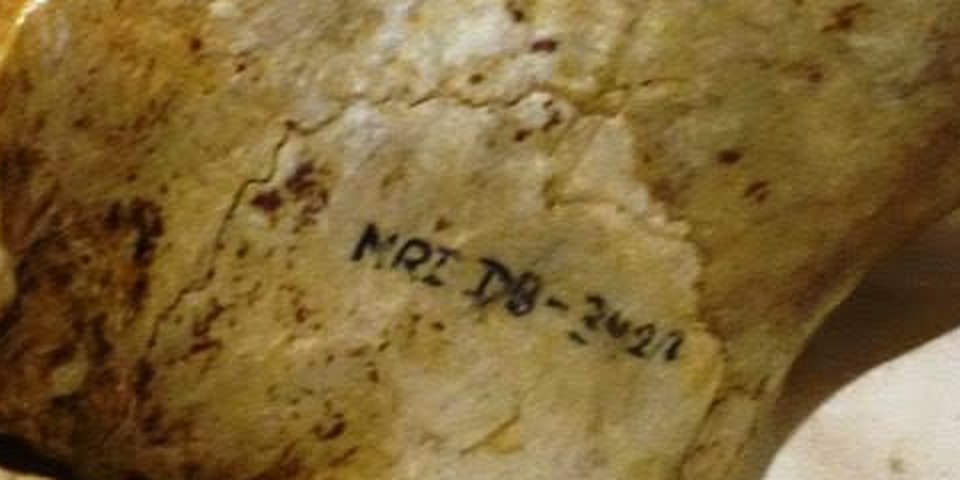
- What the photo shows. On the side of the right-hand skull, MRI DB and a string of numbers are handwritten. The number possibly looks like 3421, but the end is uncertain, so the reading is left open.
- Comparison with museum material. APage 25 of García Soto's 2018 report shows an object record from the Ica regional museum. Under “Otros códigos e inscripciones” it reads MRI-DB-3869. The skull on the record is in the Museo Regional de Ica “Adolfo Bermúdez Jenkins”, its find site is recorded as Hacienda Chongos and its other code as MRI-01050-12 [2].
- Result. A match was found for the format of the code: the same MRI-DB prefix is used on the Ica museum's object records. An individual match remains open. The numbers do not match, and the prefix alone neither identifies the skull Jani photographed nor links it to the report's DNA results.
- Next question. Confirming the full number from a sharper photo, and the corresponding catalogue record from the museum.
Three places are kept apart. The report's skulls and object records come from the Ica regional museum [2], which is a different institution from the Navarro museum [3]. The display case of three heads with hair and the collection owner's account are from the Navarro museum in Paracas (display case). The name of the back room is not shown in the video (back room). Where photo 08 was taken has not been confirmed, and identifying one place does not identify the whole material. A reverse image search with all of Jani's skull photos (20 November 2026) found the same display cases or labels nowhere else online. A traveller's TripAdvisor photo from the Navarro museum shows a glass-shelf display case of the same type as in photo 07, but the same skulls cannot be identified in it [20].
The display case of three heads with hair
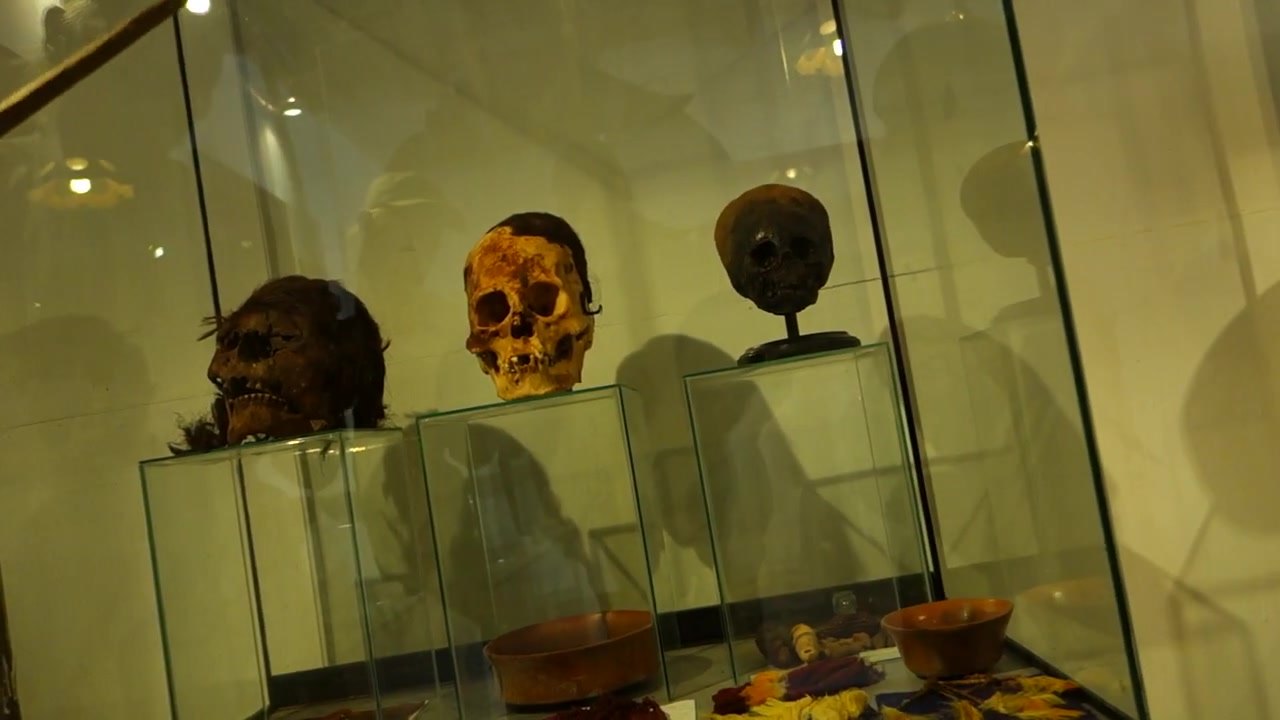
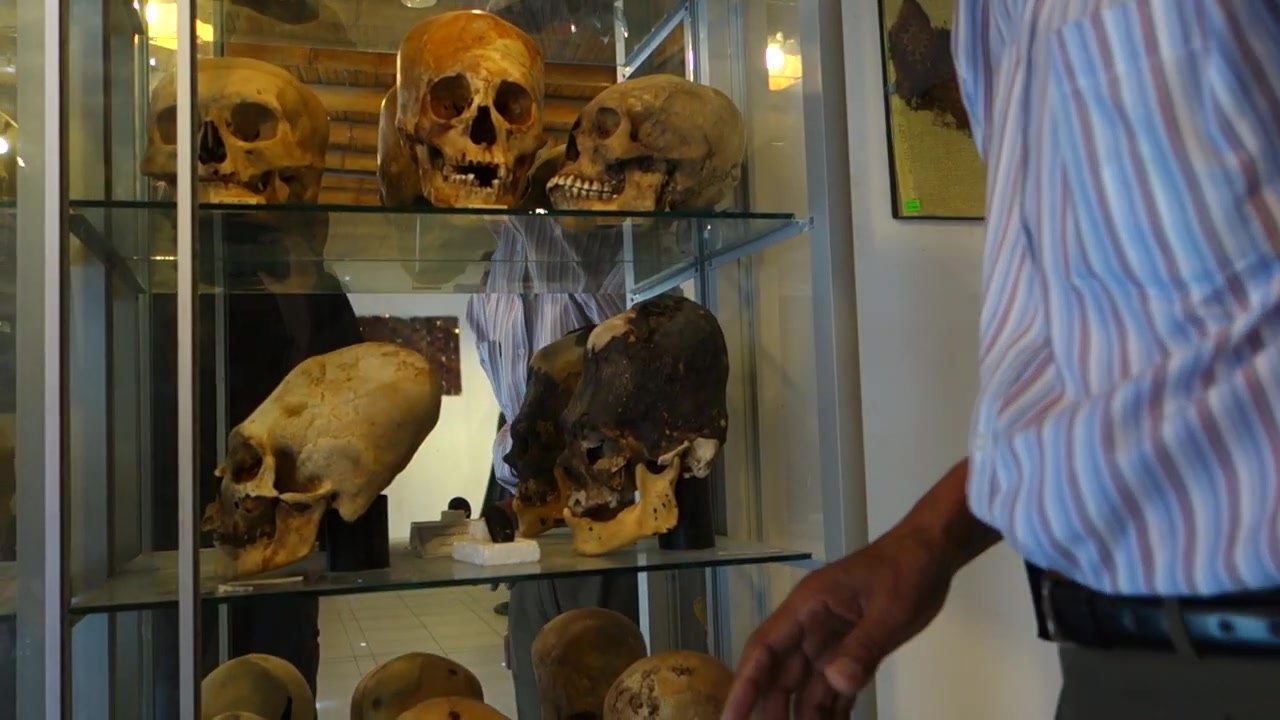
In Jani's video dNgc018HQNA three heads rest on separate glass stands. Dark hair-like material surrounds the side of the left-hand head. The middle one is an elongated pale skull with a dark area of hair on the crown. The right-hand dark head, smaller than the others, is on its own stand.
Page 175 of the Peruvian Ministry of Culture's 2023 museum guide shows three very similar-looking heads in the same order on glass stands. The video was filmed at the Museo Histórico Paracas “Juan Navarro Hierro” in Paracas. The guide presents the museum under this name, and it is run by the Navarro family [1]. Jani Korpi confirmed the filming location in 2026. The Ica regional museum is a different institution [3]. The guide does not confirm a family relationship, a shared grave or where the other photos were taken. The light and angle differ from the guide's photo.
The collection owner's account
LIn the video dNgc018HQNA (filmed 1 November 2014) the narrator is the owner of the collection at the Museo Histórico Paracas “Juan Navarro Hierro”. According to him, the collection is national heritage but in his ownership. He says that one skull is not from the Americas and states that its DNA matches Northern Europe: Norway, Sweden, Finland or Russia. About the display case of three heads with hair, he says that a father, a mother and a baby were found in the same grave, and that the father's and mother's hair was red and the baby's blond. In the video the owner does not show a research report, a laboratory or a sample code.
Is there a research code for the individual in the photo? None was found. No readable code is visible on the heads in the display case, and the museum guide does not mention a DNA study [1]. In García Soto's report, one skull from a looted grave at Cerro Colorado (S8) yielded mitochondrial group H, which according to the report is typical in Northern Europe. A second sample from the same skull yielded group B5 [2]. The report's skulls are in the storage of the Ica regional museum, and none of them can be linked to the heads in this display case.
The videos' question-style titles, such as “Ancient Skulls of Peru: Evidence of an Advanced Human Species?” (aqPy1X1mhGY) and “Ancient Skulls of humanoids: Proof of an Advanced Human Species?” (yIA-Dykw_40), are the names of the videos S. Published research does not support the idea of a separate human species: in the studied Paracas material the skulls belong to people whose heads were shaped in childhood [4].
Starchild 2 and the back room
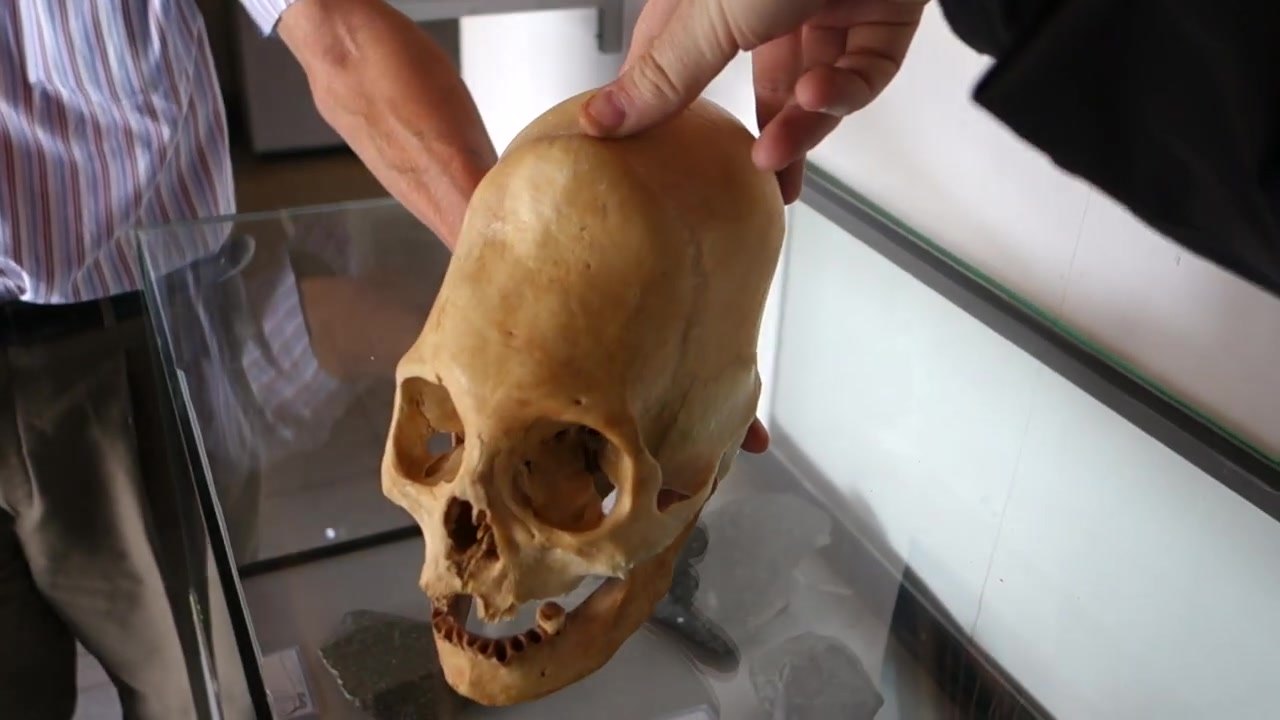
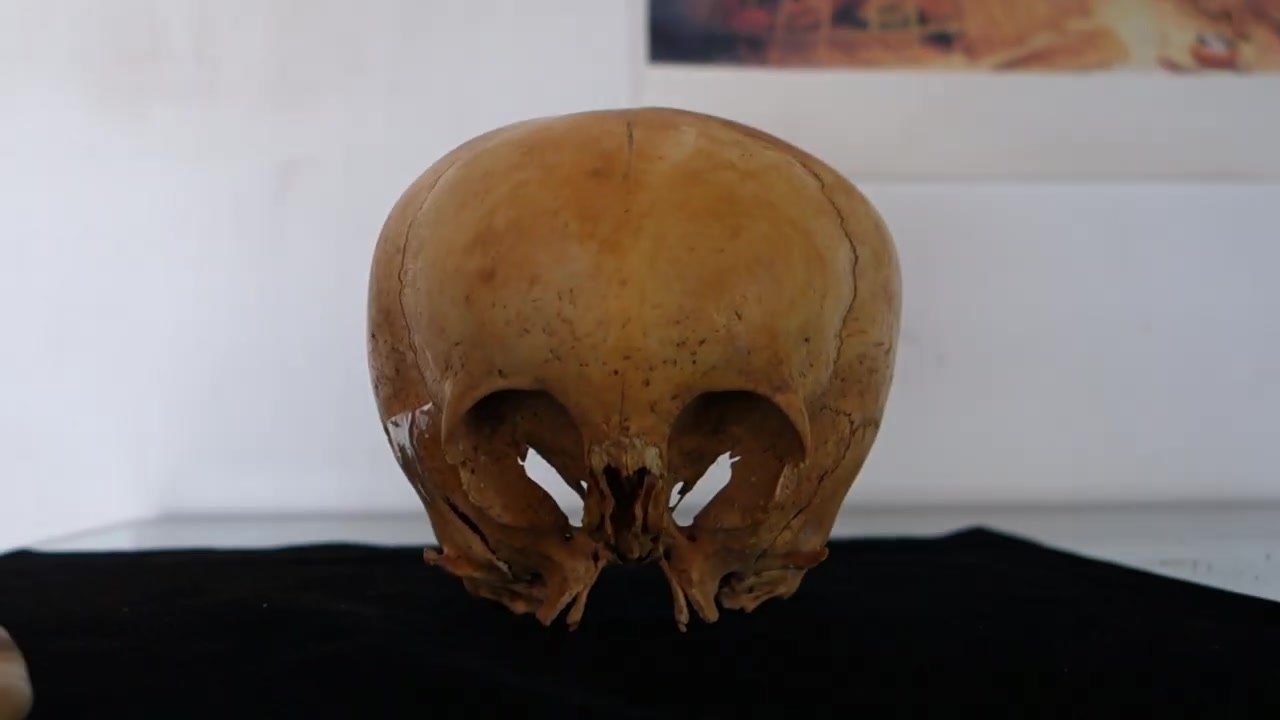
LIn the collection and in Jani's video Investigating the Starchild 2 skull of Peru (Nov 2014) the wide, round skull is called Starchild 2. The name is borrowed from another, more famous skull from Mexico. The two skulls are best kept apart:
Starchild 1 · Mexico
- Source of the name
- The skull later came to be called the Starchild skull [7]. It was made famous by the American author and researcher of paranormal phenomena Lloyd Pye (1946–2013), who acquired the skull in the late 1990s and presented it for years as a human–alien hybrid [14]. Pye led the Starchild Project, which its own texts describe as an informal research group that has coordinated research since February 1999 [15]. Pye's official website lloydpye.com is still online [16].
- Known origin
- LAccording to the story, the skull was found in the early 1930s in the Chihuahua region of Mexico [7]. The find story is not a research finding.
- LAccording to the project's own account, in the 1930s an American teenage girl found two skeletons in an abandoned mine tunnel in the Copper Canyon area and took two skulls home to El Paso. In 1998 the skulls were given to Ray and Melanie Young, who asked Pye to join. According to the project, radiocarbon dating gave the skull an age of about 900 years [15].
- Research data linked to the individual
- AAn article in the magazine Skeptical Inquirer summarises two DNA tests from 1999 and 2003, according to which the skull is human [7]. The original laboratory reports were not opened for this page, so no more detailed claims about the results are made.
- ATrace Genetics laboratory report of 12 August 2003, whose text has been published online as a copy of the project's material: the mitochondrial DNA of the Starchild skull sample (SCS-1) matched, in two separate extractions, Native American haplogroup C, and the sample of a second skull presented with it (SA-1) matched haplogroup A. According to the report, the different mtDNA types rule out a mother–child relationship, and the mothers of both were probably Native American. Nuclear DNA could not be amplified from the Starchild sample [17]. A signed original is not available to view.
- LAccording to the project's own 2011 report, an unnamed geneticist sequenced four mtDNA fragments, and the project interpreted the differences from humans as exceptionally large. According to the report, some of the researchers remain anonymous for now [15]. The result has not been published in peer-reviewed form, so here it is a claim by the project.
Starchild 2 · Peru
- Source of the name
- LThe collection and the video's narrator, Travel South, 1 November 2014.
- Known origin
- A Peruvian collection. Jani photographed the skull (photo 04) and filmed it on 1 November 2014. The find site is not known.
- Research data linked to the individual
- The research done for this page found no published study that can be verifiably linked to this individual. The DNA results of the Mexican skull cannot be transferred to this skull.
The only thing the two skulls have in common is the name.
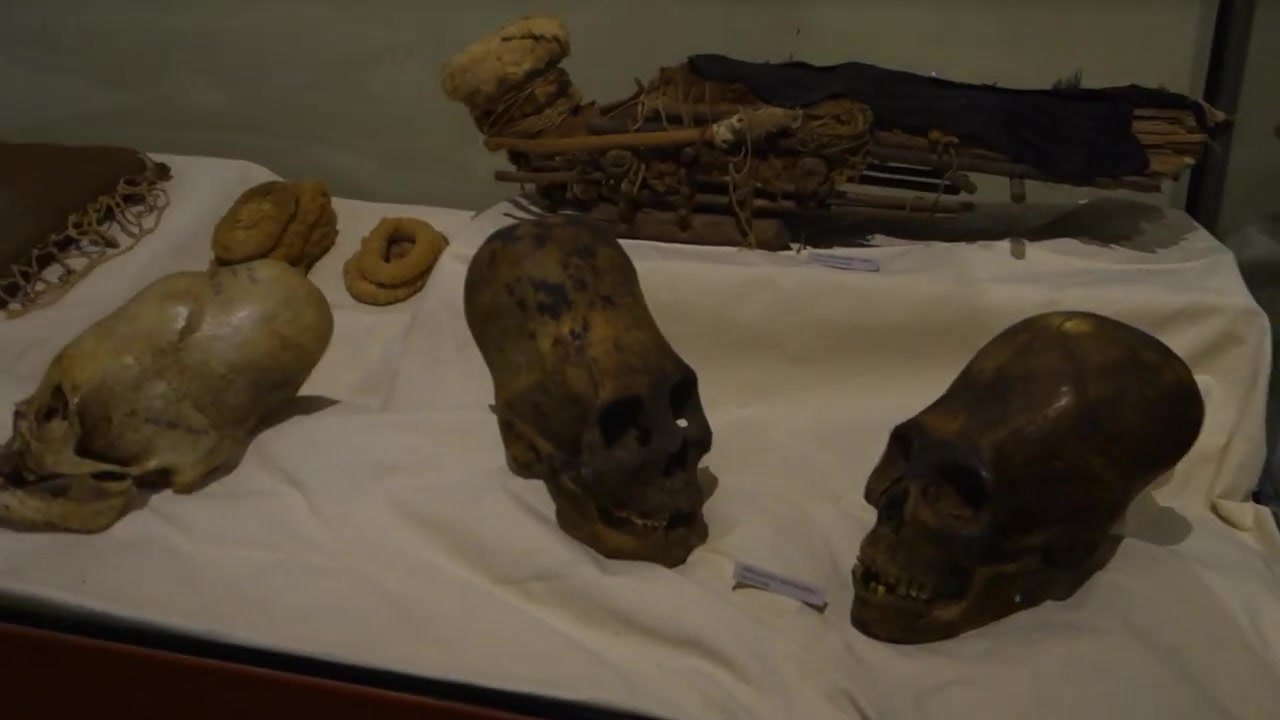
On the same day, 1 November 2014, Jani filmed, with permission, the back room of another museum, where skulls and wrapped bodies of the dead lie on a white cloth (qlPq2wTEFEc). The name of the place is not shown in the video. The arrangement in photos 05 and 09 is probably the same.
Cairo 2024: similar long heads in Egypt
On 15 February 2024, at the Egyptian Museum in Cairo, Jani photographed stone heads whose crown extends far back. The shape resembles the Peruvian skulls, but the photos were taken on another continent and about nine years later than the Peruvian skull photos (2014).
Side by side: sculpture and human remains
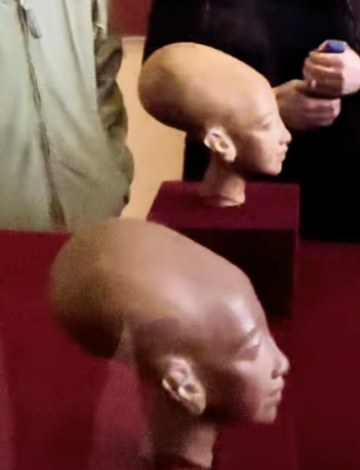
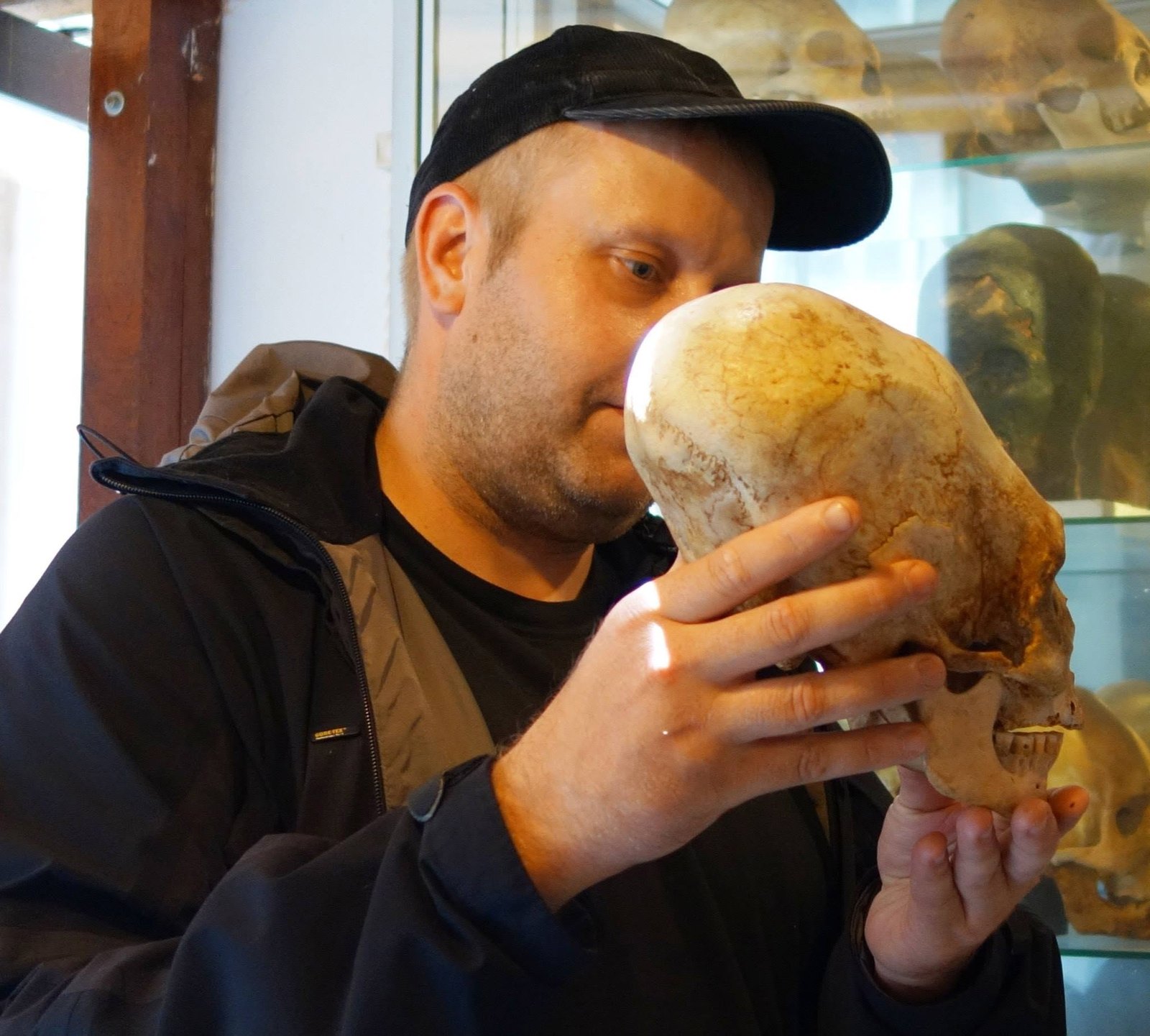
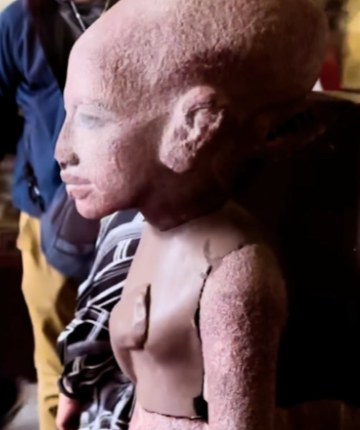
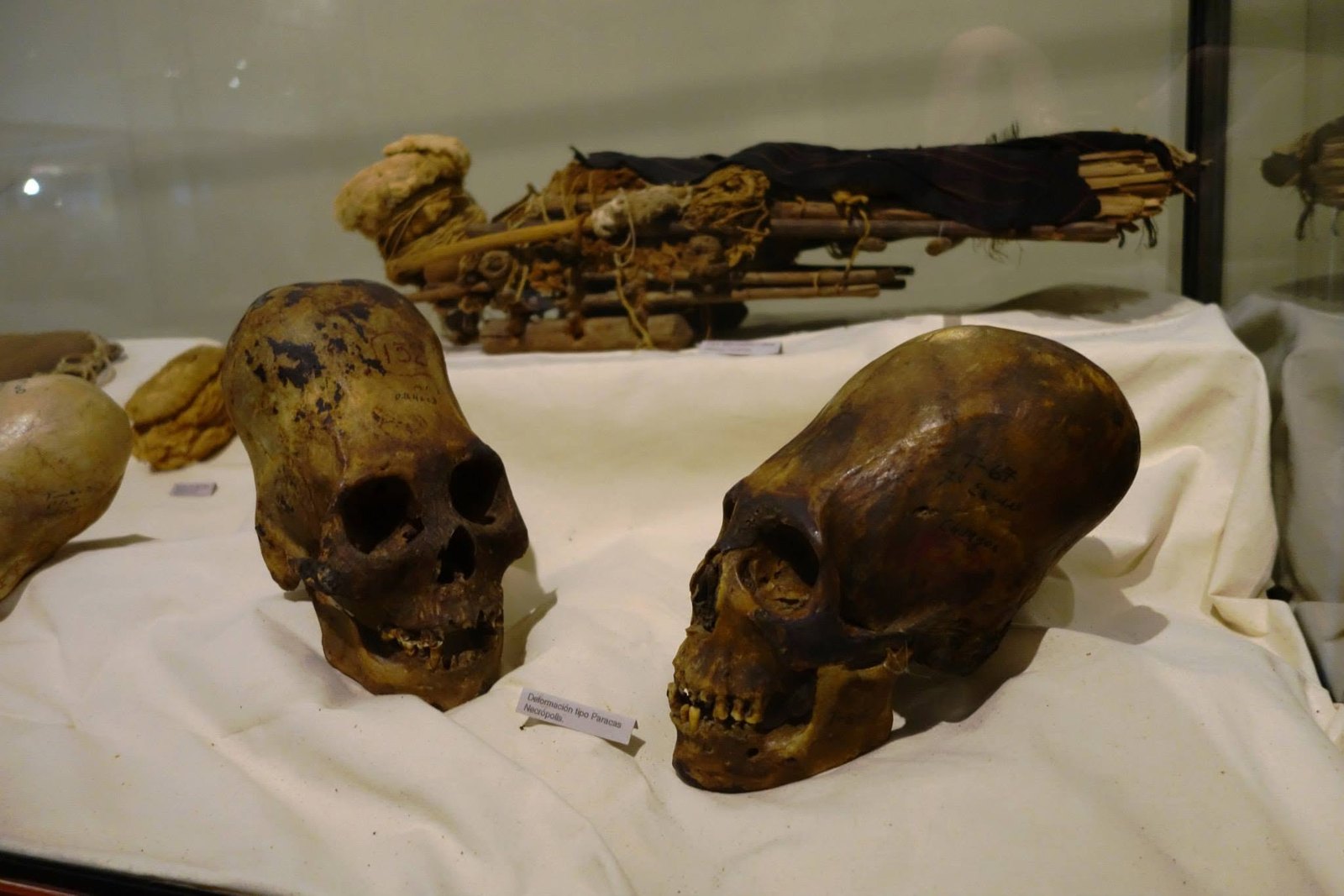
What to look at: the curve of the crown, the line of the forehead, and how far the back of the head extends behind the ear. The photos were taken from different directions and distances, so exact proportions cannot be compared.
Is the long crown an artistic convention or a real head shape? AThe object description of the Egyptian Museum in Berlin answers: according to it, the daughters' backward-elongated heads are a pure stylistic device and not a sign of hereditary or intentionally produced deformities [13]. TAccording to the Metropolitan Museum's exhibition publication, art historians have held that the Amarna artists exaggerated entirely ordinary physical features for stylistic reasons [19].
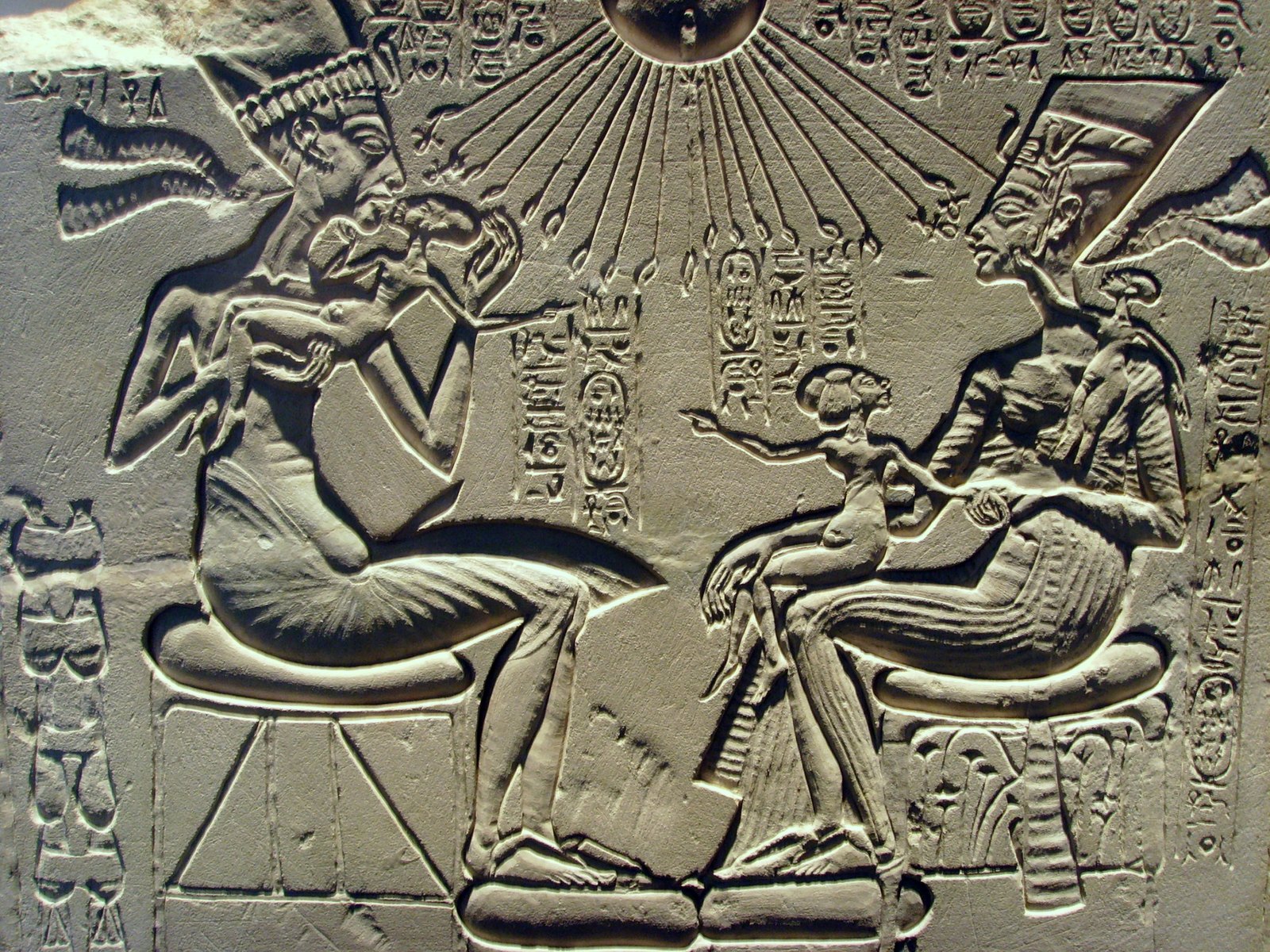
TAmarna-period art depicts the daughters of Pharaoh Akhenaten with elongated heads. According to the Global Egyptian Museum, the Cairo museum's quartzite head JE 44869 is probably Meritaten, Akhenaten's eldest daughter, and it was found in 1912 in the workshop of the sculptor Thutmose [11]. A princess head of the same type is in the Metropolitan Museum in New York [12]. According to the Cairo museum's guide, JE 44869 is 21 cm high and on display in room 3 on the ground floor [18], and another princess head from the same workshop, JE 44870 (yellow quartzite, 19 cm), is also in Cairo [19]. Jani's photo shows two heads side by side, but their correspondence to these two objects cannot be confirmed. The object numbers cannot be made out in Jani's photos, so the exact identification of the heads he filmed remains open.
Watch in the video: two stone heads, at 51:22 · museum tour from 51:31 (Travel South: Exploring the Egyptian Museum in Cairo, filmed 15 February 2024). The Peruvian counterpart: Investigating Elongated Skulls in a Peruvian Museum (filmed 1 November 2014).
The link to Peru is only visual. The Amarna heads are sculptures, the Peruvian skulls human remains; in the studied Paracas material the long head has been interpreted as shaping done in childhood (research background). The Cairo photos were taken in 2024, the Peruvian photos in 2014. AI illustrations of these pairs are on the stone city page: pair 12 and pair 13 (Cairo's stone faces and Peru's skulls).
SWhat would you set out to investigate?
The photos raise questions that many viewers ask. Here they are gathered as speculation, and for each one we say what kind of evidence would settle the question.
- Are the elongated skulls another species?
- It would take a sample code linked to the individual, a catalogue record, and a published analysis of the skeleton and genome compared with human material. In the studied Paracas material the skulls are human [4].
- What would DNA tell us?
- The first step is a sample code that links this particular skull to a laboratory report. Without it, the DNA result told in the video (the owner's account) remains a story.
- Was there an advanced civilisation behind it?
- It would take a find context, dating and artefacts, published in a verifiable way. An imagined version is opened up in the story Faces of the Stone City, and it is fiction.
What can be concluded from the studies?
| Topic | What the research says | Source |
|---|---|---|
| Cranial shaping in Paracas | TAmong the dead of Paracas Cavernas (Cerro Colorado, about 550–200 BCE), the skull shape of 159 individuals was classified. Shaping was observed in 98 per cent, and the most common type was vertical tabular shaping. The figure concerns the dead in this study, not the whole population. | [4] |
| Proportions of face and skull | T19 adult skulls from Peru in the collection of the Museum of Anthropology and Ethnology of the University of Florence, 9 shaped and 10 unshaped. The shape of the upper part of the skull differed between the groups; the average shape of the palate did not differ significantly. The study concerned the palate, not the appearance of the face, and the sample was small. | [8] |
| DNA of the region | T218 individuals from the Palpa area, the Paracas peninsula and the highlands, about 800 BCE–800 CE. A coding-region result was obtained from 130 individuals and a control-region sequence from 104. The Nasca population was genetically close to the preceding Paracas population. Population data do not tell the origin of the deceased in an individual photograph. | [10] |
| The 2018 report | AGarcía Soto's final report: eight skulls from the storage of the Ica regional museum, 30 samples, of which five produced a result. No radiocarbon dates were obtained. Results (table 3): B4 from two skulls, H and R from one, H and B5 from different samples of skull S8. In three the DNA was too degraded and one was not analysed. The author calls for further analyses. This is a report, not a peer-reviewed article. No link to the individuals in Jani's photos was found. | [2] |
| Openings and a small skull | THow an opening in the skull came about, the age of the deceased and the cause of the shape remain open from a photograph. An opening can be made by people, but similar openings are also caused by congenital anomalies, injuries, infections, tumours and damage in the soil. Telling them apart requires examining the bone. | [6] |
| The Starchild name | AThe name comes from the skull of a reported find in the Chihuahua region of Mexico. According to the Skeptical Inquirer article, two DNA tests in 1999 and 2003 found it to be a human skull. For Peru's Starchild 2 no object record or study was found that would link that result to it. | [7] |
What would confirming the individual require? The strongest candidate is the right-hand skull in photo 08 (tracing). A sharp close-up of the whole code or the museum's catalogue record could link the photograph to a find site and a sample code. Without this link, age, dating, kinship and DNA result remain open.
What is being researched on the topic in 2026?
Two studies published this year show where research on cranial shaping is heading.
- TWard et al., iScience 2026. The researchers compiled a dataset of 1,772 cases of intentional cranial modification from the Americas and examined its temporal and geographical patterns. According to the modelling, the practice appeared first in Central America and then spread to North and South America. Annular shaping appeared in regions where tabular shaping already existed, and spread rapidly [9].
- TOxilia et al., Applied Sciences 2026. A three-dimensional shape analysis of 19 Peruvian skulls (9 shaped, 10 unshaped): the shape of the braincase differed clearly between the groups, the shape of the palate did not. In these skulls, then, the shaping showed in the braincase but not in the average shape of the palate [8].
Neither study identifies the individuals Jani photographed or shows a link between Egypt and Peru. Nor does Oxilia's result confirm the faces of the illustrated figures on the stone city page; they are fiction.
Photo index: photos 01–11
For each photo, the most interesting observation is shown first. The remaining details open under More observations.
01 Round skull from the front
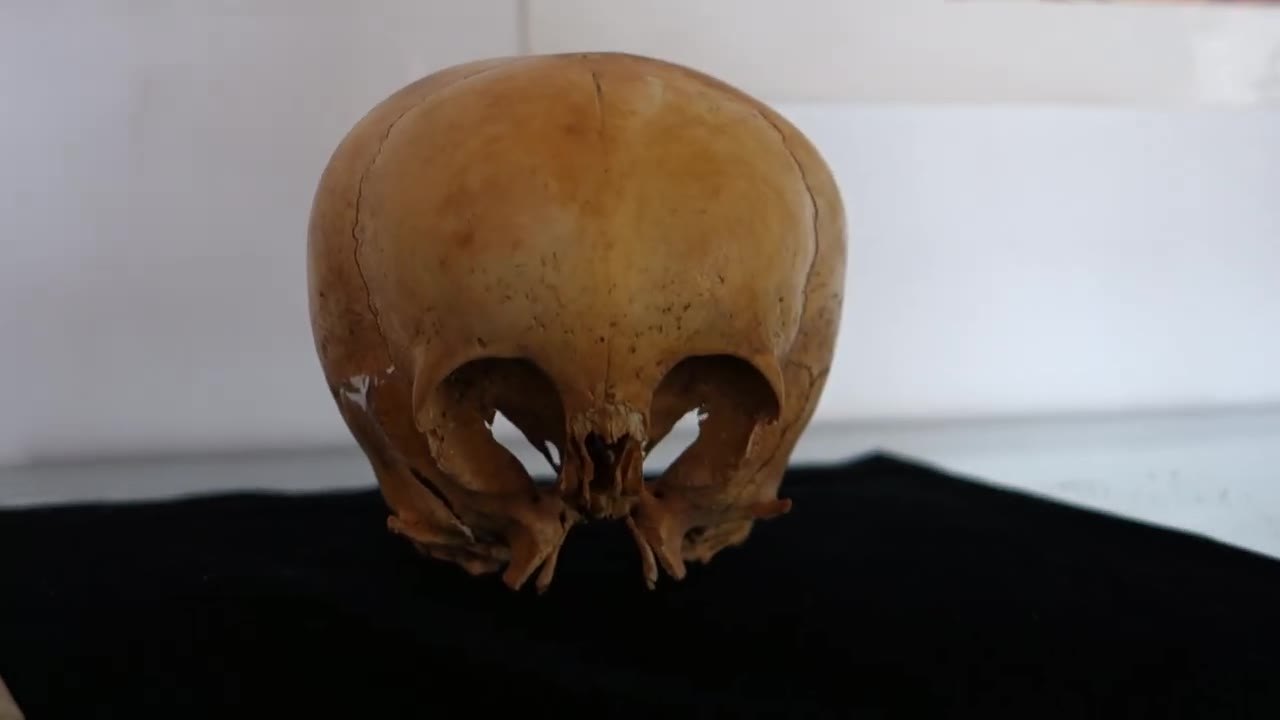
Upper part and eye sockets
The upper part of the skull curves broadly to both sides. Both eye sockets are visible, but the lower jaw and much of the lower face are missing from the photo. This changes the apparent proportion between head and face.
More observations
Comparison with photos 04 and 10
The round outline, the remaining eye-socket area and the missing lower face are consistent with each other. The photos share no visible object code, but photos 01, 04 and 10 probably show the same object from three directions.
Background of the Starchild name
The same object probably also appears in Jani's video _IlZYy2Mbpk, whose title calls the skull Starchild 2. The original Starchild skull is associated with Chihuahua in Mexico, and two DNA studies (1999 and 2003) found it to be a human skull [7]. No object record was found for the Peruvian skull that would link it to that case or confirm the nickname.
Illustration 01: The optician adjusts a prism (AI illustration, fiction)
02 Two elongated skulls in a video compilation
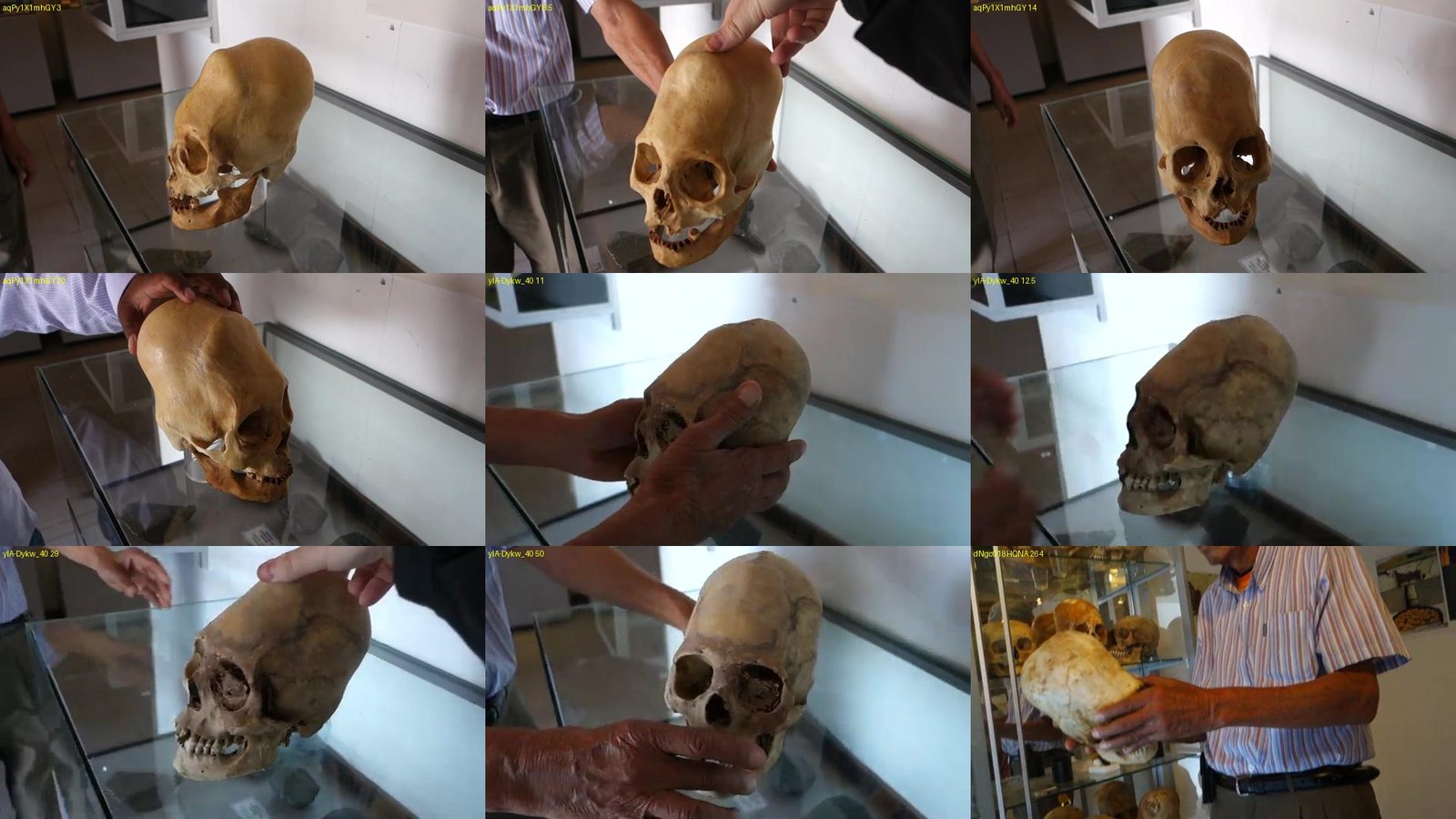
Top row and left frame of the middle row
The four stills from the video aqPy1X1mhGY show the same pale, high skull from several directions. The lower jaw is visible. Seen from above, the shape of the crown and the part extending behind the forehead come out better.
More observations
The second video
In the two right-hand frames of the middle row and the two left-hand frames of the bottom row, the source is the video yIA-Dykw_40. The darker surface, the different side profile and the visible teeth help follow the object from frame to frame. It is probably a different skull from the one in the top row.
Bottom right corner
The third video is dNgc018HQNA. A person is holding a pale skull. The frame cannot settle whether it is the same as either of the other two. The nine frames of the image therefore do not mean nine individuals.
Illustration 02: A load of stone passes down the lane (AI illustration, fiction)
03 An elongated skull in hands
The object in the photo
The pale skull is held sideways in hands. The face and teeth point to the right. The back of the head extends far behind the face and curves upwards. The fingers cover part of the temple and cheek area.
More observations
Link to the rest of the material
The last frame of photo 02 shows a similar pale skull in hands. The comparison reveals no shared individual code.
What the scale tells us
The hands help to gauge the size of the object. The photo has no scale bar or three-dimensional measurement, so volume or brain size would remain guesses.
Illustration 03: The stonecutter checks a joint (AI illustration, fiction)
04 A round skull in hands: Starchild 2
The object in the photo
Jani Korpi holds a pale, round part of a skull in both hands. It is tilted towards the camera, and the eye sockets are seen at an angle.
More observations
Identification
The shape and the missing parts of the facial area resemble the object in photos 01 and 10. The palms give a better sense of scale than a close-up taken on a table.
What remains open
The size of the palms and the perspective do not tell the age of the deceased. The photo cannot tell whether this is a child's skull or whether the shape is due to some illness. A research or catalogue record for the individual is missing. The collection calls the skull Starchild 2 (Starchild 2 and the back room).
Illustration 04: The gardener examines a seed pod (AI illustration, fiction)
05 Dark skull from the side
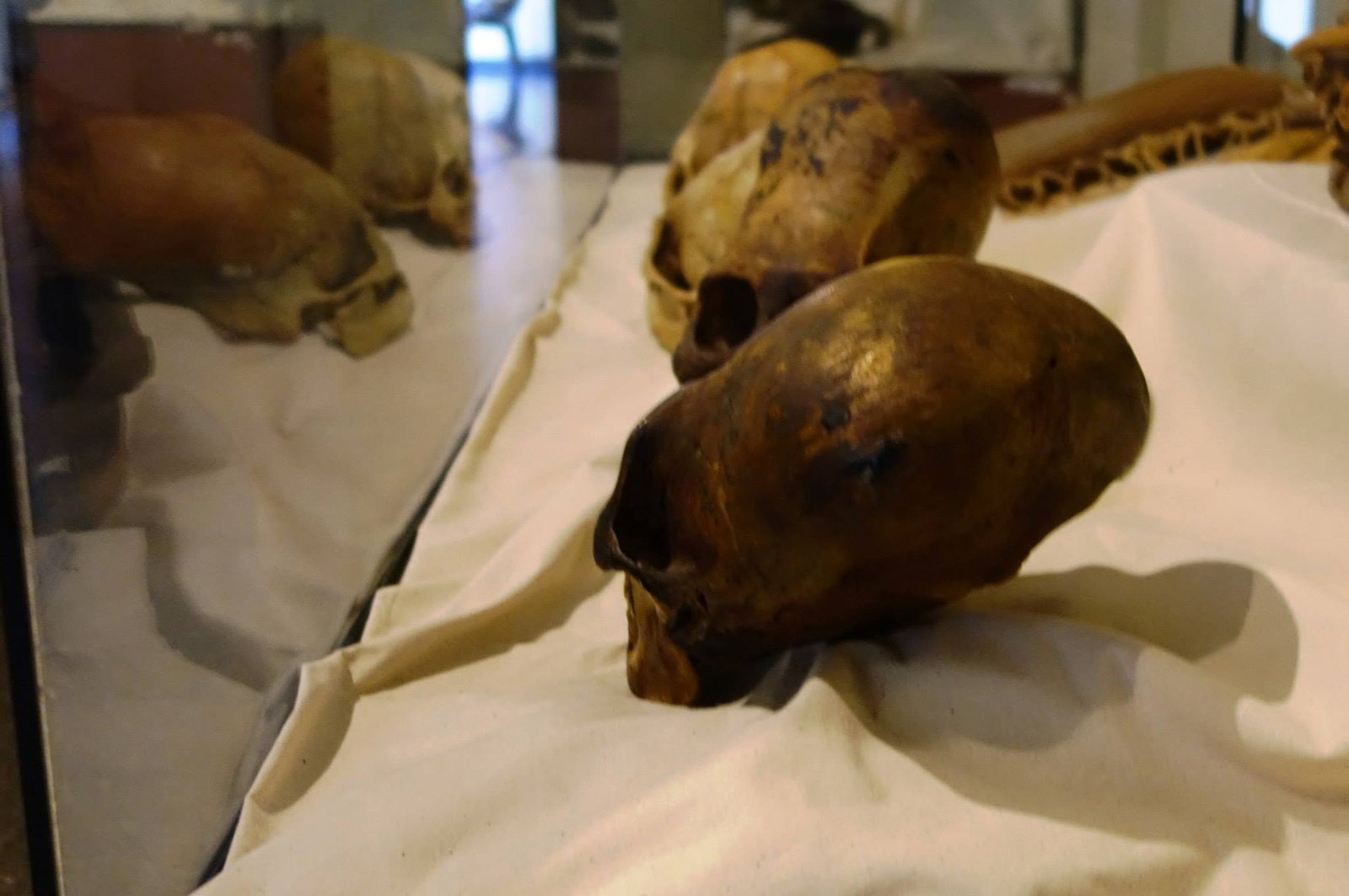
The dark skull in the foreground
The facial profile points to the left and the back of the head curves to the right. A side view shows the length better than a view from the front. No identifier can be made out reliably in this photo.
More observations
The paler skull behind
Irregular dark patches are visible on the crown. A similar pattern is visible on the left-hand skull in photo 09. The display base and the objects in the background also resemble the arrangement in photo 09, so this is probably the same display.
Reflection in the glass
The blurred profiles on the left are reflections in the glass. They cannot be counted as additional individuals. The colour of the light and the reflections also affect how the surface tone is read.
Illustration 05: The water master levels a channel (AI illustration, fiction)
06 Two skulls on the same shelf
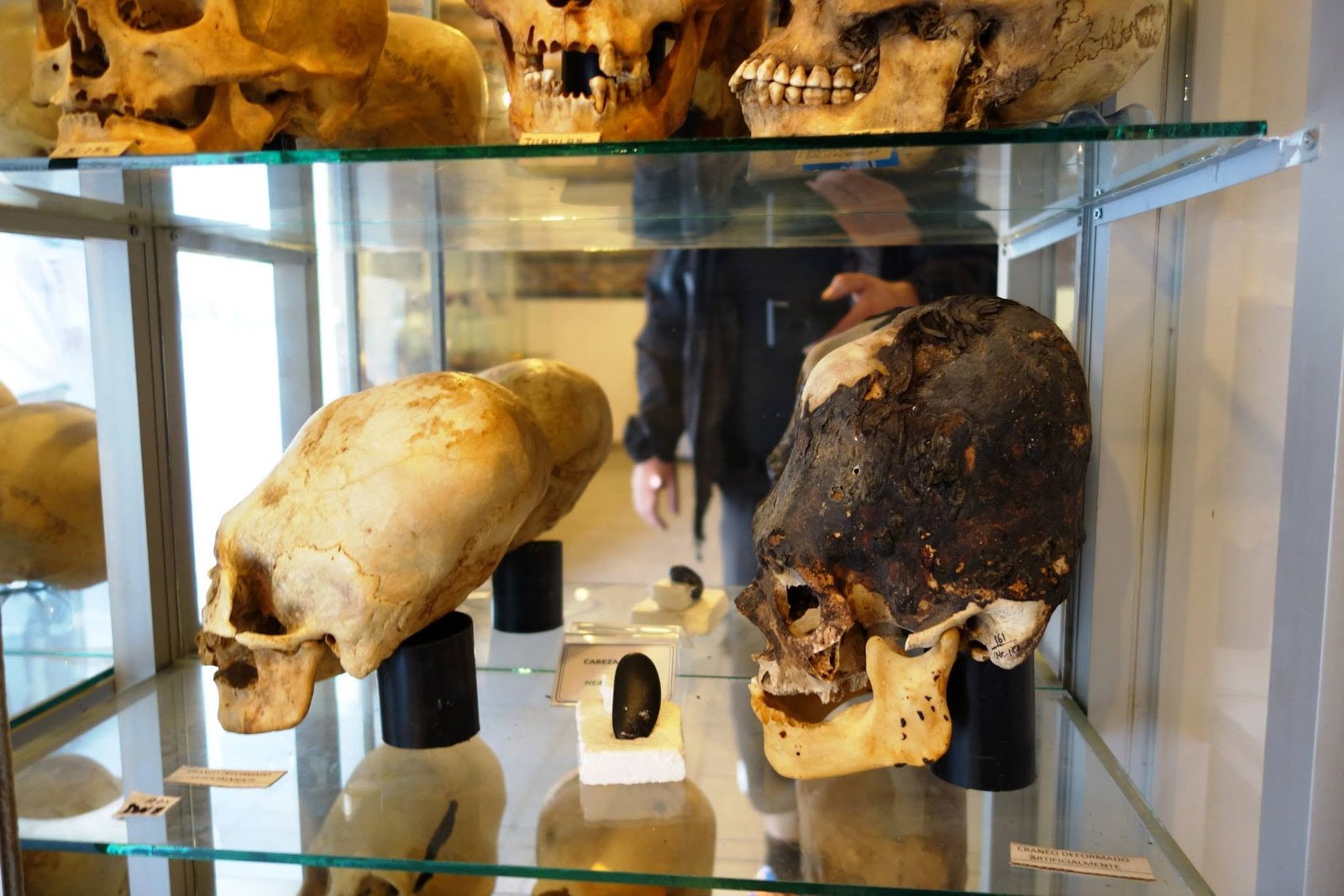
The pale skull on the left
The back of the skull curves diagonally upwards. The skull rests on a black support. The small text label in front is mostly too blurred to read.
More observations
The dark-surfaced skull on the right
Compared with the left-hand one, the outline of the crown is more upright. The lower jaw can be made out. Below the ear area the handwritten number 161 is visible. Finding out what it means would require the collection's register.
Who claims what
By the right-hand skull is an exhibition sign. The sign's classification is the exhibition's own and does not tell the individual's find site. Reflections are also visible in the glass.
Illustration 06: The weavers examine a cloth (AI illustration, fiction)
07 Three skulls on the same shelf
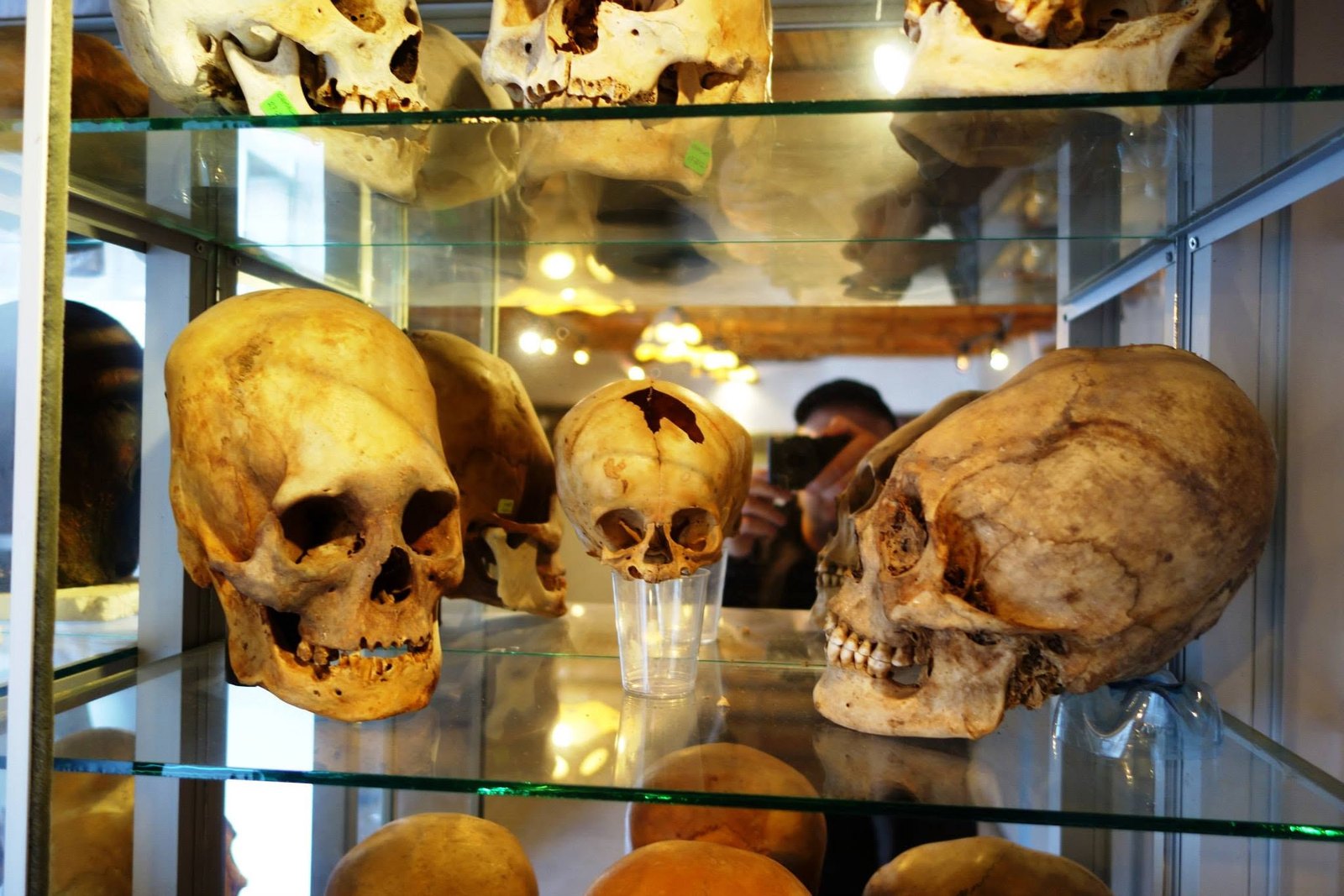
The skull on the left
A high pale crown and a narrow forehead area. The eye sockets, nasal opening and dental arches are visible.
More observations
The middle skull
Compared with its neighbours, the skull is small. It has been raised on a separate transparent support. There is an opening in the crown whose edge is visible. The photograph does not show how the opening came about or the age of the deceased. Finding the cause of an opening in a skull requires examining the bone, because similar openings can also be caused by congenital anomalies, injuries, infections, tumours and damage in the soil [6].
The skull on the right
The side profile points to the left, and the back of the head fills the right edge of the photo. The cheekbone arch and the rows of teeth can be made out. The photo shows no information on any kinship among the three individuals. This is a different arrangement from the display case of three heads with hair presented below.
Illustration 07: A meeting at the maize market (AI illustration, fiction)
08 Two skulls and handwritten codes
The skull on the left
The pale skull has a marking circled in red, and black writing is visible on the side of the forehead. The end of the marking looks like the number 18, but the reading of the whole marking is uncertain.
More observations
The skull on the right
On the side of the head a handwritten code beginning MRI DB can be made out. The string of numbers possibly looks like 3421, but the end is best left open. Markings are also visible on the crown.
Register comparison
The same MRI-DB prefix appears on the Ica object records in García Soto's report, for example the marking MRI-DB-3869 on page 25 of the report [2]. No certain match for this skull was found in the report's list or illustrated records, so the report's find site or DNA data cannot be assigned to it (tracing).
Illustration 08: A glass canopy runs from the gate (AI illustration, fiction)
09 Paracas Necrópolis exhibition label
The narrower skull on the left
The profile is more upright than the right-hand one, and the surface has an irregular dark pattern. The position reveals both eye sockets. The skull resembles the rear skull in photo 05.
More observations
The darker skull on the right
The back of the head curves strongly backwards. The surface has handmade markings. The lower jaw and the row of teeth can be made out from the side. The skull is probably the same as the foreground skull in photo 05.
The label has the word tipo
The label names a type. Its position alone does not show which skull it belongs to or which grave the individual comes from. The Wari Kayan cemetery, which Julio C. Tello excavated in 1927–1928, is a separate, documented site [5].
The same display in Jani's museum video
The horizontal base bound from sticks is also visible in the cover image of Jani's museum video Investigating Elongated Skulls in a Peruvian Museum (Nov 2014) (cover image on the stone city page). The common point helps to identify the display, but the find site and the identity of the objects remain open.
Illustration 09: The song of the water wheel (AI illustration, fiction)
10 Round skull from the side
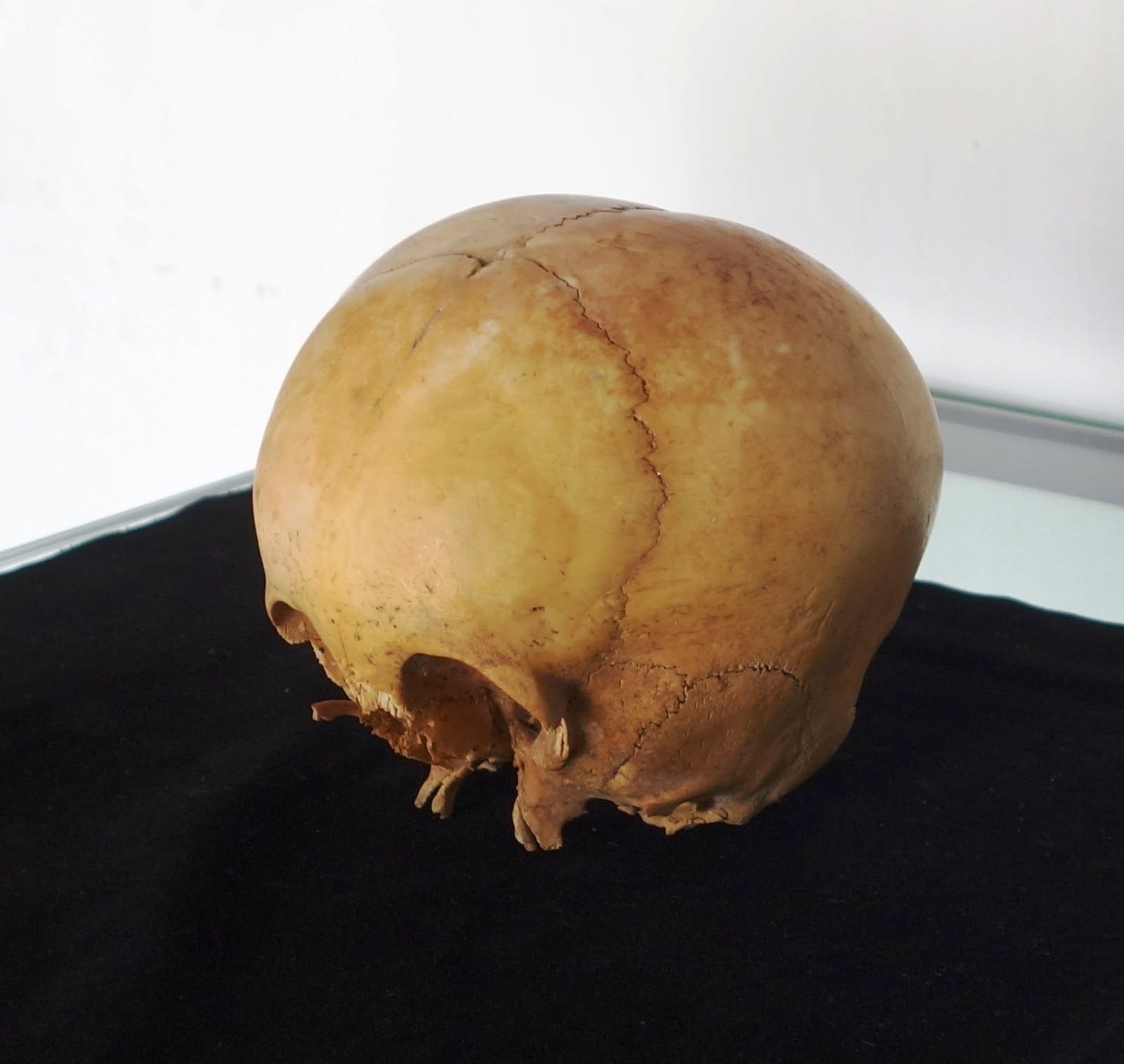
Side view
The photo shows a jagged suture running from the crown down the side. Below it the edge of an eye socket is visible. The jaw and teeth are missing from the photo.
More observations
What the angle adds
The round upper part of the object resting on a black base is seen whole from the side. Together with photo 01 it shows how different the same shape looks from the front and from the side. The object is probably the same as in photos 01 and 04.
Limits of the individual data
The photos show no find-site label, date or register number. The visibility of the sutures, the size of the intact upper part or the missing jawbone do not on their own settle the age, the cause of the shape or the relationship to other individuals.
Illustration 10: The flute player in a stone lane (AI illustration, fiction)
11 The whole display case, shelf by shelf
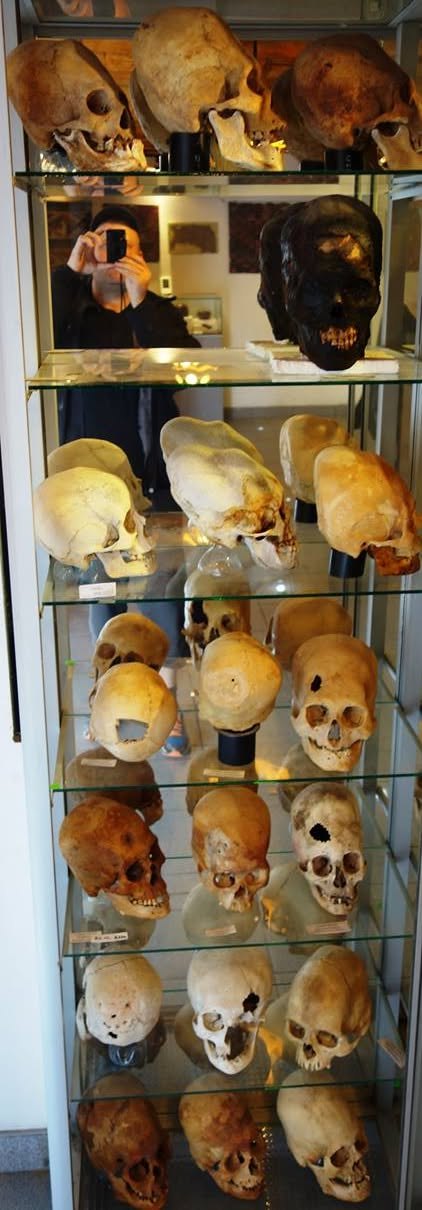
Top shelf
On the left a skull is seen at an angle, in the middle the upper part of a skull rises high, and on the right is a darker side profile, part of whose face is cropped out.
More observations
Second shelf
On the right is one very dark head whose teeth can be made out. On the left the photographer's reflection is visible. The preservation method used cannot be identified from the surface.
Third shelf
On the left is a roundish pale profile, in the middle a pale skull extending far back, and on the right a yellowish skull on a black support. Shapes behind are reflected in the glass.
Fourth shelf
An angular opening is visible at the back of the object on the left. The back of the middle one faces the camera. Above the face of the one on the right is a dark opening. How the openings came about remains open [6].
Fifth shelf
On the left is a brown side profile; the middle one is orange-toned and faces the camera. On the right a dark opening is visible in the upper part of a pale skull.
Sixth shelf
On the left small dark spots are visible on the pale surface. Above the face of the middle one is a larger opening. On the right an elongated yellowish skull is seen diagonally from the front.
Bottom shelf
A brown skull on the left, a reddish-brown one in the middle and a pale one on the right are in the front row. The bottom edge of the shelf is tightly cropped. Individual codes cannot be read reliably.
Illustration 11: Exchanging baskets in the terrace city (AI illustration, fiction)
Sources
- Peruvian Ministry of Culture: Guía de museos e instituciones museales del Perú 2023, p. 175 (Museo Histórico Paracas “Juan Navarro Hierro”). View source
- García Soto, Rubén 2018: Proyecto de investigación arqueogenético de cráneos Paracas Cavernas y Paracas Necrópolis de las colecciones del Museo de Sitio de Paracas y del Museo Regional de Ica. Informe final, Lima. A report, not a peer-reviewed article. Tables 1 and 3, object record p. 25. View source
- Peruvian Ministry of Culture: Museo Regional de Ica “Adolfo Bermúdez Jenkins”, the museum's information page. View source
- Gómez-Mejía, J., Aponte, D., Pezo-Lanfranco, L. & Eggers, S. 2022: Intentional cranial modification as a marker of identity in Paracas Cavernas, South-Central Coast of Peru. Journal of Archaeological Science: Reports 41, 103264. View source
- Arqueología Paracas – Wari Kayan: Acerca de las Necrópolis de Wari Kayan (research project page). View source
- Verano, John W. 2016: Differential diagnosis: Trepanation. International Journal of Paleopathology 14, 1–9. View source
- Radford, Benjamin 2018: ’Alien’ Mummy Identified By DNA. Skeptical Inquirer 42(4), July–August 2018, pp. 10–11. View source
- Oxilia, G., Paternostro, F. et al. 2026: Palatal Morphology in Artificially Modified Crania: Evidence for Limited Craniofacial Integration. Applied Sciences 16(17), 8695. View source
- Ward, S. M., Sánchez-Villagra, M. R., Raymond, C., Lazaro, G. R., Lynch, S. & Wilson, L. A. B. 2026: Intentional cranial modifications in the Americas: The temporal and spatial patterns of potential transmissions and cultural innovations. iScience 29(5), 115643. doi:10.1016/j.isci.2026.115643 · PMC13141071
- Fehren-Schmitz, L., Reindel, M., Tomasto Cagigao, E., Hummel, S. & Herrmann, B. 2010: Pre-Columbian population dynamics in coastal southern Peru. American Journal of Physical Anthropology 141(2), 208–221. View source
- Global Egyptian Museum: Head of a princess, JE 44869. View source
- The Metropolitan Museum of Art: Head of a princess from a group statue, 547692. View source
- Ägyptisches Museum und Papyrussammlung, Berlin: House altar, Akhenaten, Nefertiti and their three daughters, ÄM 14145 (Google Arts & Culture). View source
- Wikipedia: Lloyd Pye (accessed 20 November 2026). View source
- Johnson, Andrew (ed.) 2015: The Starchild Skull. Compiled from Lloyd Pye's texts (starchildproject.com, lloydpye.com), includes the Starchild Skull DNA Analysis Report 2011. View source
- Lloyd Pye – The Official Website of Lloyd Pye (accessed 20 November 2026). View source
- Trace Genetics 2003: Report on the DNA analysis from skeletal remains from two skulls, 12 August 2003. Text as a copy on the Biblioteca Pleyades website. View source
- Salah, Samy: Akhenaten. Egyptian Museum in Cairo (museum guide, Internet Archive text), item 2 Head of a Princess. View source
- Arnold, Dorothea 1996: The Royal Women of Amarna: Images of Beauty from Ancient Egypt. The Metropolitan Museum of Art, New York (catalogue nos. 50–51 and L. Green's chapter Who Was Who). View source
- TripAdvisor: Paracas History Museum – Juan Navarro Hierro, traveller's photo “a large skull (25-60% larger than normal)”. View source
Videos: aqPy1X1mhGY · yIA-Dykw_40 · dNgc018HQNA · _IlZYy2Mbpk · qlPq2wTEFEc (Travel South, filmed 1 November 2014) · _ClDtZ7vcDc (Travel South, filmed 30 October 2014).
See how an imagined figure grew from the shape of a skullFaces of the Stone City
Paracas & HuacachinaDestination page