Travel South

Tiwanaku & Puma Punku

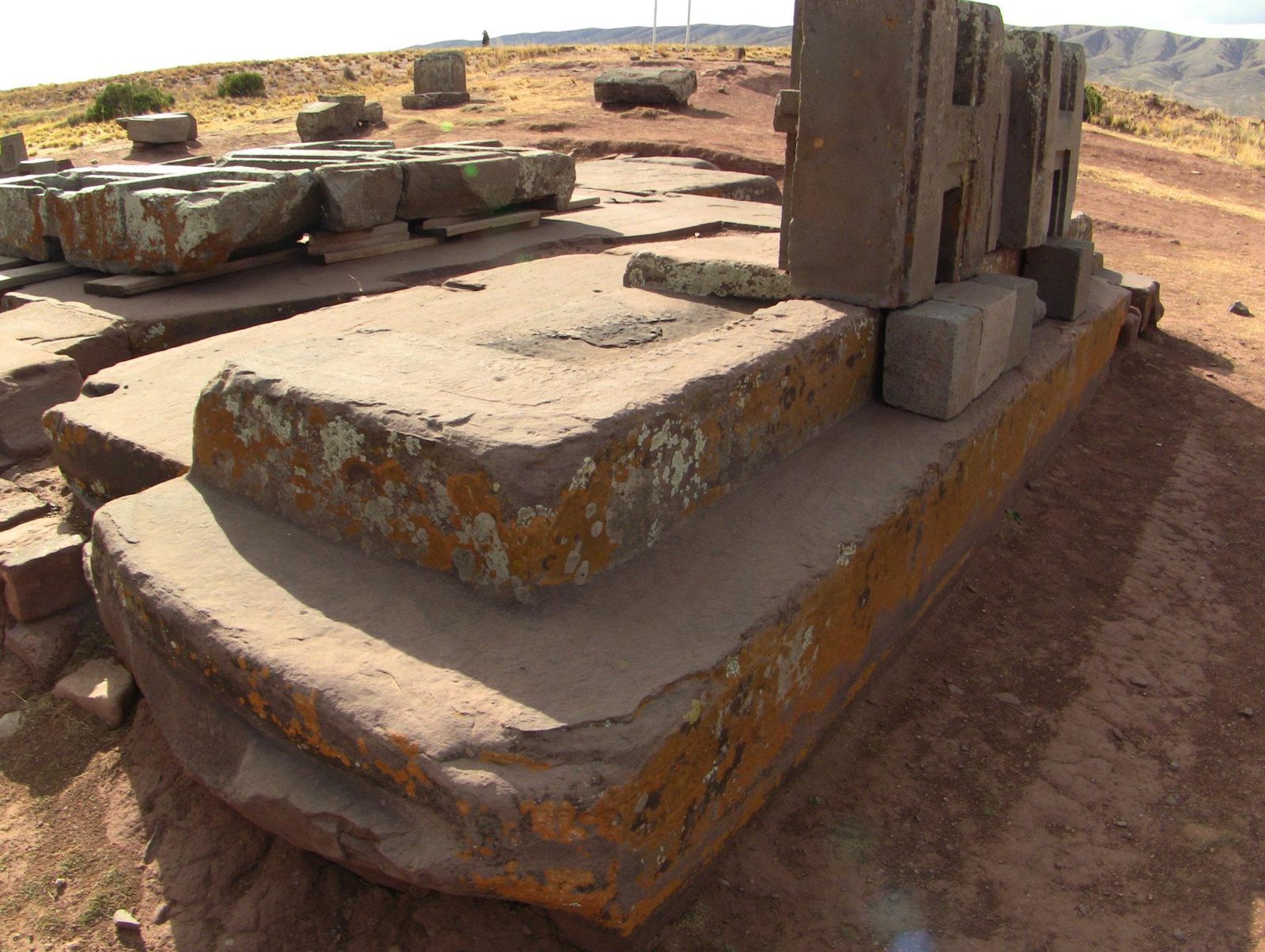
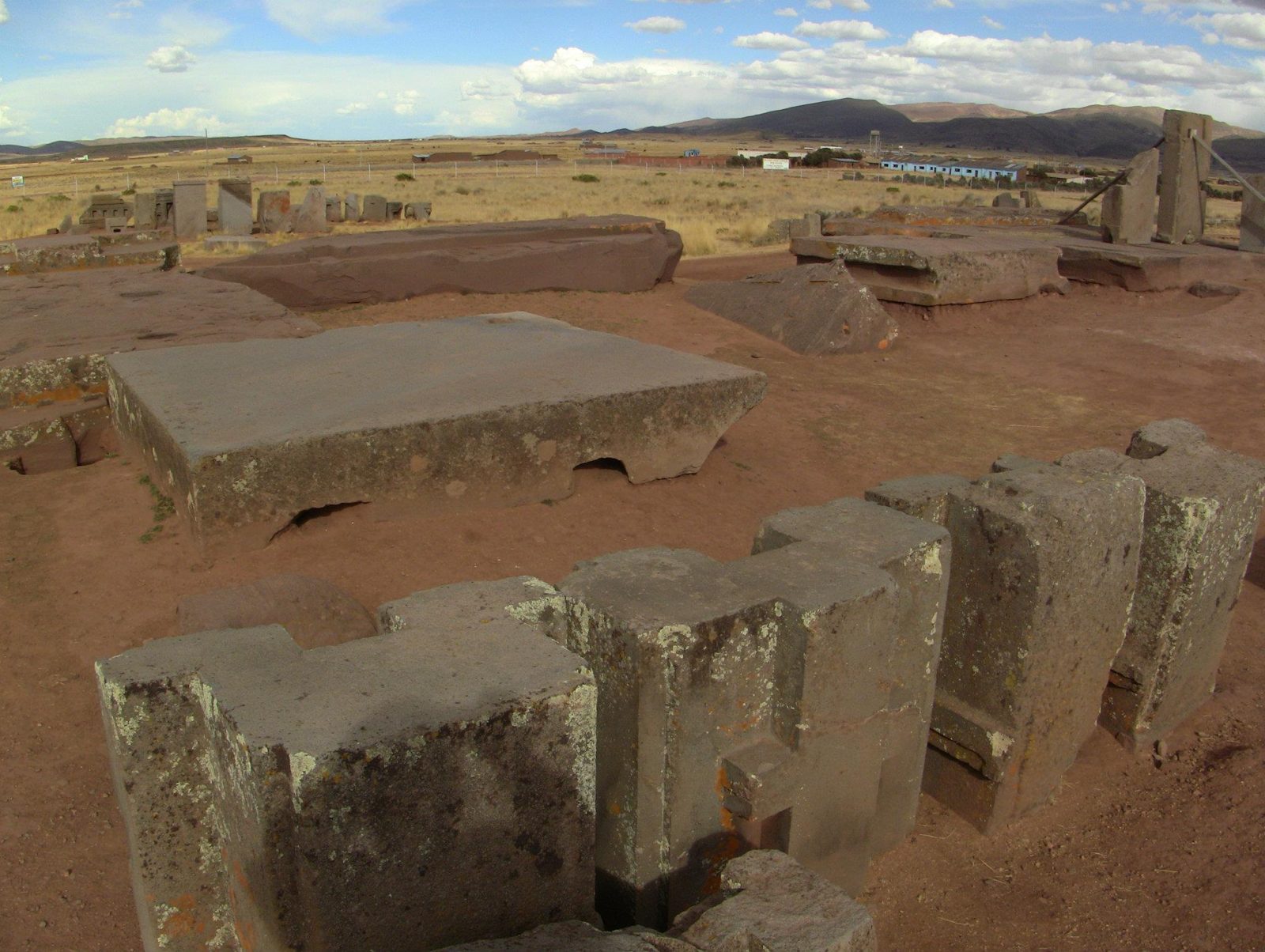
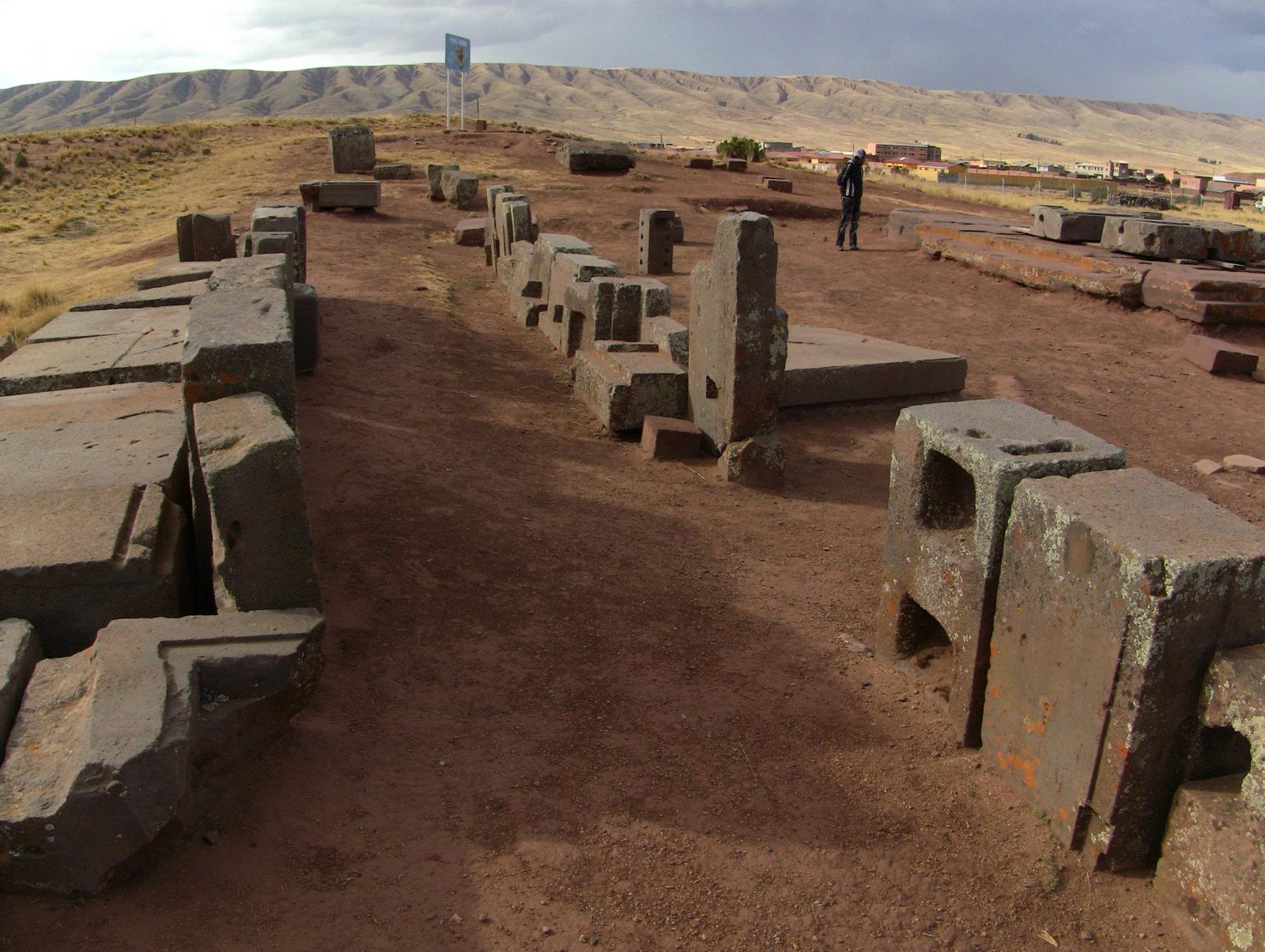
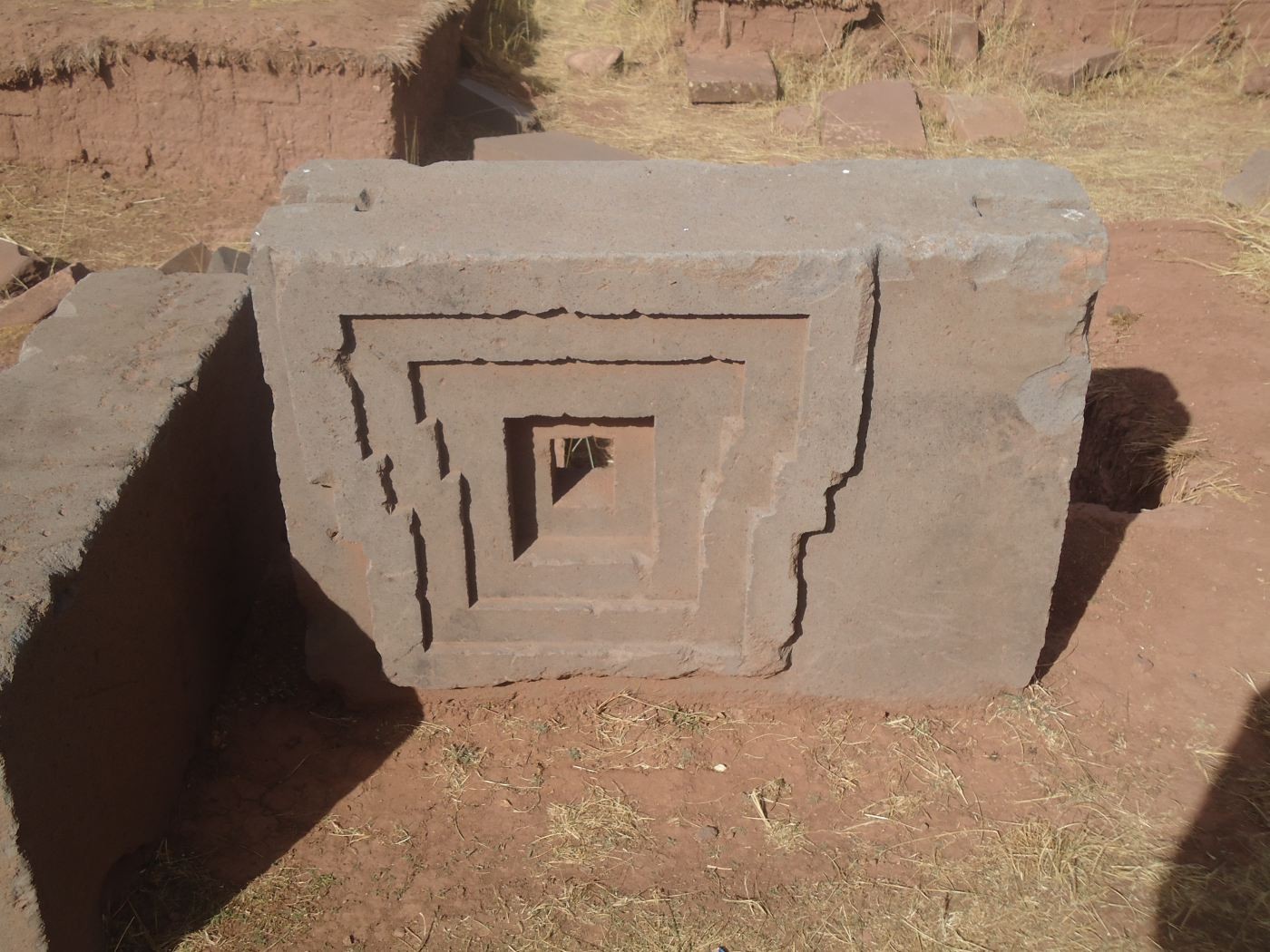
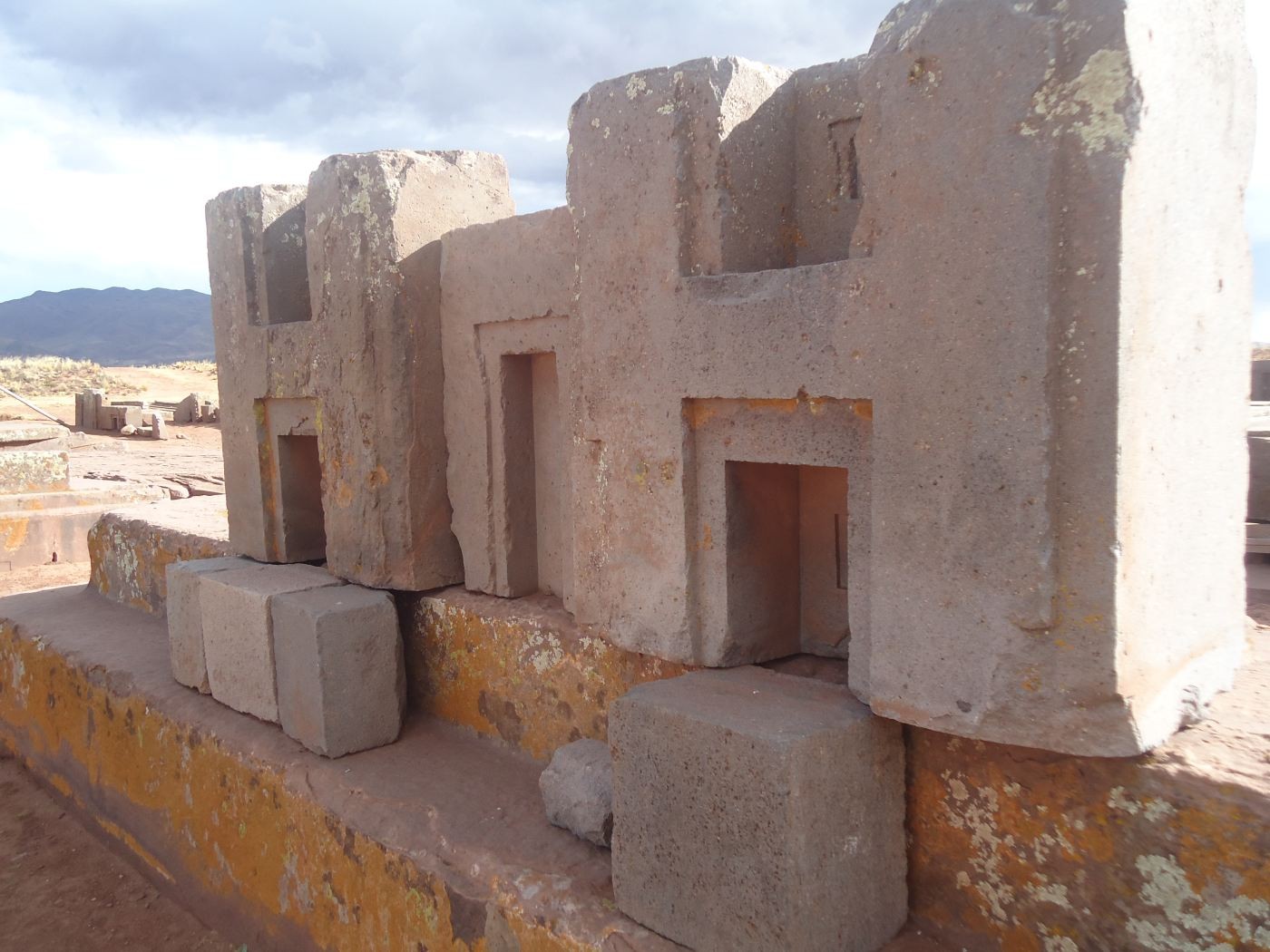
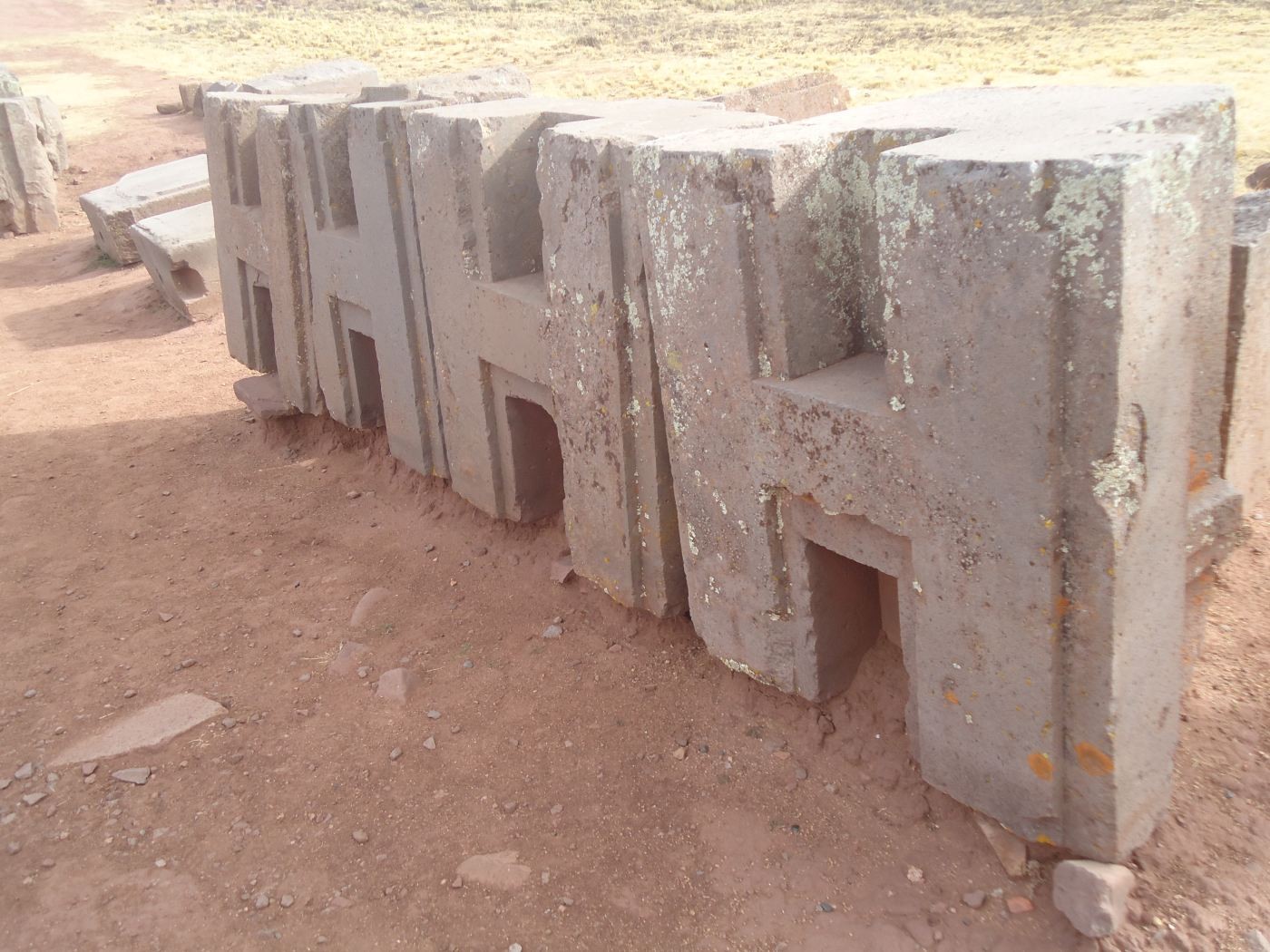
The same H-shaped block appears again and again at Puma Punku, cut with flat faces and sharp inner angles.

Near Lake Titicaca, Tiwanaku was the centre of an Andean civilisation founded around AD 180. According to a model of radiocarbon dates, Puma Punku was built around AD 580–710 (Marsh et al. 2023). Its andesite and sandstone blocks were precisely cut. A metal cramp poured into a joint in the south canal is an alloy of copper, arsenic and nickel (Lechtman 1996). The largest sandstone slab is 8.12 metres long (Vranich 2018).

Speculation: in Tihuanacu, the Cradle of American Man (1945) Arthur Posnansky dated Tiwanaku to about 15,000 BC, and some enthusiasts talk of lost technology. A model of radiocarbon dates places the building of Puma Punku at about AD 580–710 (Marsh et al. 2023). Lost technology would need excavated evidence, such as tools or their marks, and none has been reported. In 2006 the site's platforms were levelled and blocks were moved, some into the wrong places (Vranich 2018).

How would you cut identical blocks with stone tools?

Site on the map: Tiwanaku · Puma Punku

Jani's note

From the border to Tiwanaku, 10 August 2011

After La Puerta del Diablo we were, to our surprise, almost in Bolivia. When I paid in cash, I was given the wrong change several times. Gianina noticed at once; I was not used to that kind of thing.

The price had been agreed with the driver at the border: first Tiwanaku, then La Paz. My first video from Tiwanaku is at 15:05. After Tiwanaku, in the middle of the wilderness, the driver announced that the agreed sum would not get us there. He would leave us here. This was a cemetery in the desert. There was no other traffic, and a cemetery in the desert did not look like a good place to spend the night. We paid double.

A In 1549 the local people laughed when Cieza de León asked whether the Incas had made these buildings. In 2011 the same stones were shown to me by a descendant of an Inca family.

Before the trip I thought it possible that a joint like this could not be made with stone tools. Now: the builders were Tiwanaku, but the speed of the work and the tools are still a good question. This is where I would come back, with what is known today.

What I could not yet know: T the dating of Puma Punku was refined in 2023 (Marsh et al. 2023), and in 2025 researchers reported Palaspata, a Tiwanaku temple complex about 215 km south-east of Tiwanaku (Capriles et al. 2025).
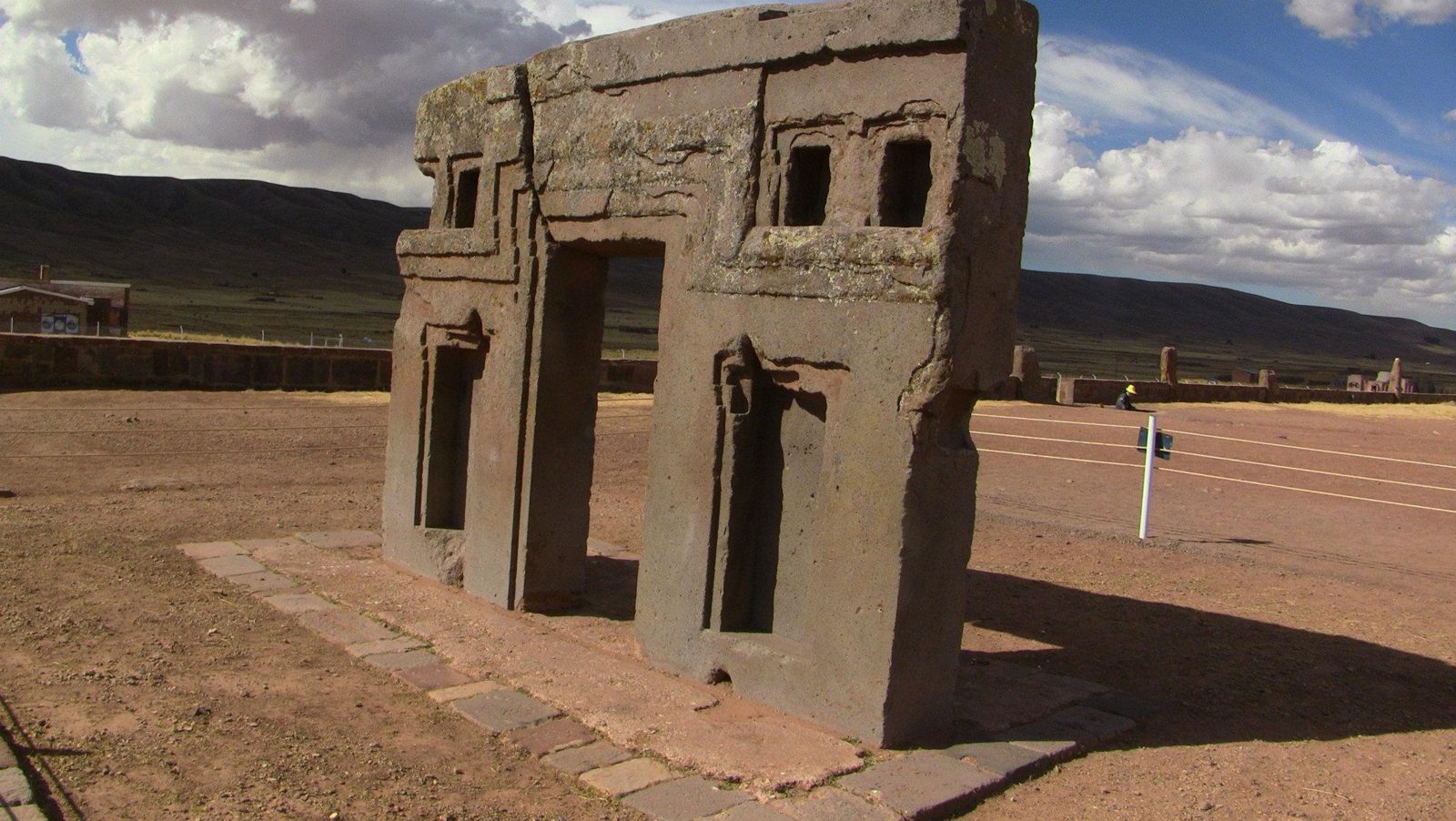
The Gate of the Sun, carved from a single block of andesite
The Gate of the Sun, carved from a single block of andesite: about 3 m tall and 4 m wide.Data: Stone: andesiteView on Google Maps
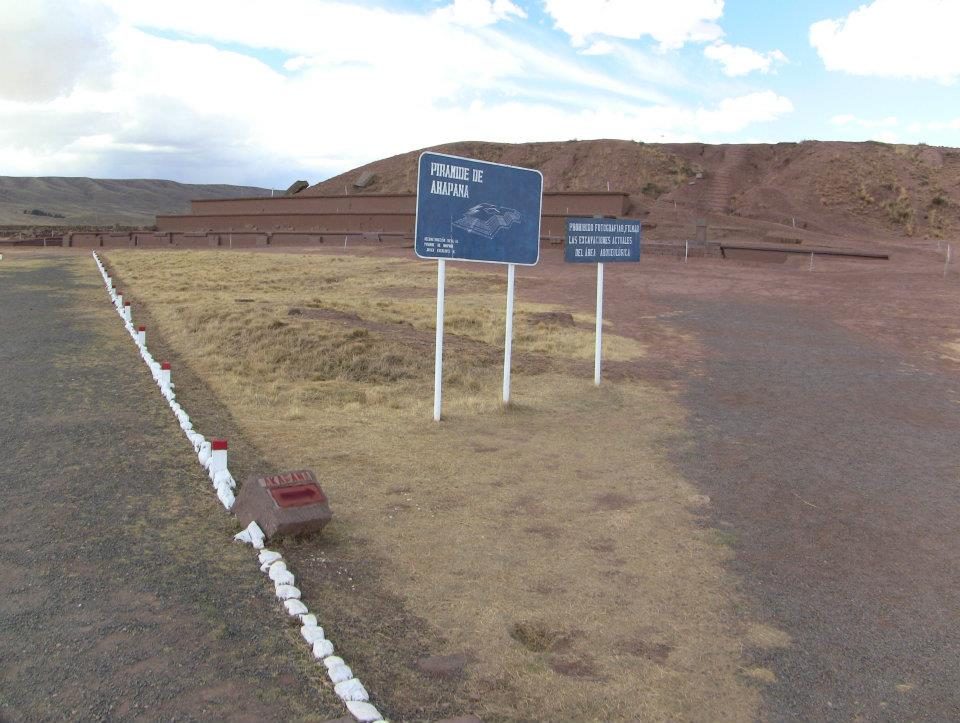
The Akapana pyramid
The Akapana pyramid: 257 by 197 m and 16.5 m tall, Tiwanaku's largest structure.Data: Size: 257 × 197 m · Height: 16.5 mView on Google Maps
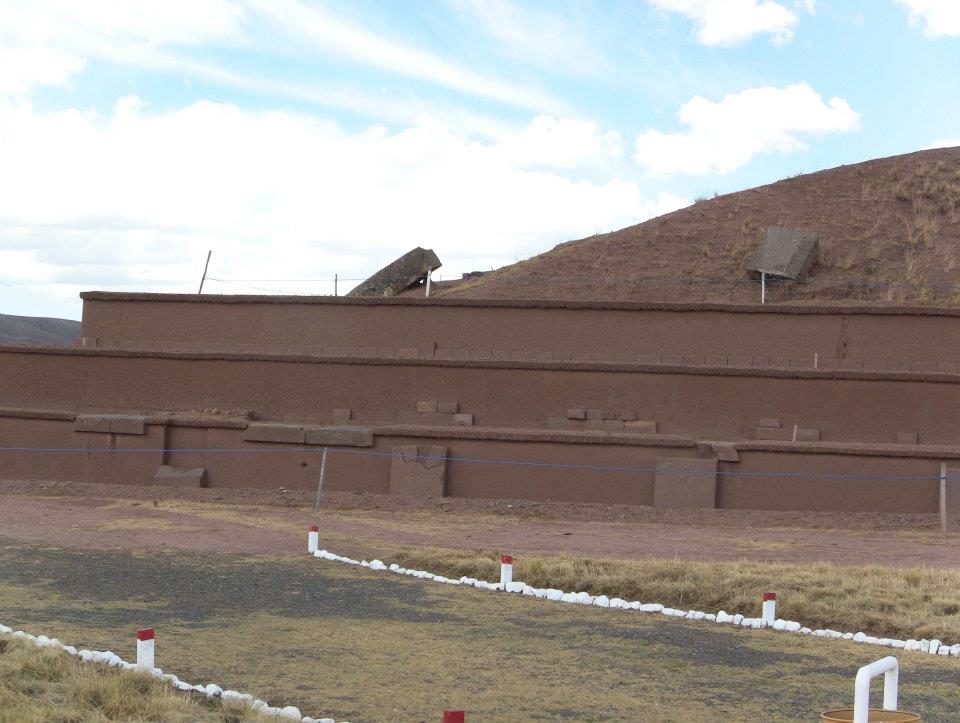
The Akapana
The Akapana. Much of its stone facing was later removed, leaving an earthen mound.View on Google Maps
The Semi-subterranean Temple, whose walls hold dozens of carved stone heads
The Semi-subterranean Temple, whose walls hold dozens of carved stone heads.View on Google Maps
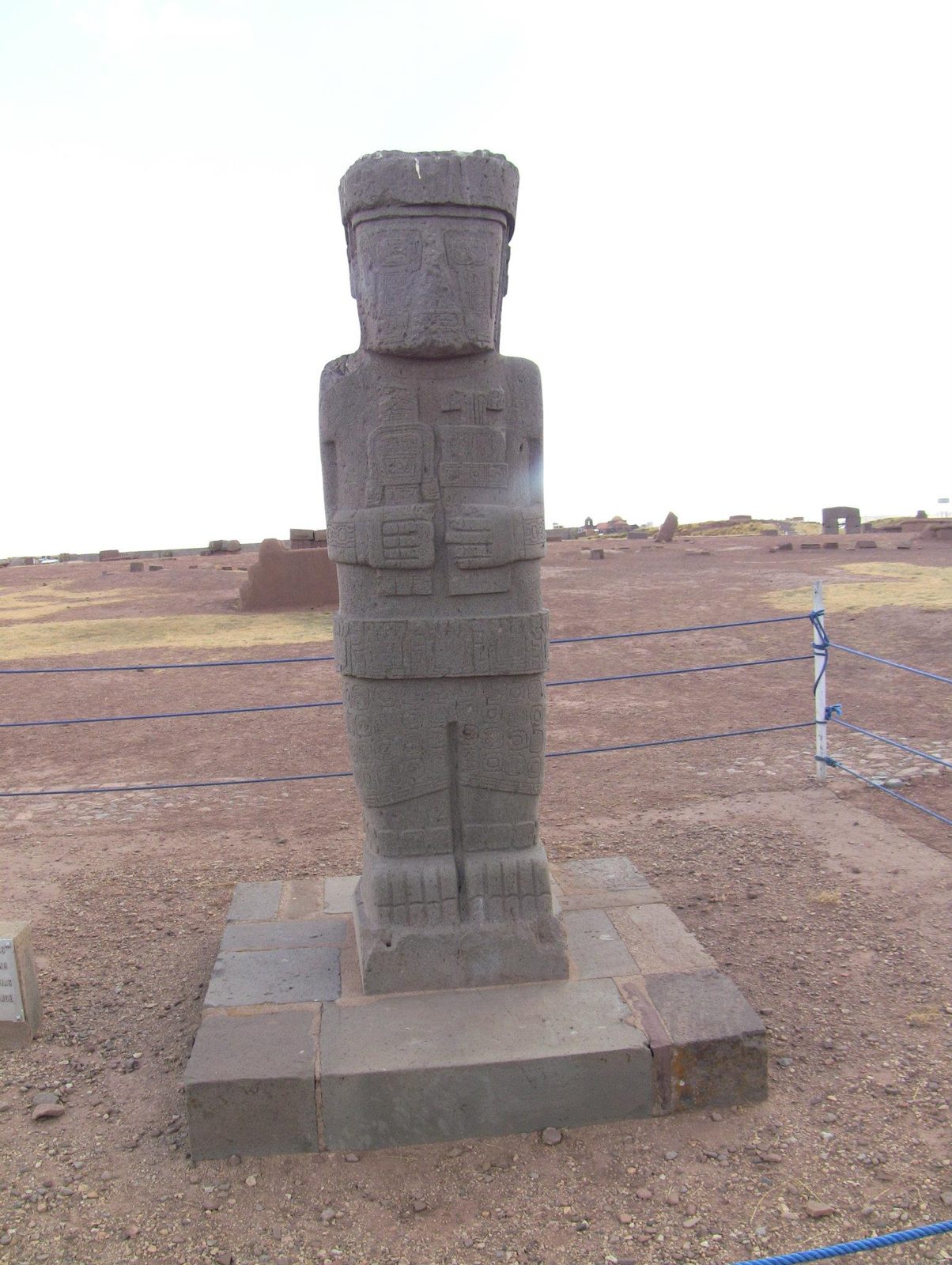
A carved statue
A carved statue. Tiwanaku monoliths such as the Ponce Monolith hold ritual objects in their hands.View on Google Maps
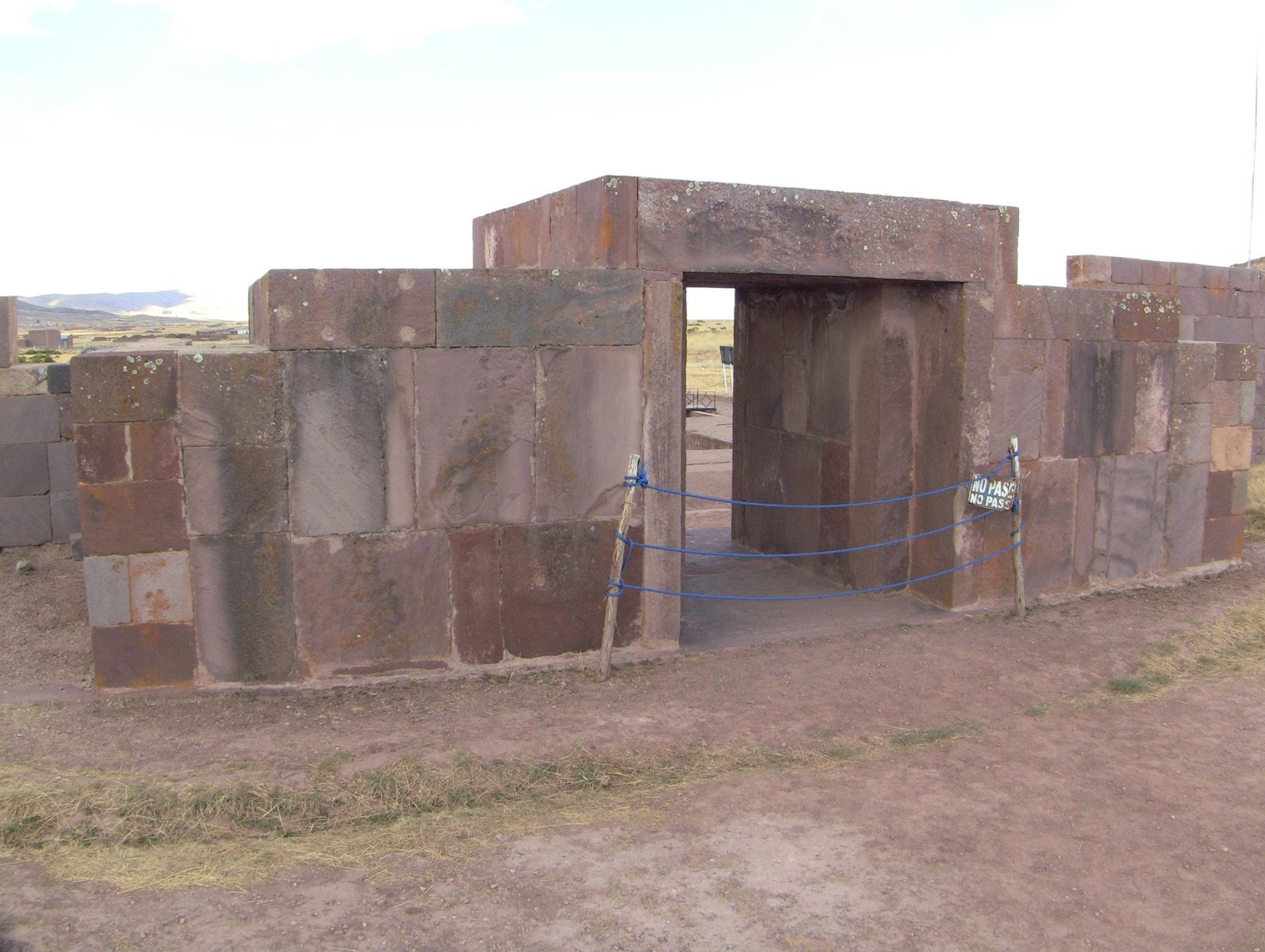
The Kalasasaya gateway and monolith
The Kalasasaya gateway and monolith. The walls were reconstructed from the late 1950s onwards.View on Google Maps
The Tiwanaku temple area, a UNESCO site since 2000
The Tiwanaku temple area, a UNESCO site since 2000.View on Google Maps
An H-block
An H-block. The same shape repeats from block to block; no published measurements have been matched to this block.Data: Stone: andesiteView on Google Maps
A precisely cut andesite block
A precisely cut andesite block; andesite came from quarries across Lake Titicaca.View on Google Maps
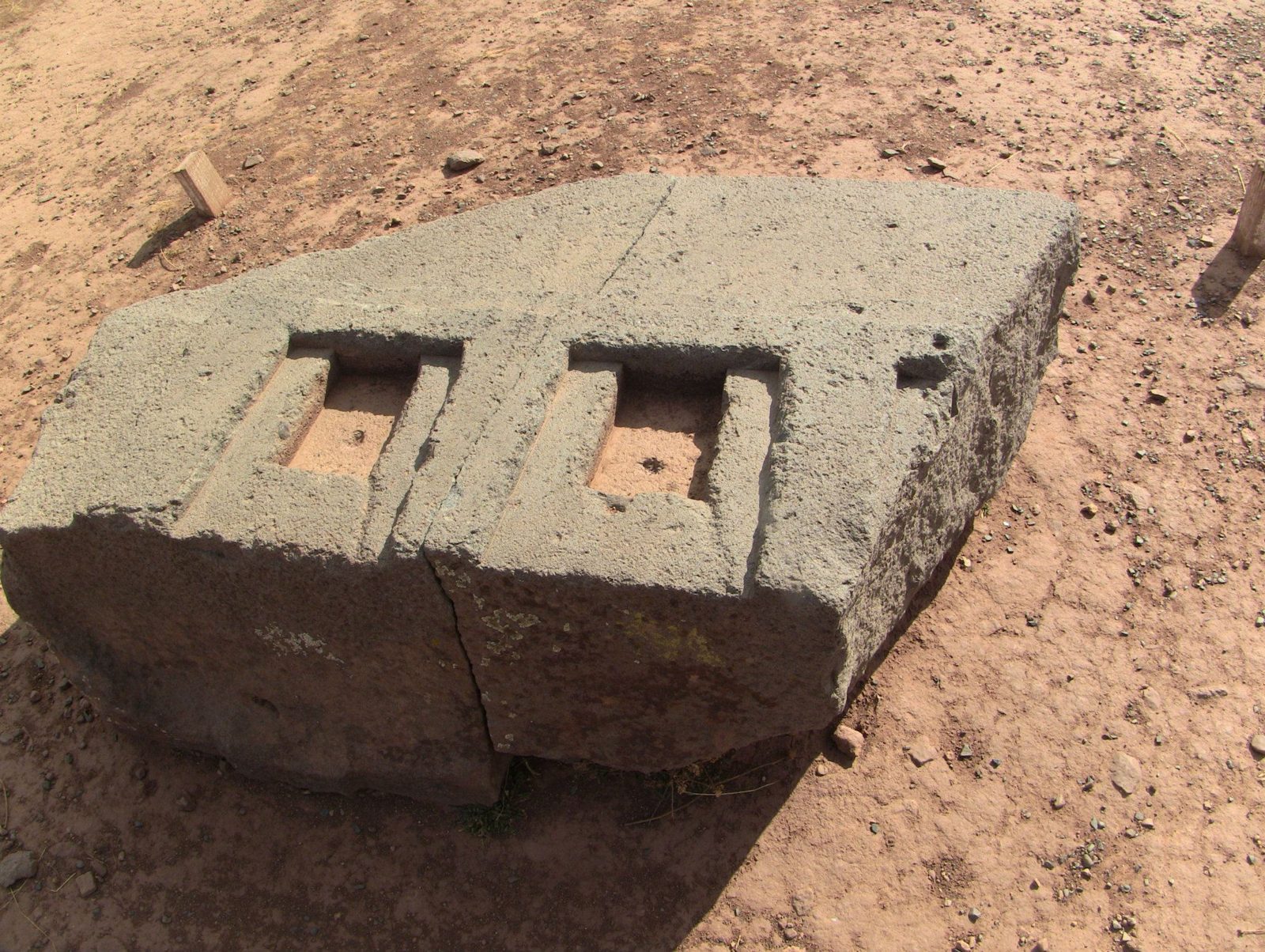
Recesses cut to join blocks
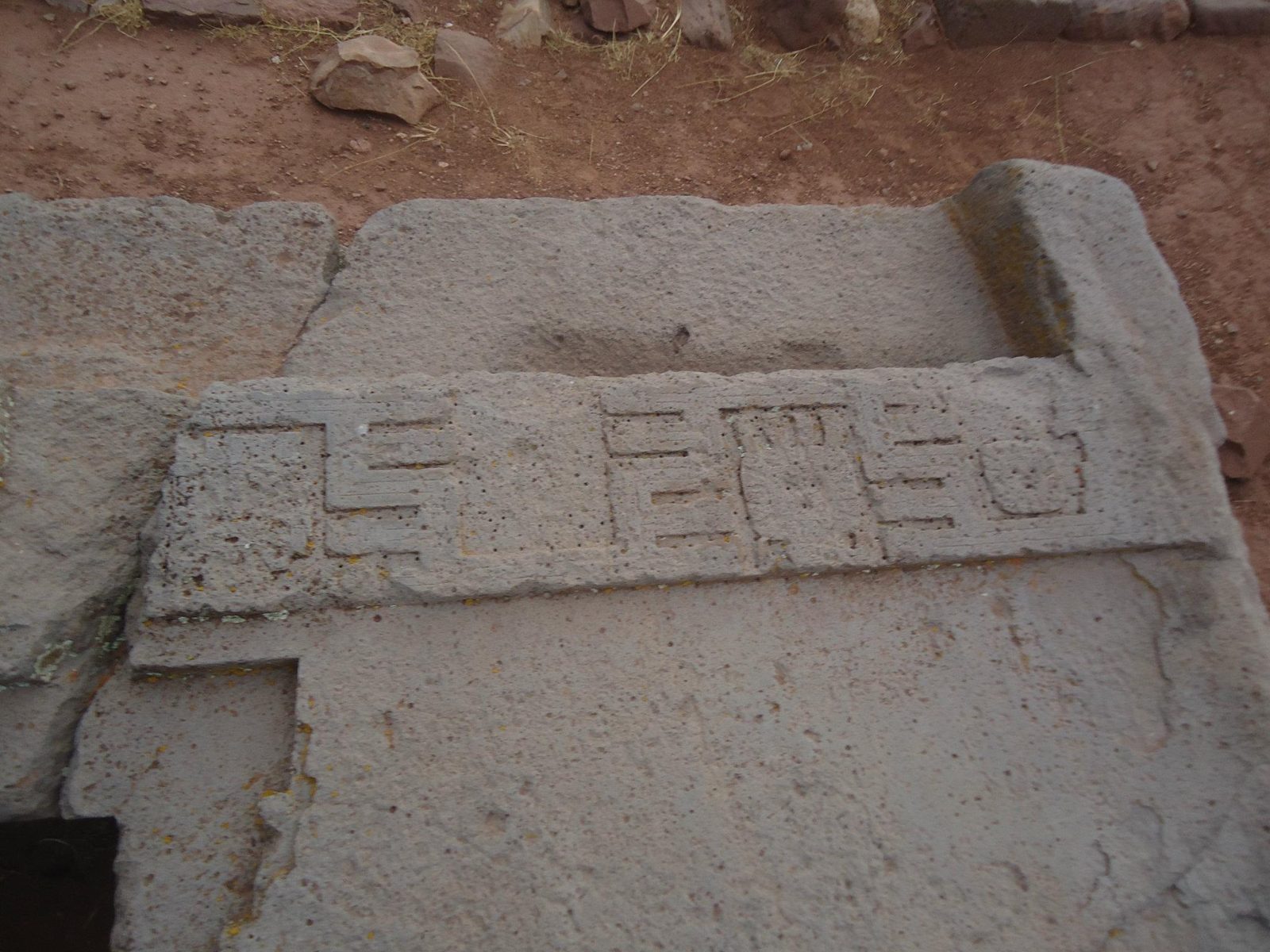
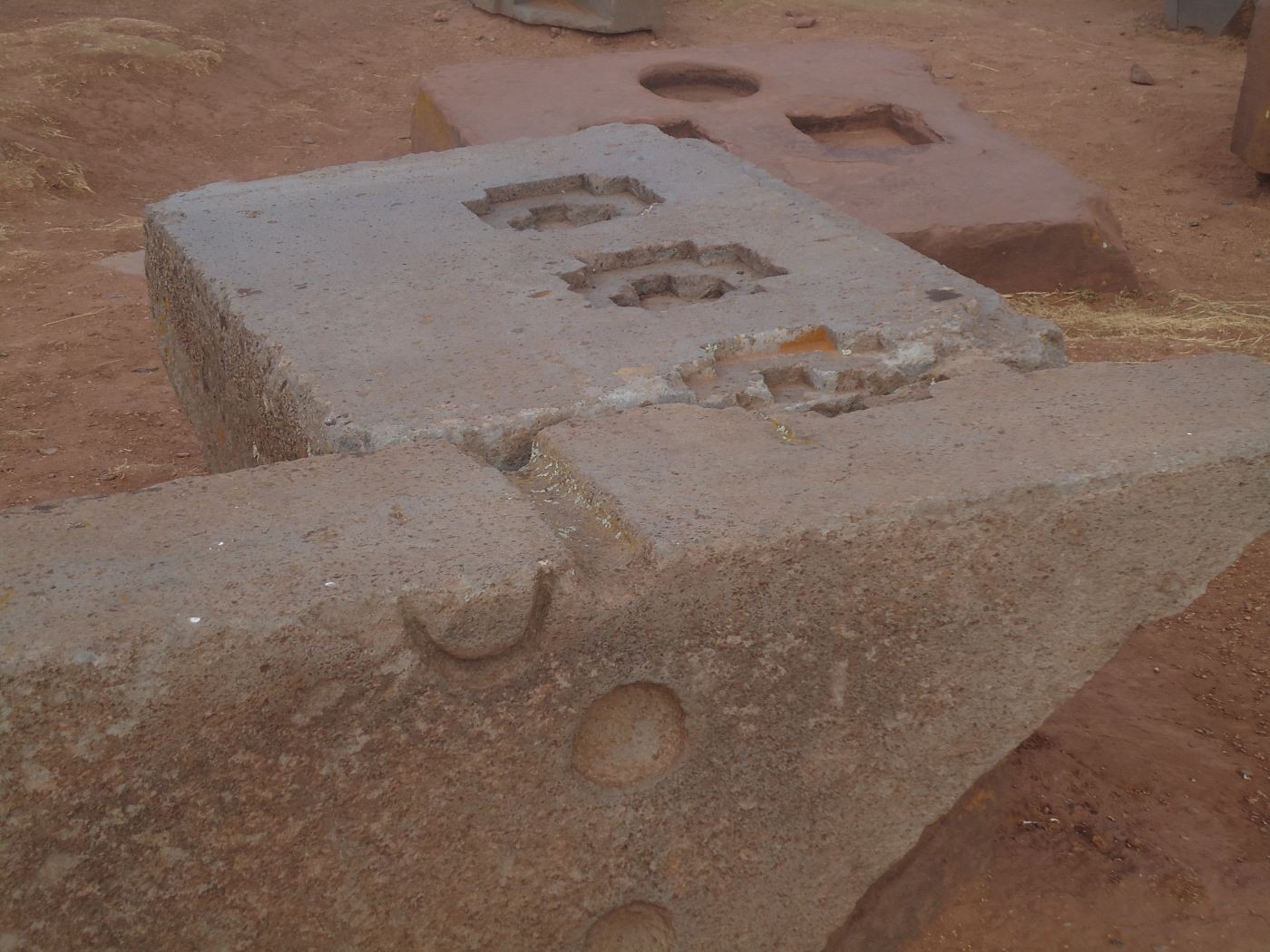
Recesses cut to join blocks; copper-arsenic-nickel alloy cramps were cast into I-shaped (double-T) sockets (Lechtman 1996).View on Google Maps
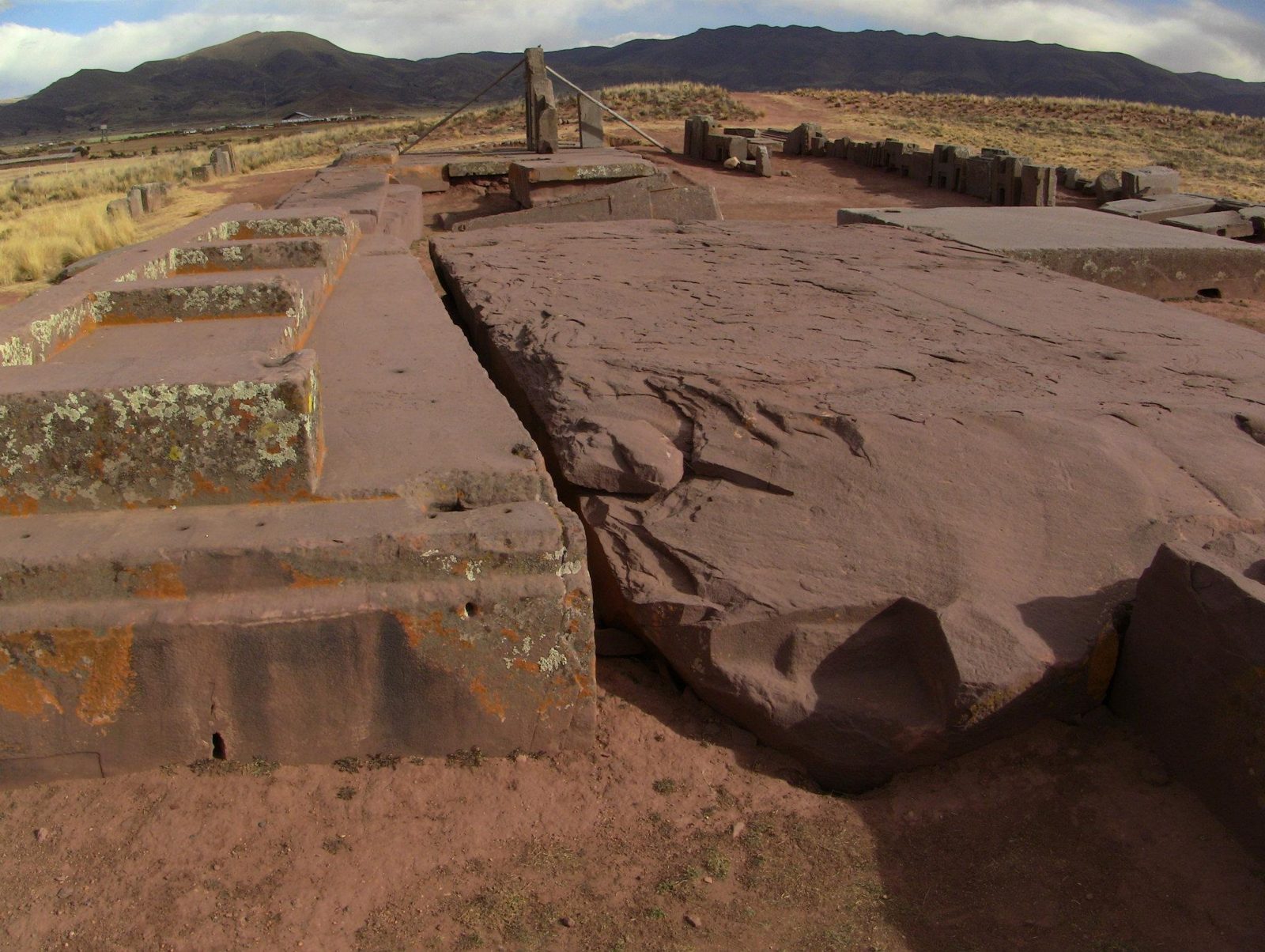
The great platform slabs of red sandstone, from a quarry roughly 10 km away
The great platform slabs of red sandstone, from a quarry roughly 10 km away.View on Google Maps
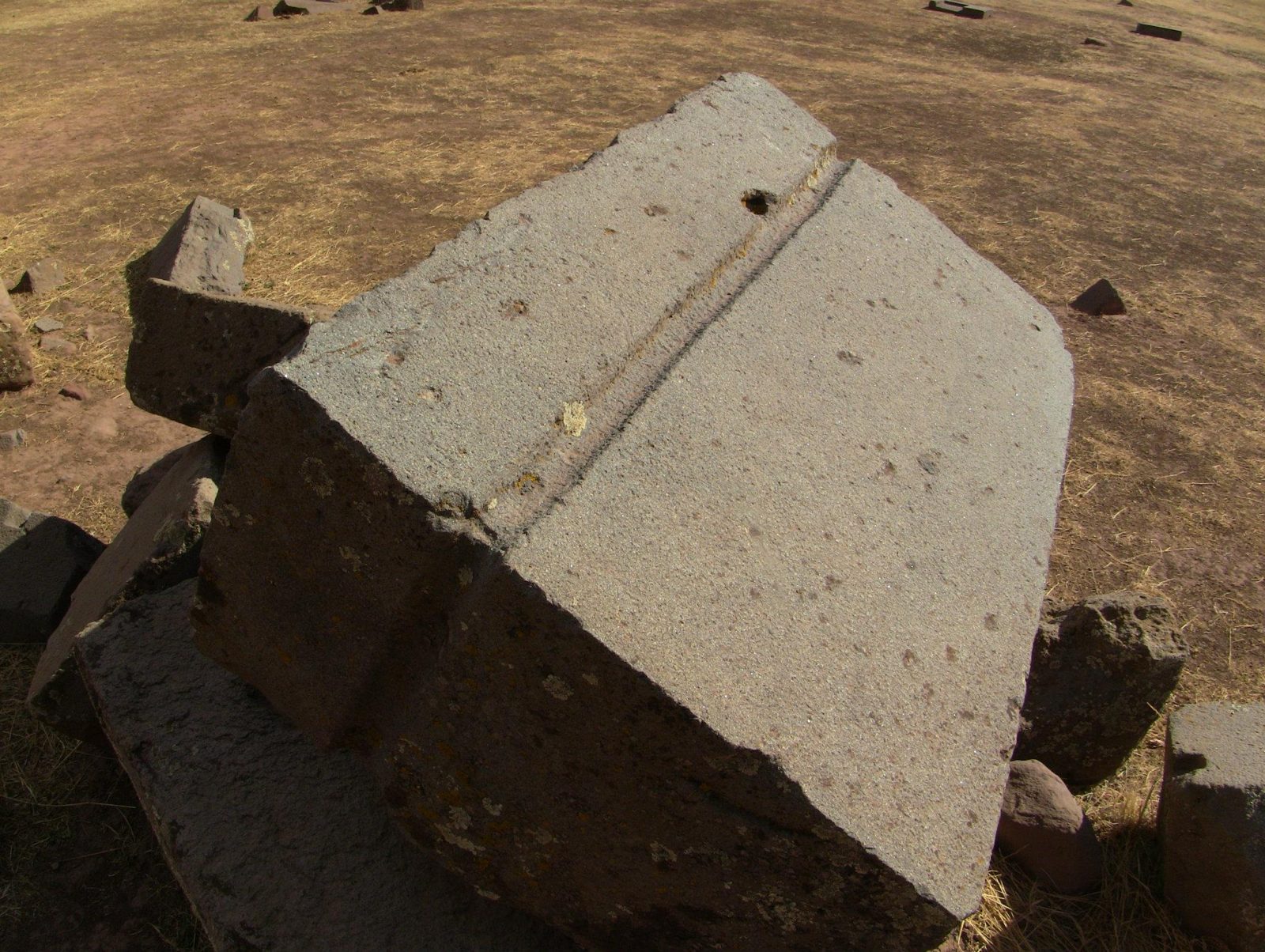
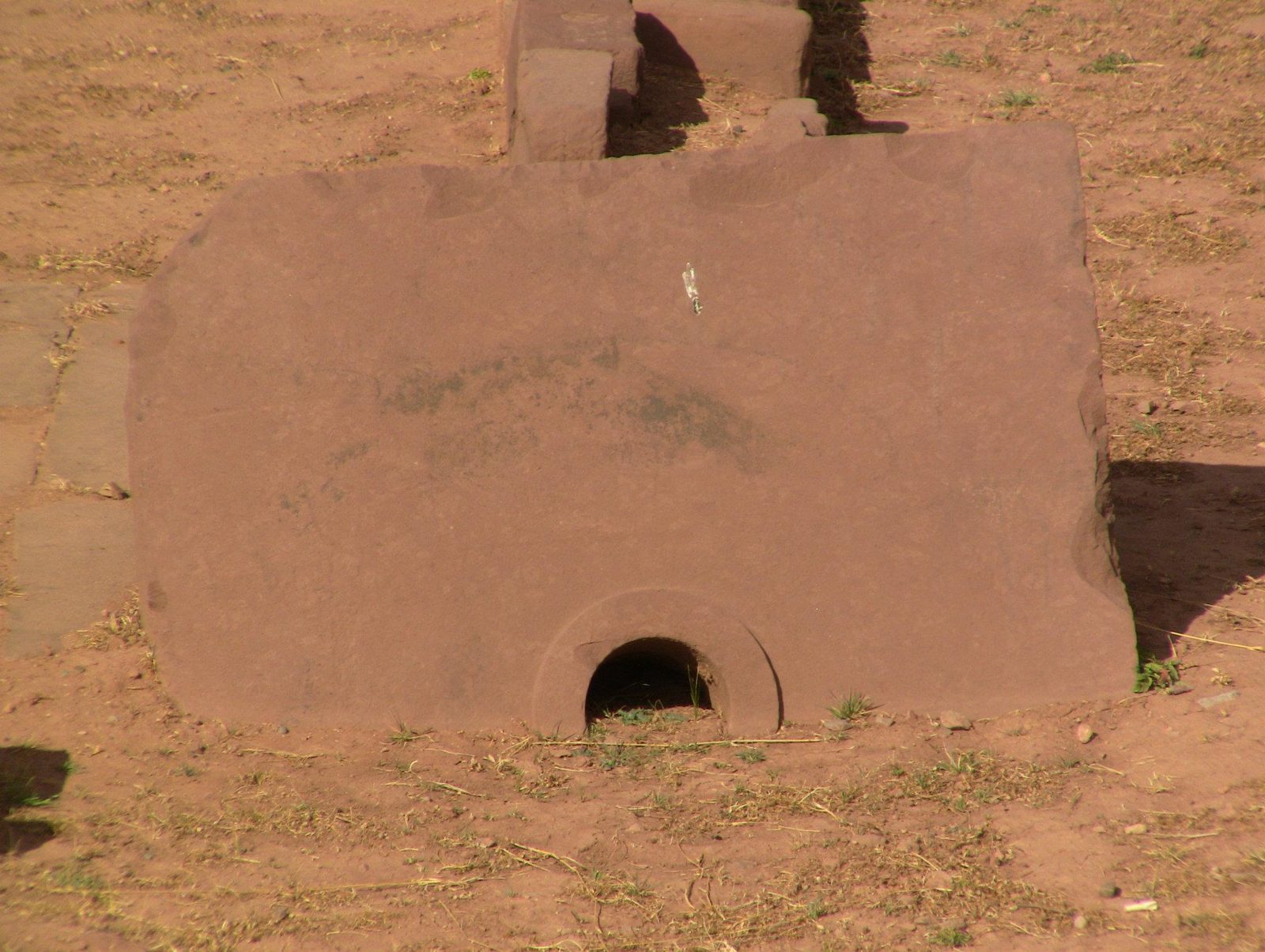
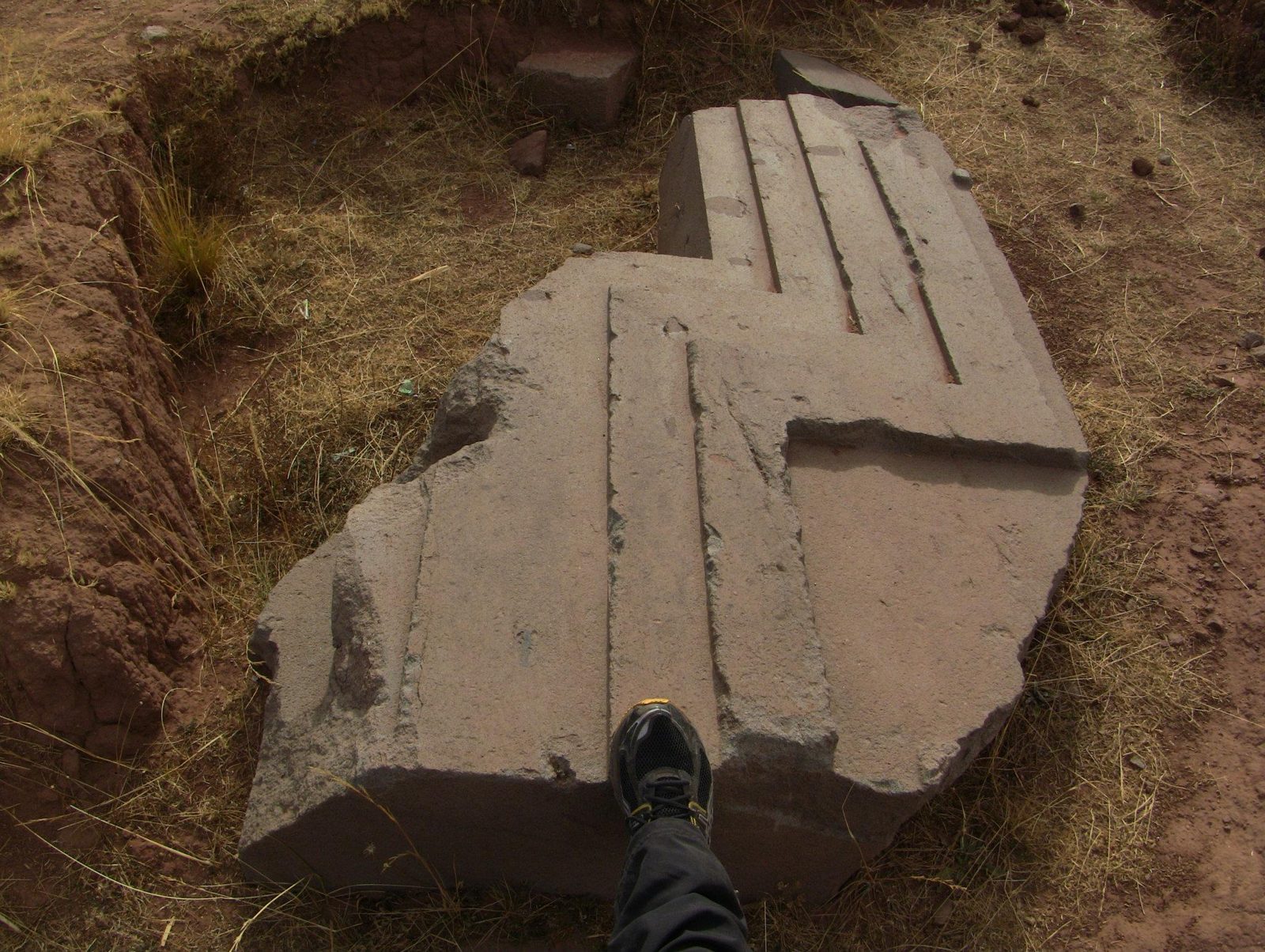
A slab with a carved channel, possibly for water drainage
A slab with a carved channel, possibly for water drainage.View on Google Maps
Stacked blocks on the Puma Punku platform (about 3,850 m)
Stacked blocks on the Puma Punku platform (about 3,850 m). The mound had three levels of stone retaining walls, and the platform once carried as many as eight andesite gateways.View on Google Maps
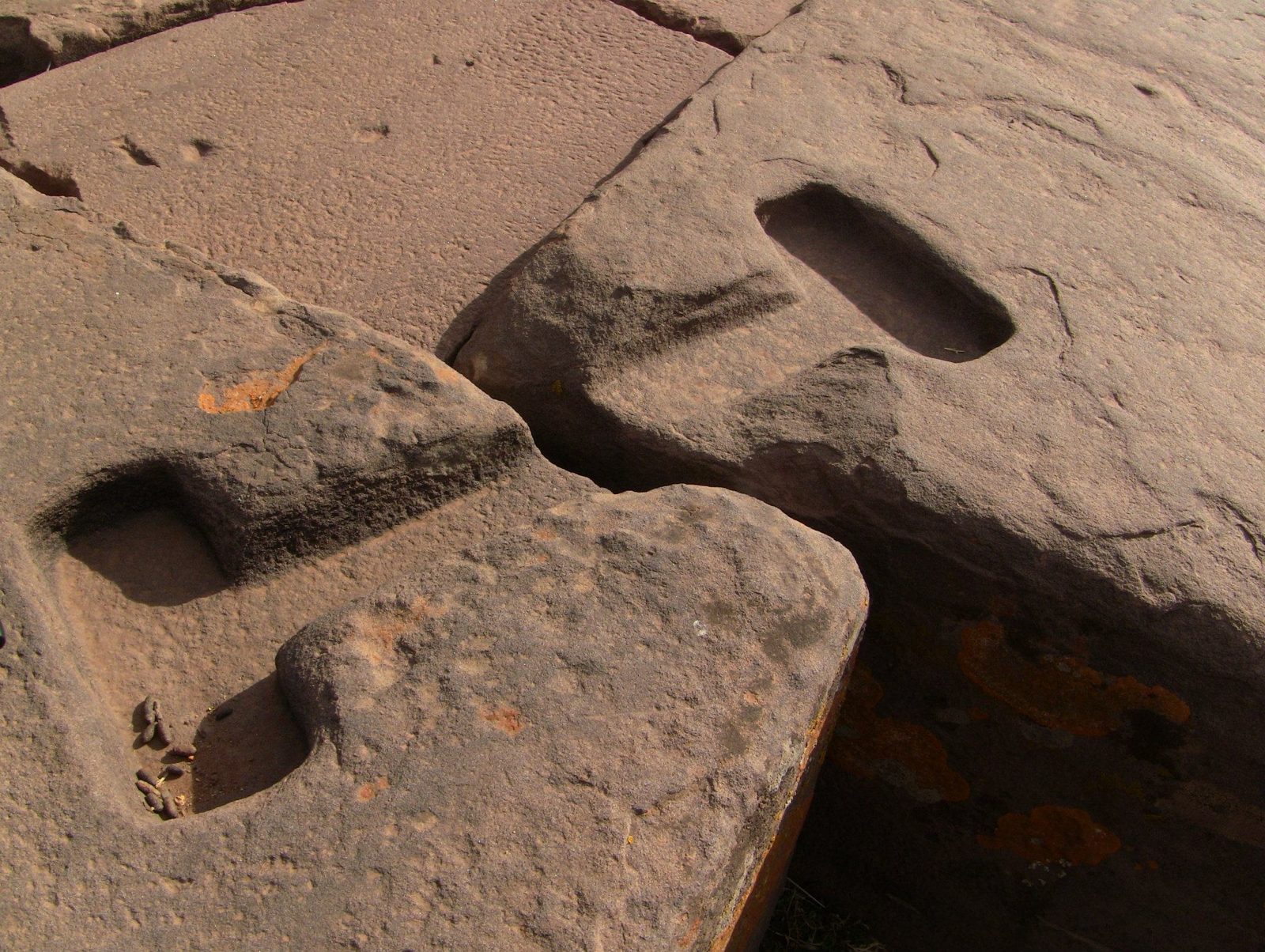
Small recesses and slots
Small recesses and slots: copper-arsenic-nickel alloy cramps were used in some joints.View on Google Maps
A giant sandstone slab
A giant sandstone slab. According to Vranich (2018) the largest slab is 8.12 m long; this photograph has not been identified as the very largest slab.Data: Stone: red sandstone · Built: about AD 580–710View on Google Maps
Puma Punku blocks
Puma Punku blocks: red sandstone was quarried in the hills south of Tiwanaku, andesite came from the southern shore of Lake Titicaca, possibly from the Kapia volcano or the Copacabana Peninsula (Villanueva Criales 2024). In the model of Marsh et al. (2023), quarried and carved stones were used from the start of construction, about AD 580, until about 630.View on Google Maps
Scattered blocks, moved by looting, colonial stone robbing and probably earthquakes
Scattered blocks, moved by looting, colonial stone robbing and probably earthquakes.View on Google Maps
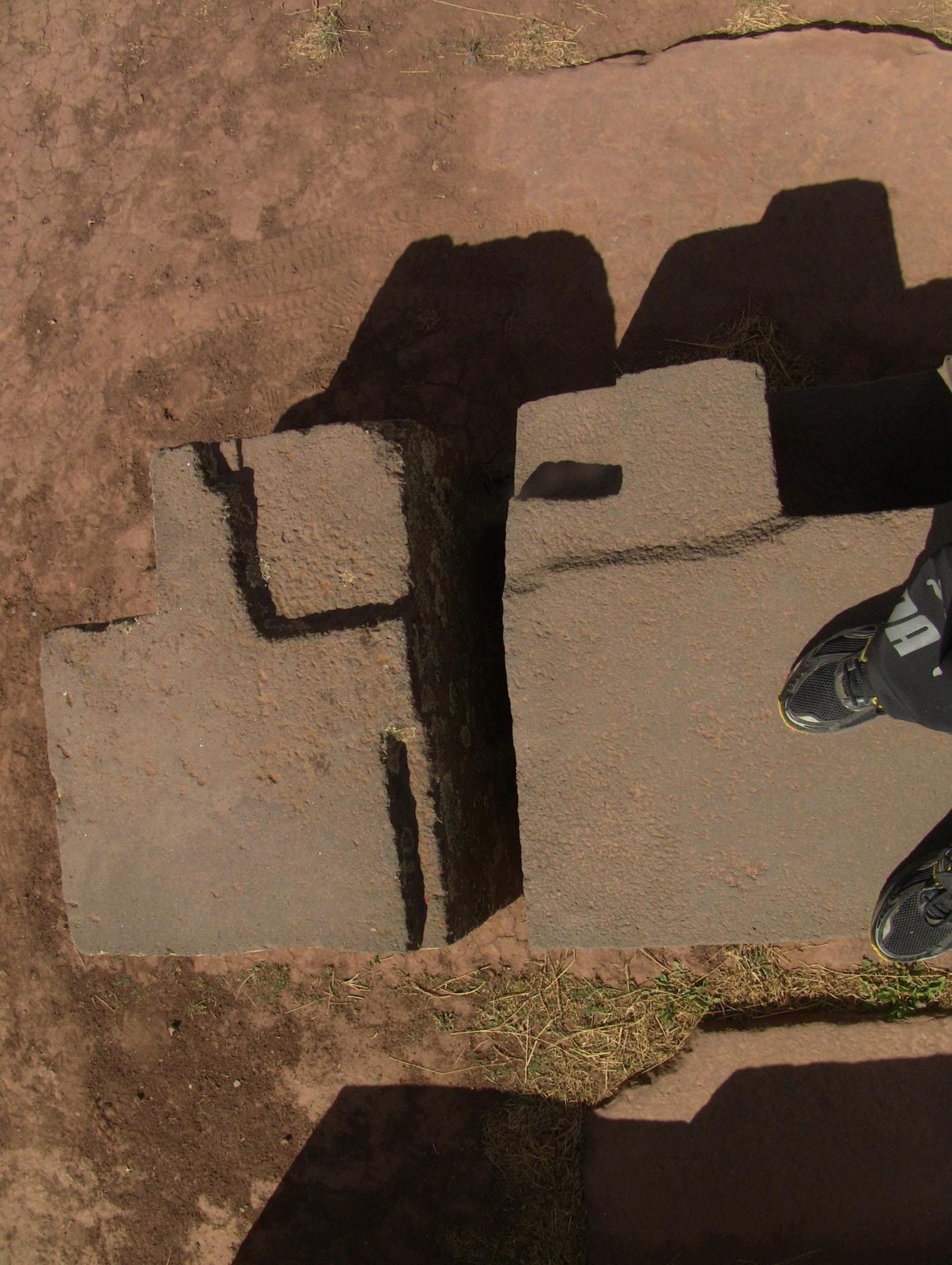
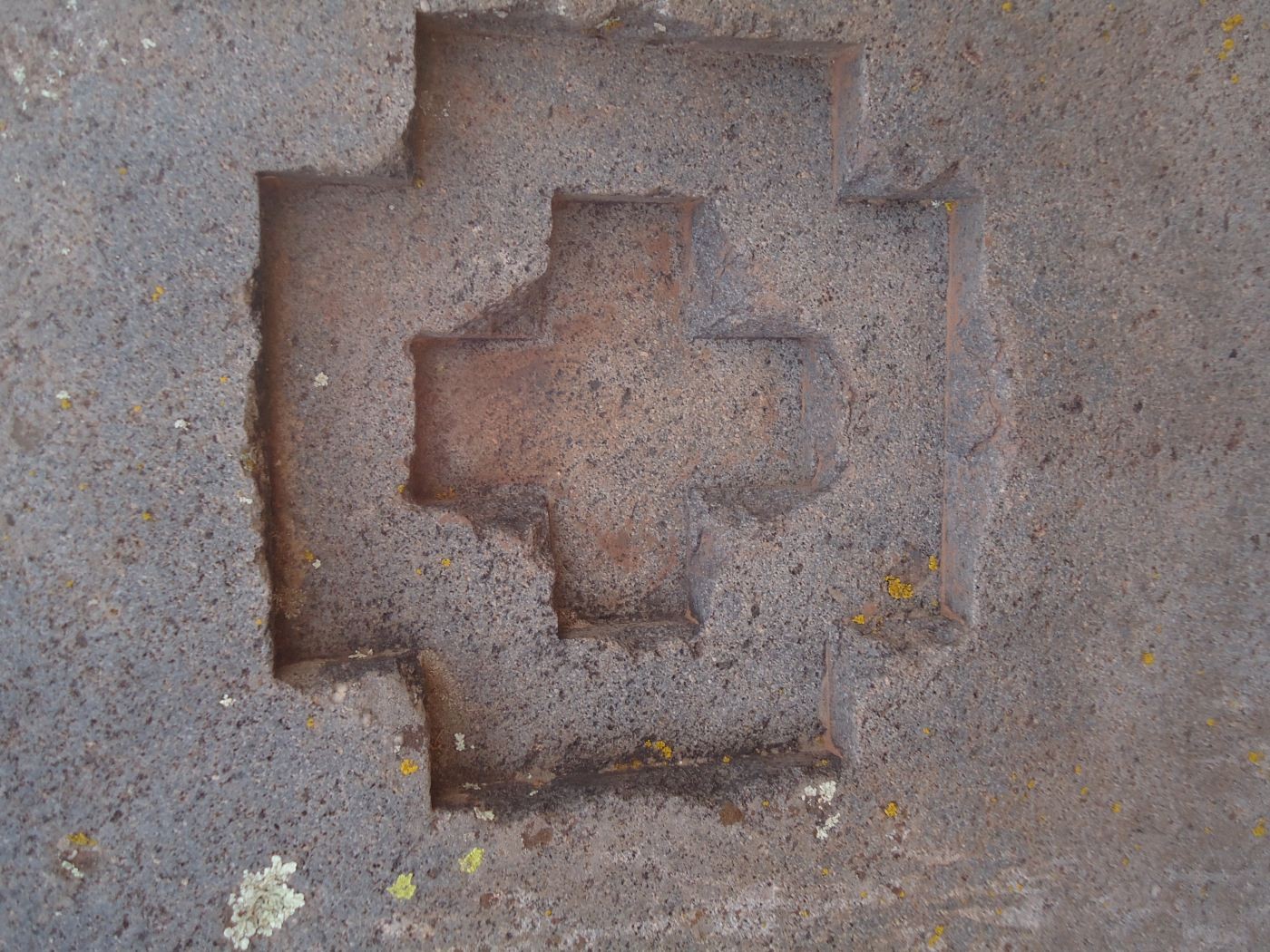
A block with a cross-shaped cut
A block with a cross-shaped cut. Open question: how exactly were such inner angles finished with stone tools?View on Google Maps
The Puma Punku entrance
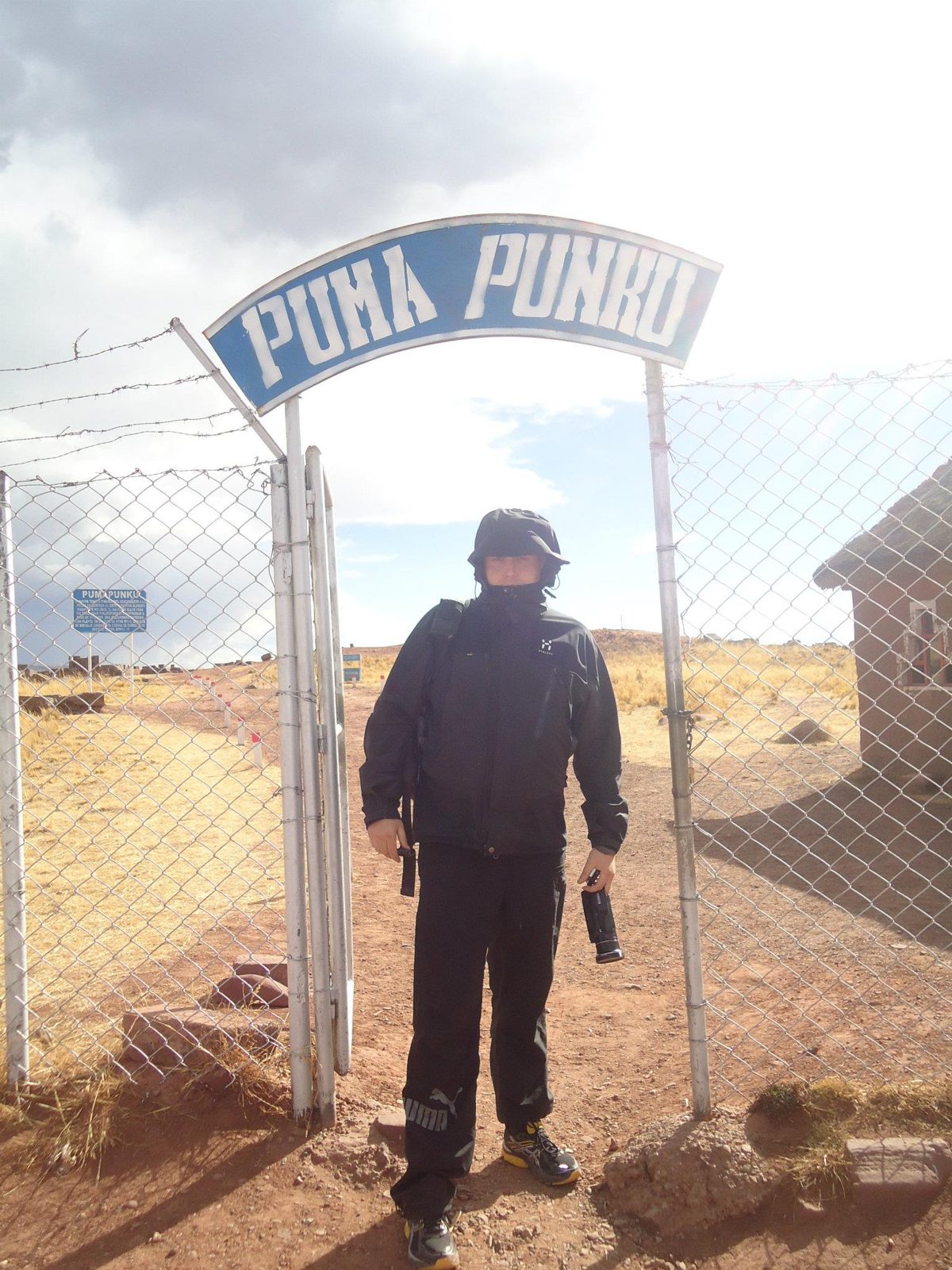
The Puma Punku entrance. The name is usually translated as "Gate of the Puma".View on Google Maps
Repeated H-forms suggest the masons worked to templates
Repeated H-forms suggest the masons worked to templates.View on Google Maps

Original photos from 2011

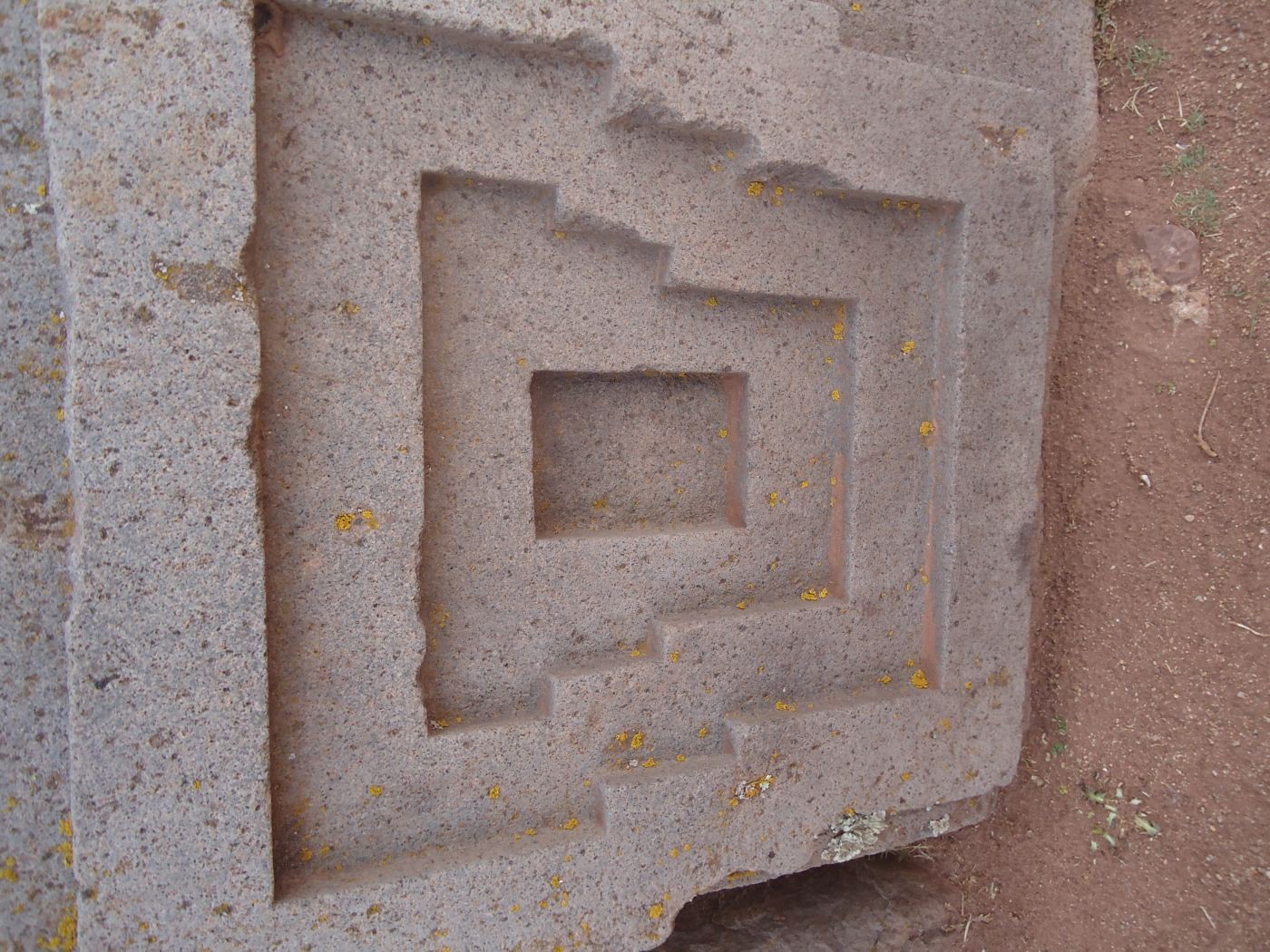
A stone block with nested, stepped rectangles and sharp inner corners.
Puma Punku, 10 August 2011. T Puma Punku is a temple complex of the Tiwanaku culture, built about AD 580–710, centuries before the Incas (Marsh et al. 2023). H From the uniform dimensions of the H-blocks, the researchers Protzen and Nair inferred that they were made to shared templates (Wikipedia: Puma Punku). A stone block with nested, stepped rectangles and sharp inner corners. Photo: Jani Korpi. The photo has only been resized.
Round hollows in the surface of a block.
Puma Punku, 10 August 2011. T Puma Punku is a temple complex of the Tiwanaku culture, built about AD 580–710, centuries before the Incas (Marsh et al. 2023). H From the uniform dimensions of the H-blocks, the researchers Protzen and Nair inferred that they were made to shared templates (Wikipedia: Puma Punku). Round hollows in the surface of a block. Photo: Jani Korpi. The photo has only been resized.
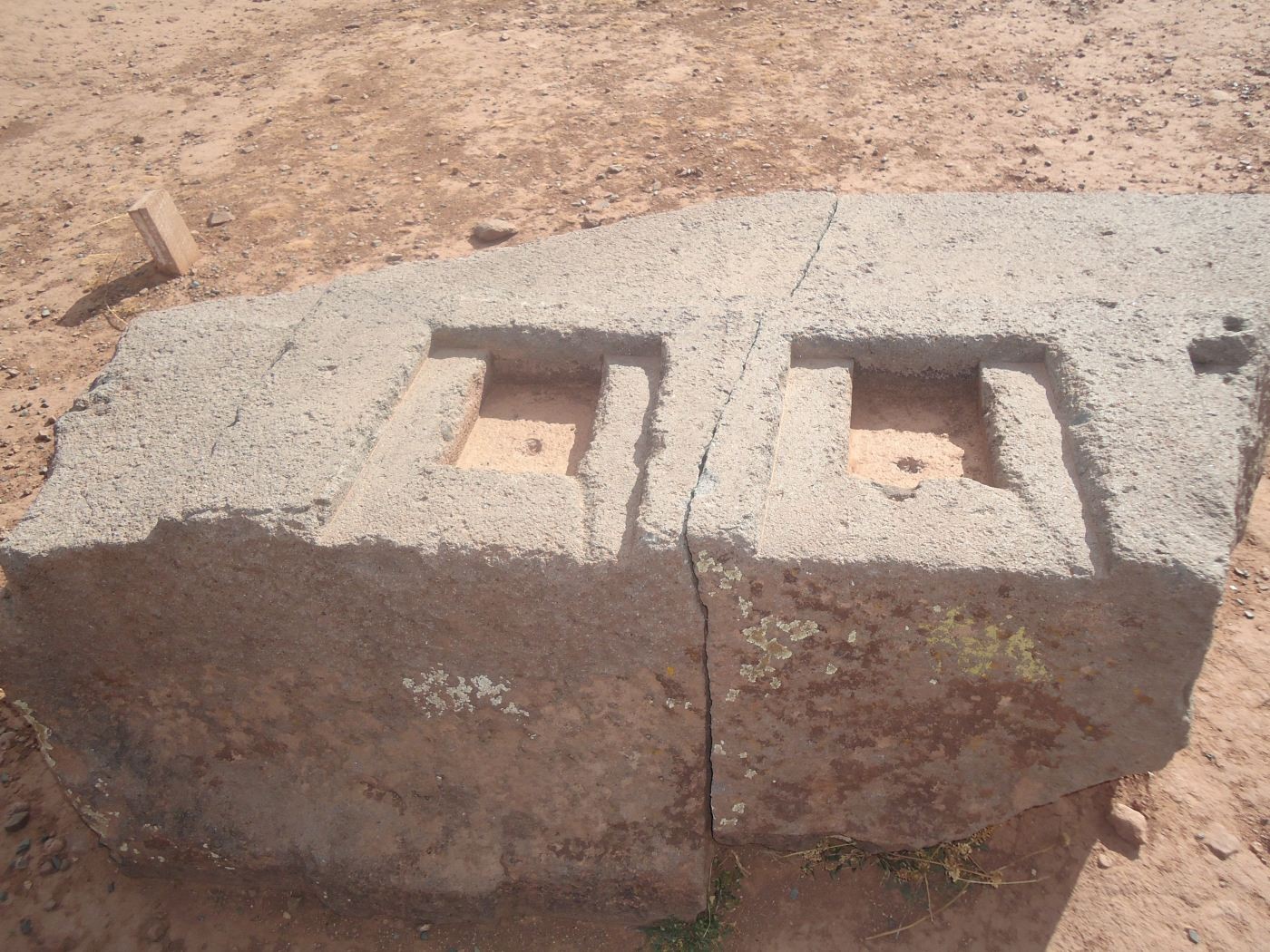
Two rectangular sockets in a block.
Tiwanaku, 10 August 2011. T Tiwanaku was the centre of a pre-Inca culture south of Lake Titicaca (UNESCO 567). L In Inca tradition the creator Wiracocha made people at Tiwanaku (Betanzos 1551). Two rectangular sockets in a block. Photo: Jani Korpi. The photo has only been resized.
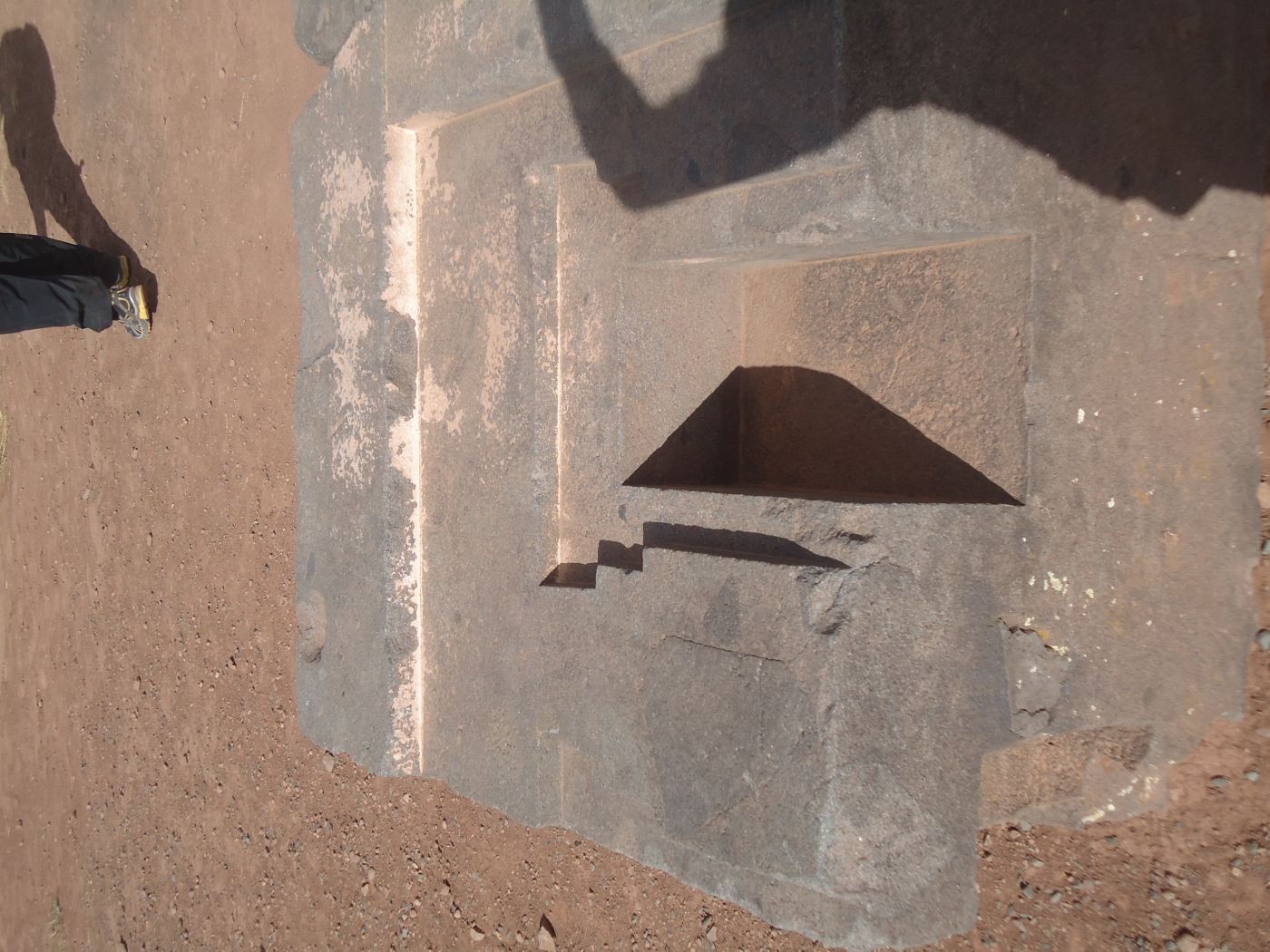
A triangular, stepped recess.
Tiwanaku, 10 August 2011. T Tiwanaku was the centre of a pre-Inca culture south of Lake Titicaca (UNESCO 567). L In Inca tradition the creator Wiracocha made people at Tiwanaku (Betanzos 1551). A triangular, stepped recess. Photo: Jani Korpi. The photo has only been resized.
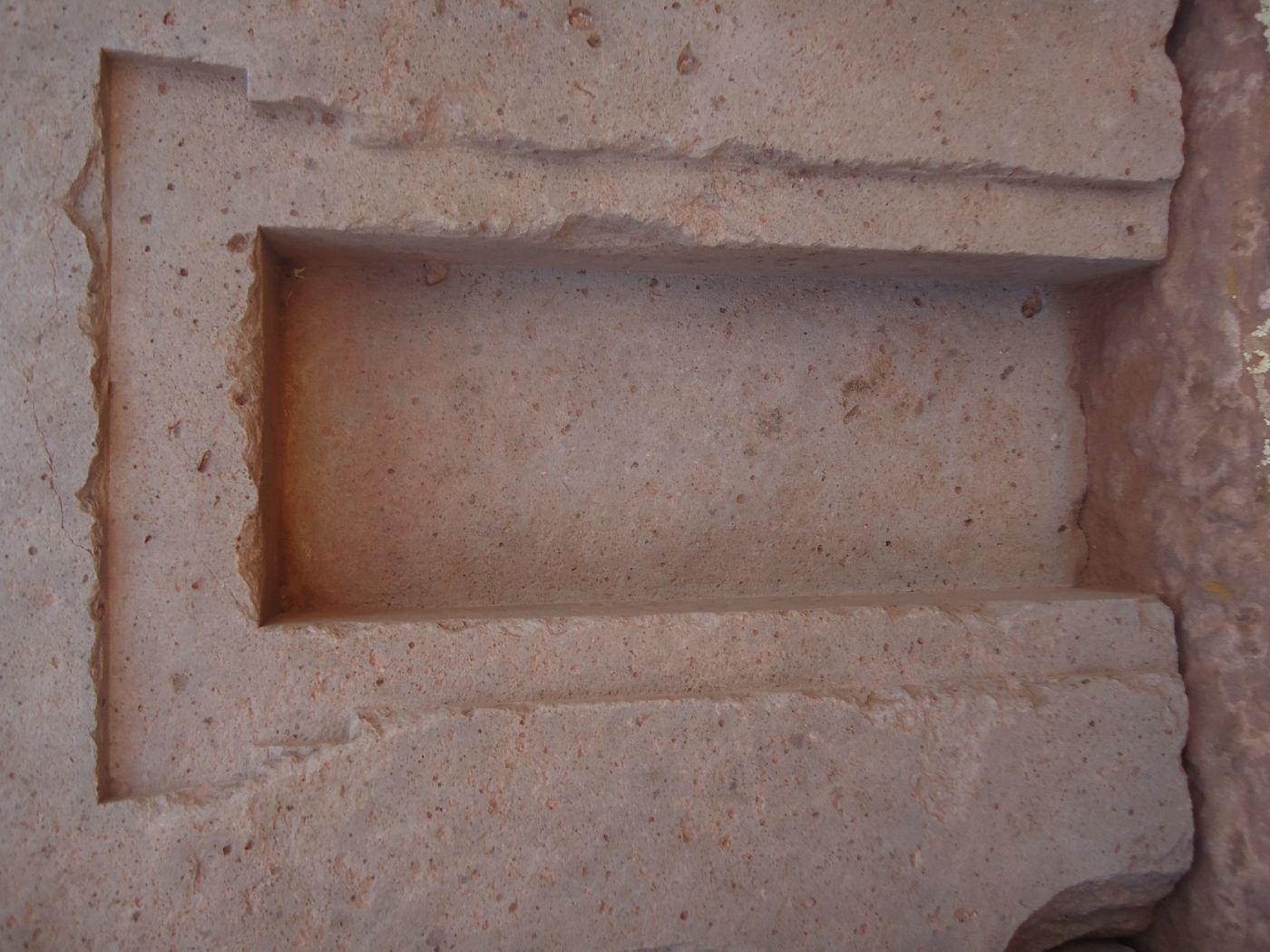
A rectangular recess with flat surfaces and sharp inner corners.
Puma Punku, 10 August 2011. T Puma Punku is a temple complex of the Tiwanaku culture, built about AD 580–710, centuries before the Incas (Marsh et al. 2023). H From the uniform dimensions of the H-blocks, the researchers Protzen and Nair inferred that they were made to shared templates (Wikipedia: Puma Punku). A rectangular recess with flat surfaces and sharp inner corners. Photo: Jani Korpi. The photo has only been resized.
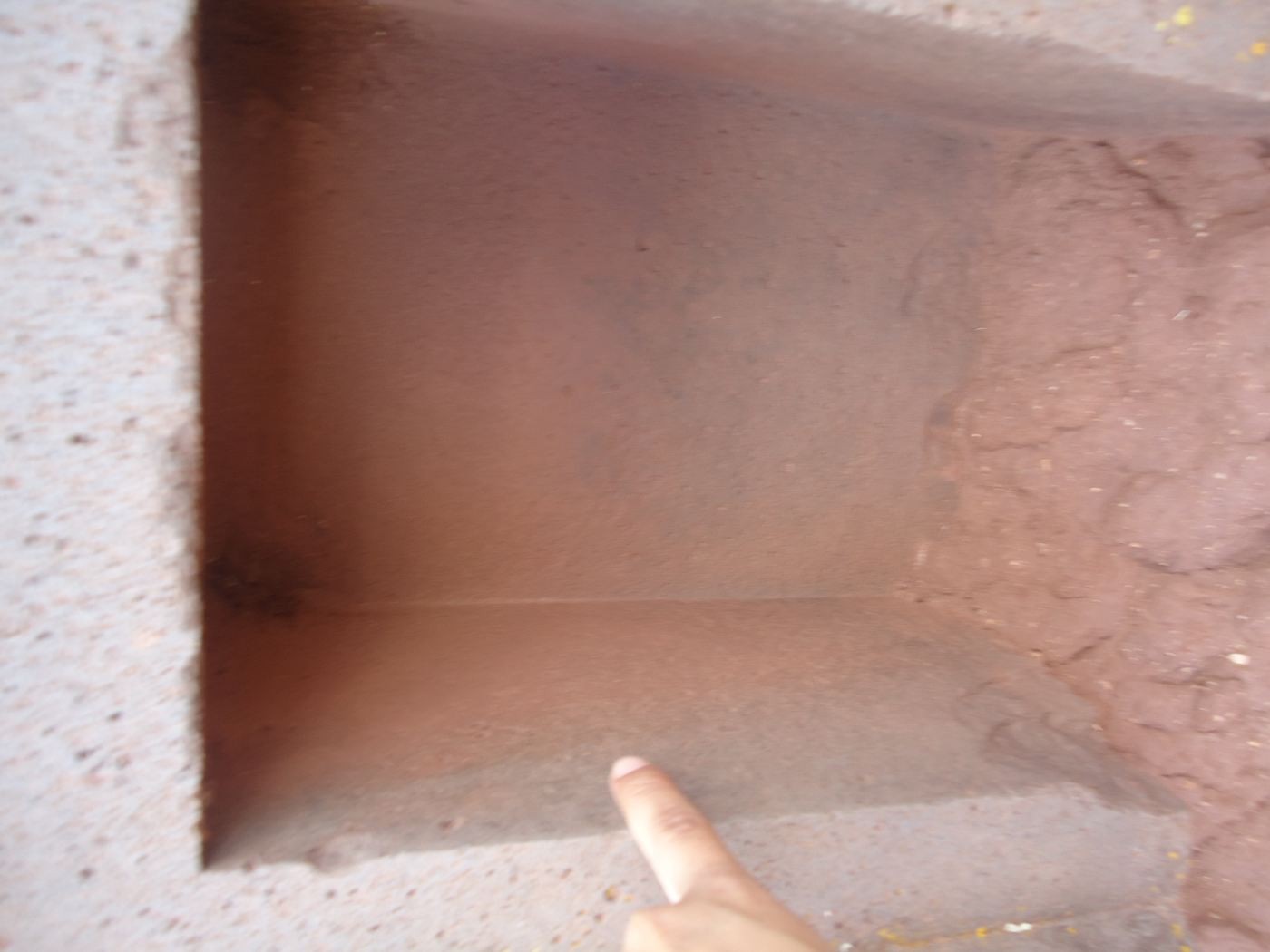
The smooth inner surface and sharp inner corner of a recess; a finger points at the corner.
Puma Punku, 10 August 2011. T Puma Punku is a temple complex of the Tiwanaku culture, built about AD 580–710, centuries before the Incas (Marsh et al. 2023). H From the uniform dimensions of the H-blocks, the researchers Protzen and Nair inferred that they were made to shared templates (Wikipedia: Puma Punku). The smooth inner surface and sharp inner corner of a recess; a finger points at the corner. Photo: Jani Korpi. The photo has only been resized.
H-blocks: repeated rectangular shapes.
Puma Punku, 10 August 2011. T Puma Punku is a temple complex of the Tiwanaku culture, built about AD 580–710, centuries before the Incas (Marsh et al. 2023). H From the uniform dimensions of the H-blocks, the researchers Protzen and Nair inferred that they were made to shared templates (Wikipedia: Puma Punku). H-blocks: repeated rectangular shapes. Photo: Jani Korpi. The photo has only been resized.
A row of identically shaped H-blocks.
Puma Punku, 10 August 2011. T Puma Punku is a temple complex of the Tiwanaku culture, built about AD 580–710, centuries before the Incas (Marsh et al. 2023). H From the uniform dimensions of the H-blocks, the researchers Protzen and Nair inferred that they were made to shared templates (Wikipedia: Puma Punku). A row of identically shaped H-blocks. Photo: Jani Korpi. The photo has only been resized.
A stepped recess on a flat surface.
Puma Punku, 10 August 2011. T Puma Punku is a temple complex of the Tiwanaku culture, built about AD 580–710, centuries before the Incas (Marsh et al. 2023). H From the uniform dimensions of the H-blocks, the researchers Protzen and Nair inferred that they were made to shared templates (Wikipedia: Puma Punku). A stepped recess on a flat surface. Photo: Jani Korpi. The photo has only been resized.
A stepped cross recessed into the stone.
Puma Punku, 10 August 2011. T Puma Punku is a temple complex of the Tiwanaku culture, built about AD 580–710, centuries before the Incas (Marsh et al. 2023). H From the uniform dimensions of the H-blocks, the researchers Protzen and Nair inferred that they were made to shared templates (Wikipedia: Puma Punku). A stepped cross recessed into the stone. Photo: Jani Korpi. The photo has only been resized.
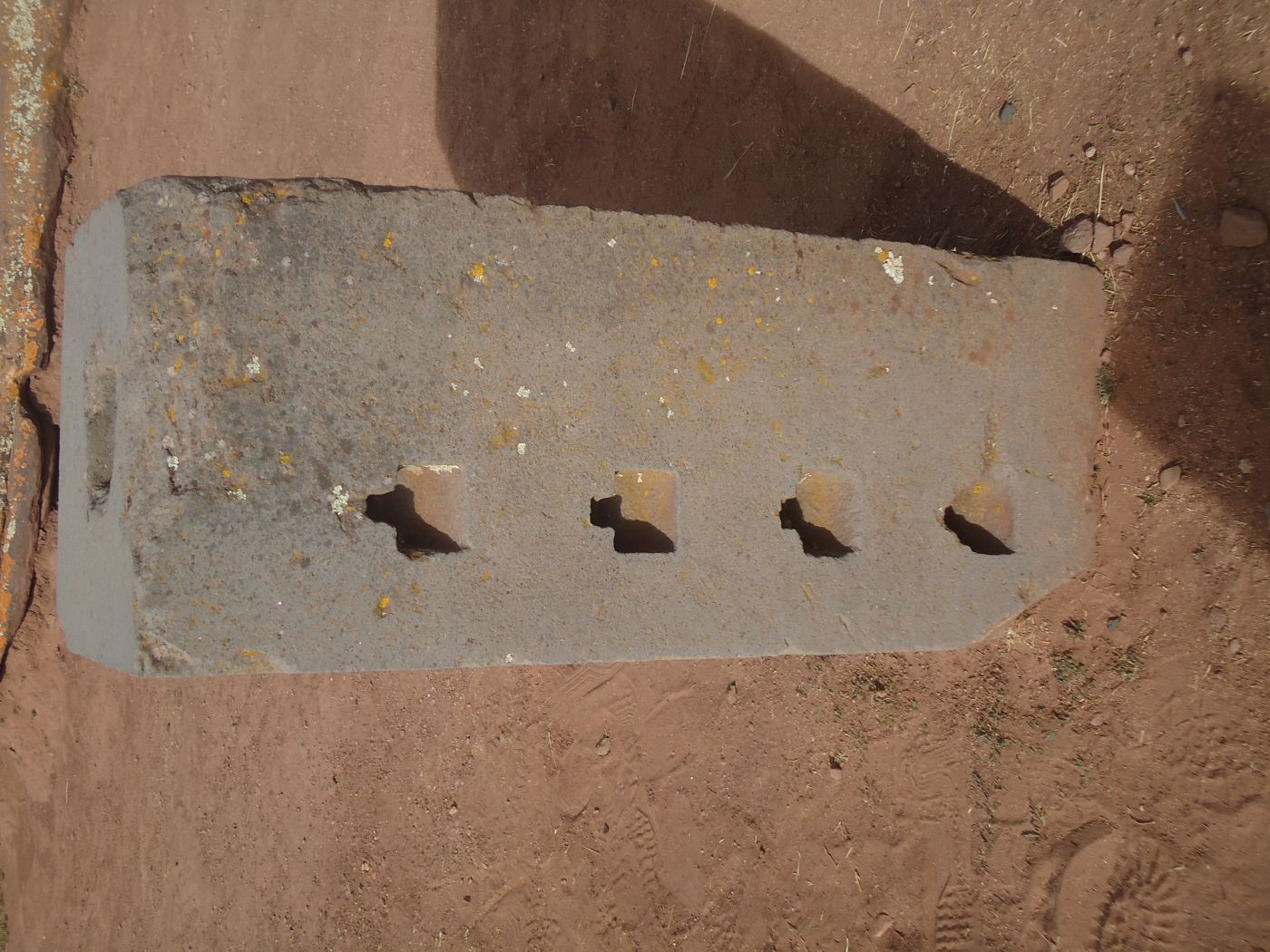
A row of small holes along the edge of a block.
Puma Punku, 10 August 2011. T Puma Punku is a temple complex of the Tiwanaku culture, built about AD 580–710, centuries before the Incas (Marsh et al. 2023). H From the uniform dimensions of the H-blocks, the researchers Protzen and Nair inferred that they were made to shared templates (Wikipedia: Puma Punku). A row of small holes along the edge of a block. Photo: Jani Korpi. The photo has only been resized.
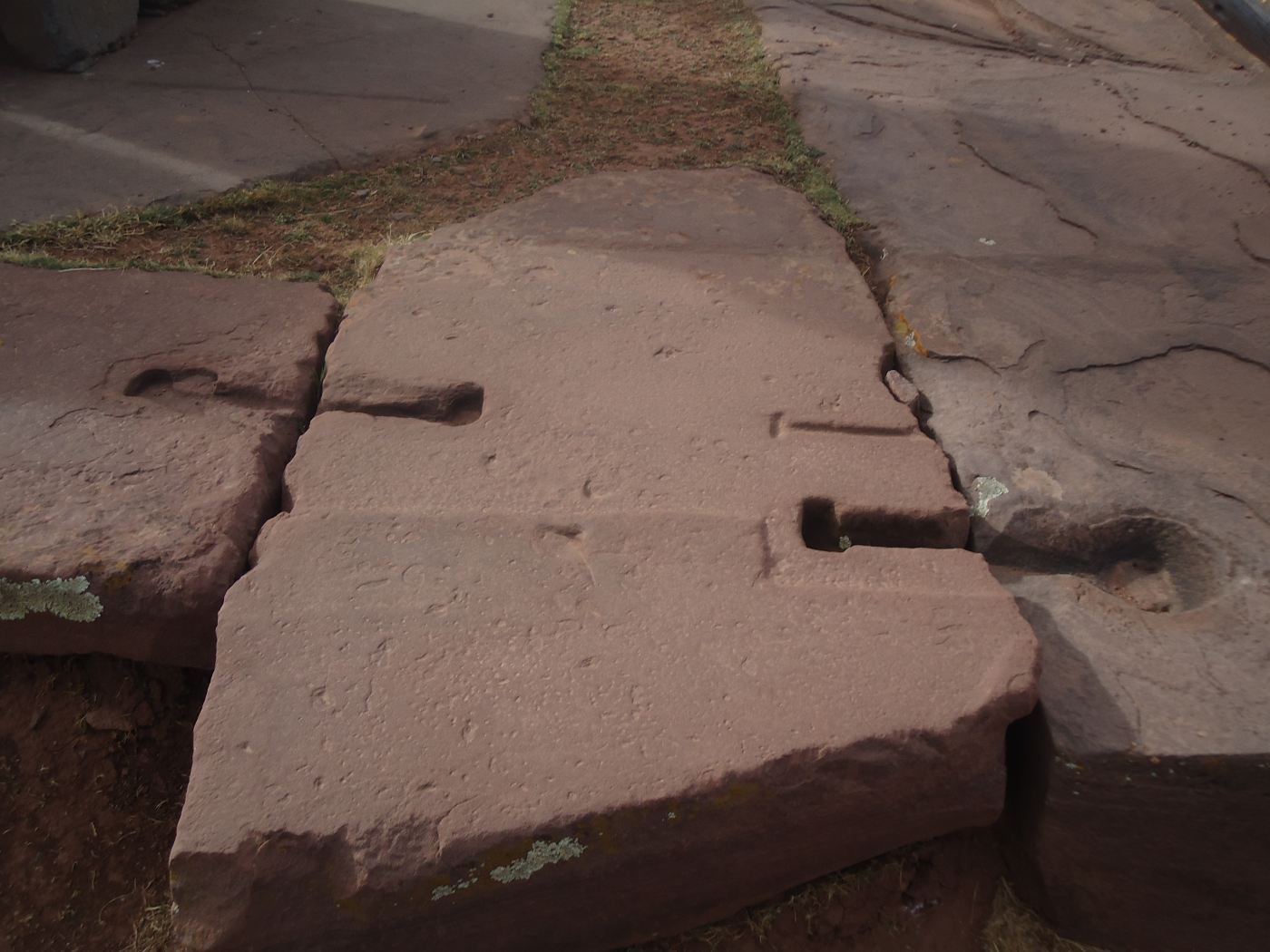
Long straight grooves and sockets cut into a slab.
Puma Punku, 10 August 2011. T Puma Punku is a temple complex of the Tiwanaku culture, built about AD 580–710, centuries before the Incas (Marsh et al. 2023). H From the uniform dimensions of the H-blocks, the researchers Protzen and Nair inferred that they were made to shared templates (Wikipedia: Puma Punku). Long straight grooves and sockets cut into a slab. H Sockets like these are considered seats for I-shaped metal clamps. Photo: Jani Korpi. The photo has only been resized.
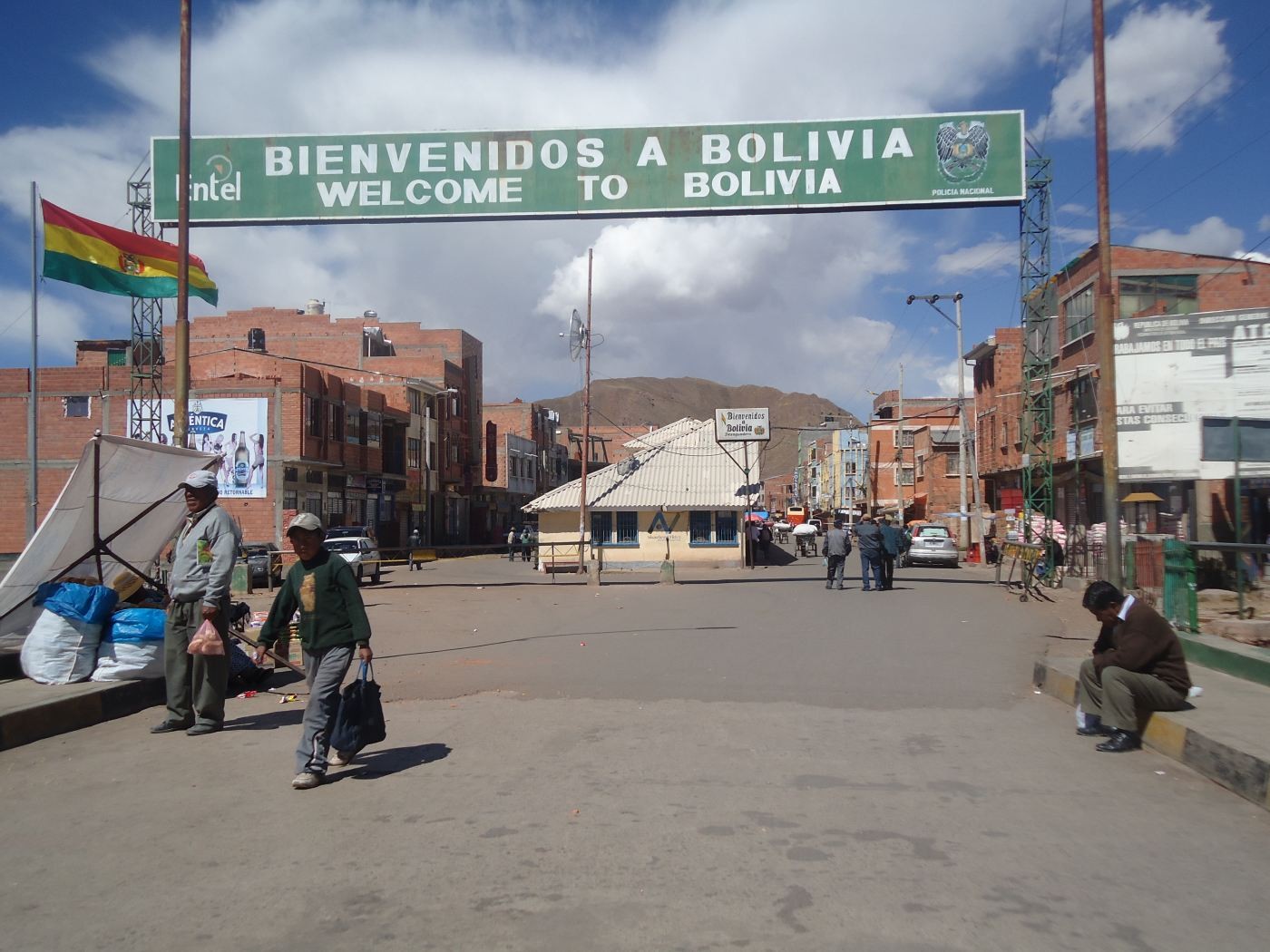
The border arch reading “Bienvenidos a Bolivia”; people on the street.
Peru–Bolivia border, 10 August 2011. The border arch reading “Bienvenidos a Bolivia”; people on the street. Photo: Jani Korpi. The photo has only been resized.
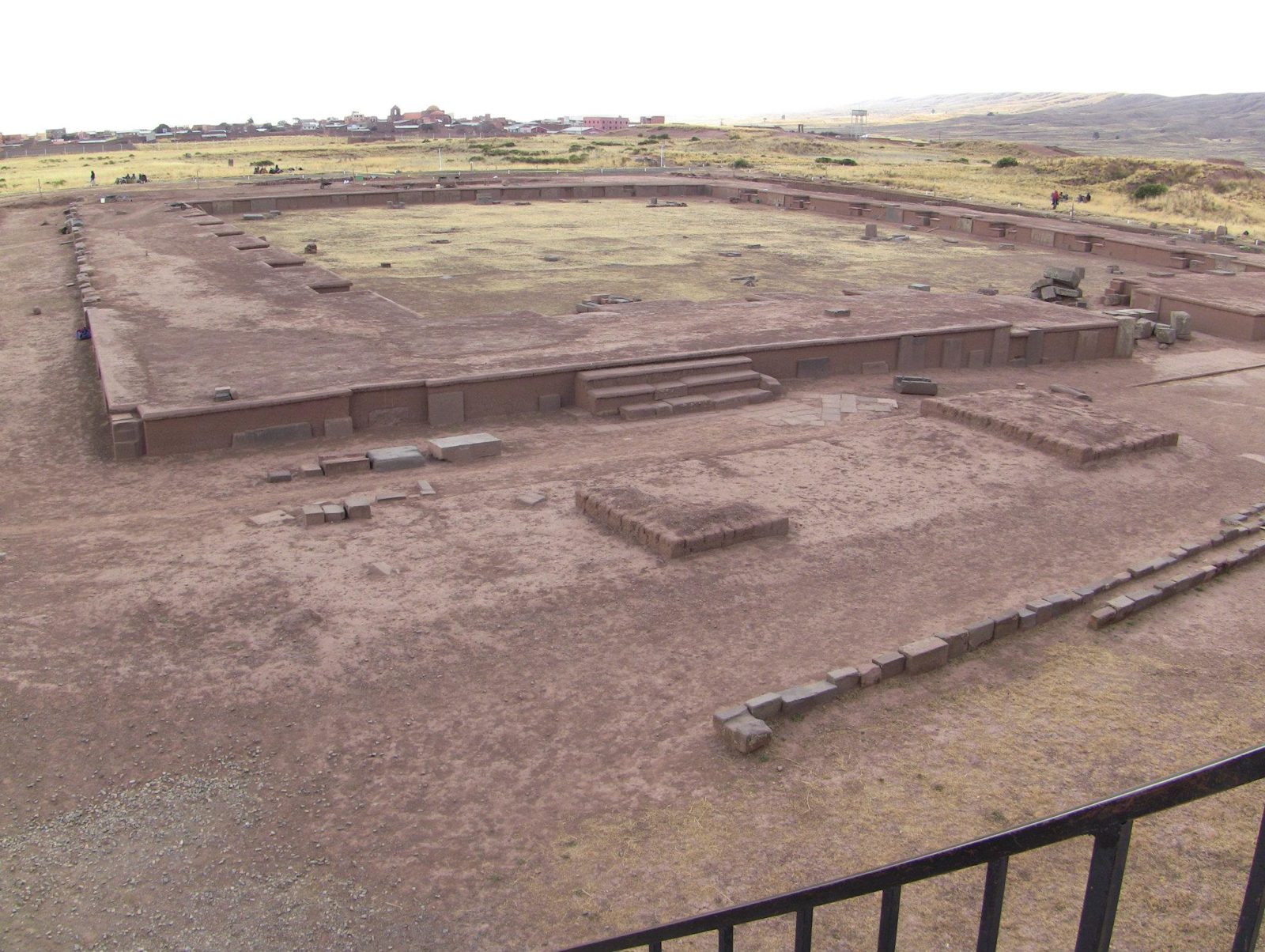
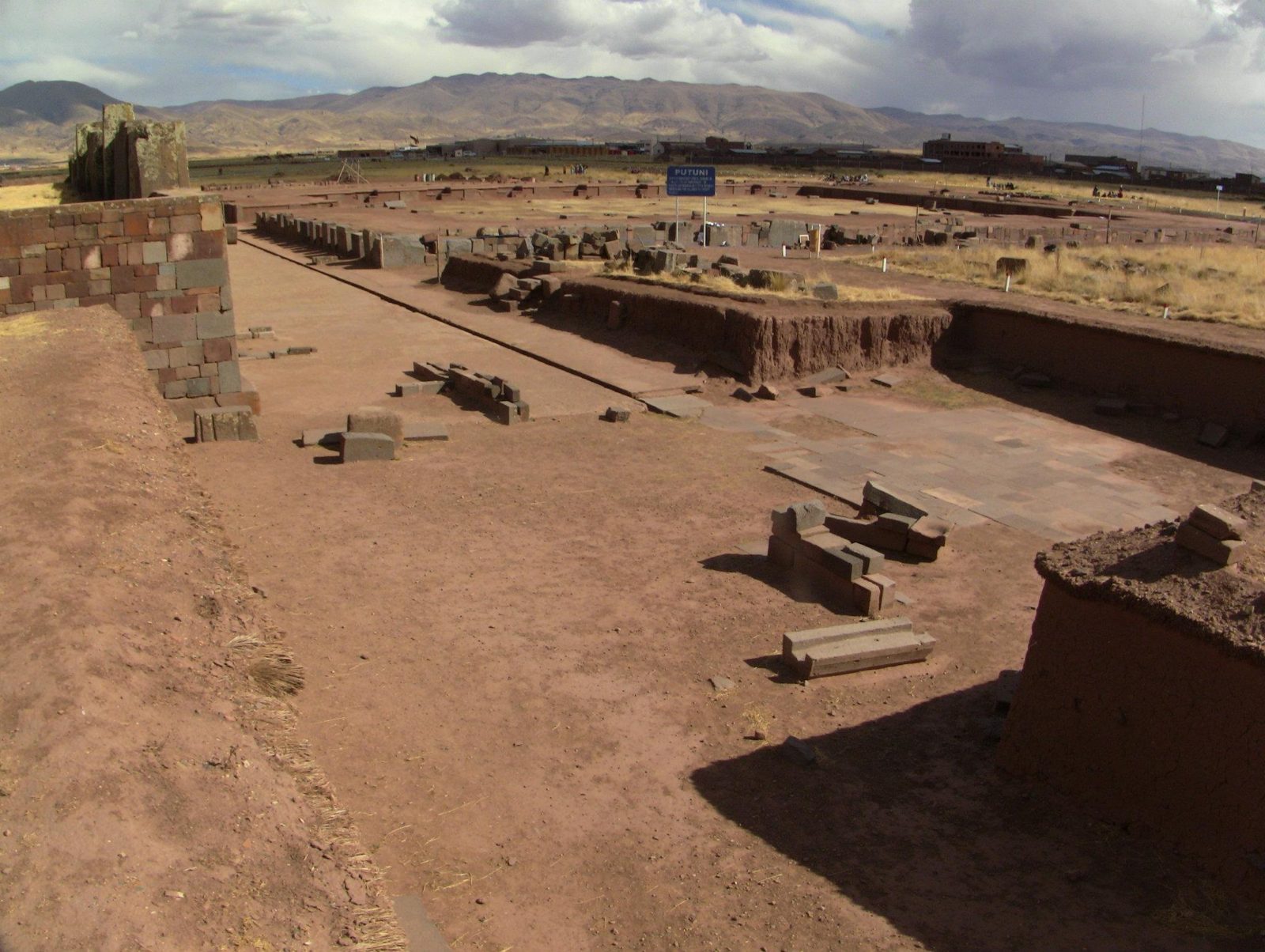
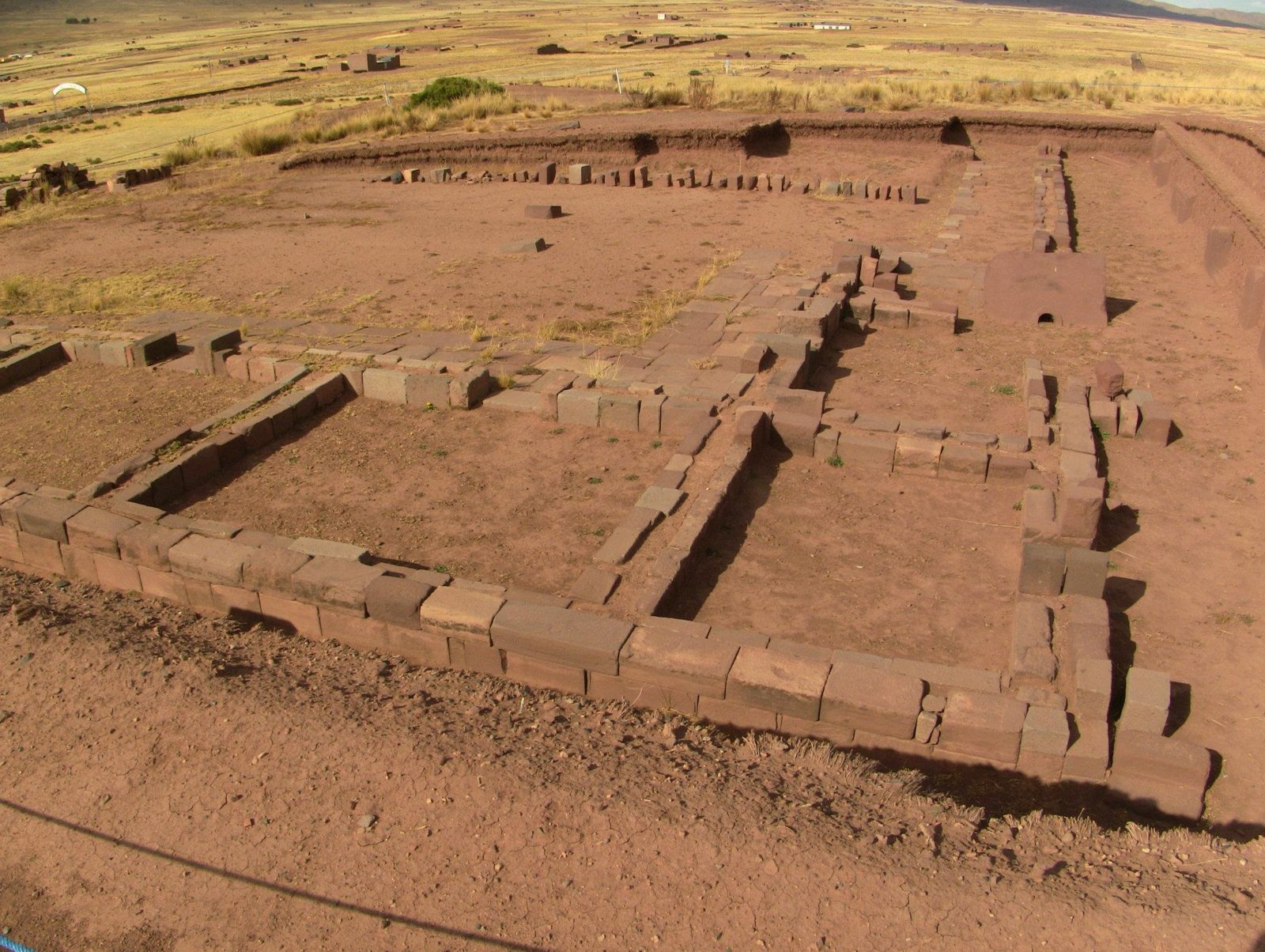
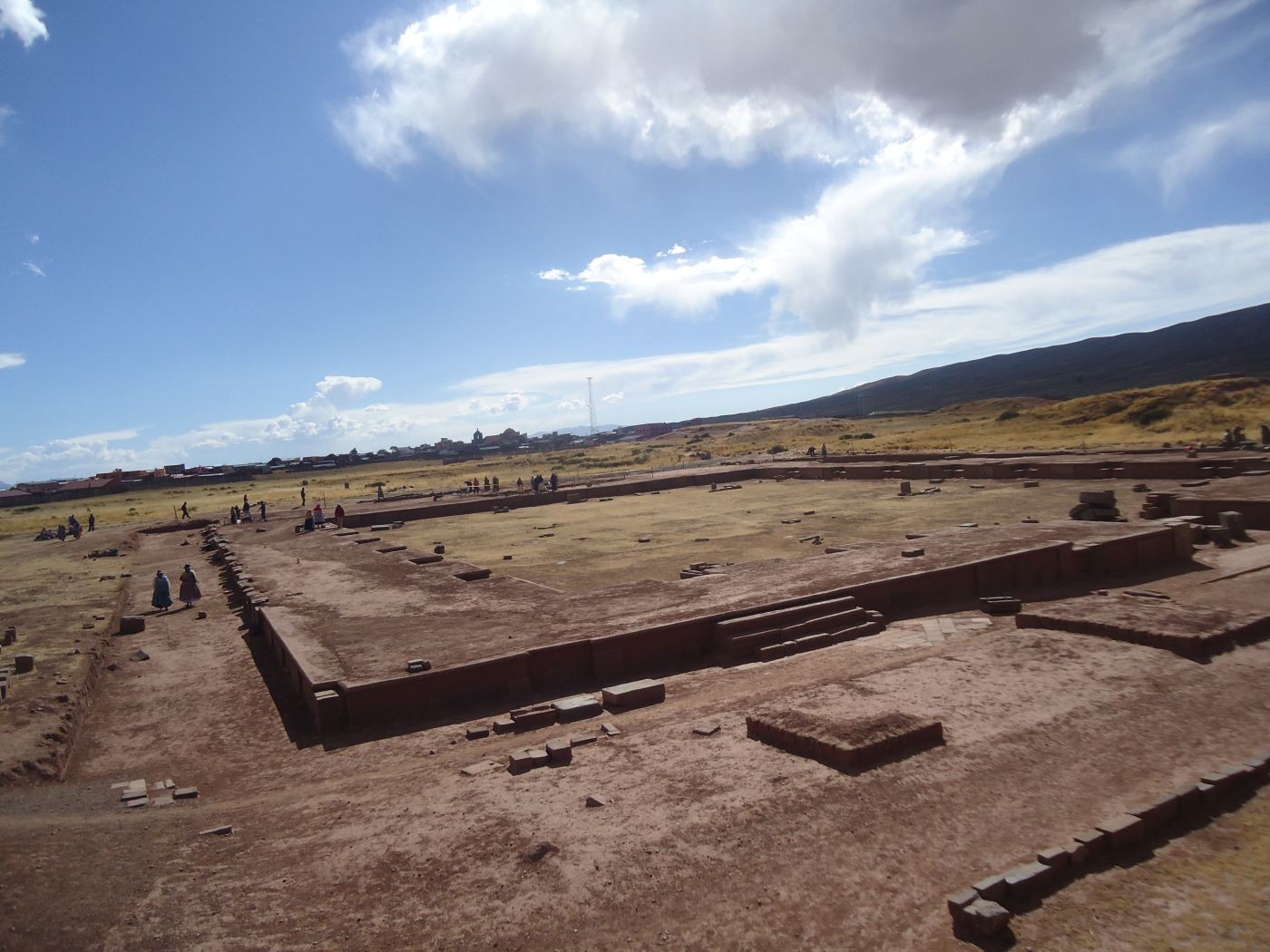
A rectangular area bounded by low stone walls on the plain.
Tiwanaku, 10 August 2011. T Tiwanaku was the centre of a pre-Inca culture south of Lake Titicaca (UNESCO 567). L In Inca tradition the creator Wiracocha made people at Tiwanaku (Betanzos 1551). A rectangular area bounded by low stone walls on the plain. Photo: Jani Korpi. The photo has only been resized.

Location, research and videos

Coordinates

T According to UNESCO, Tiwanaku was the capital of a powerful pre-Hispanic empire that reached its height around AD 500–900 (UNESCO 567).

Travel South videos filmed here: 18. Go to the videos